Shandong’s Eight-Point AI Industrial Reset
💡Shandong’s industrial scale is huge, but its AI opportunity depends on turning scattered manufacturing strengths into ec
⚡ 30-Second TL;DR
What Changed
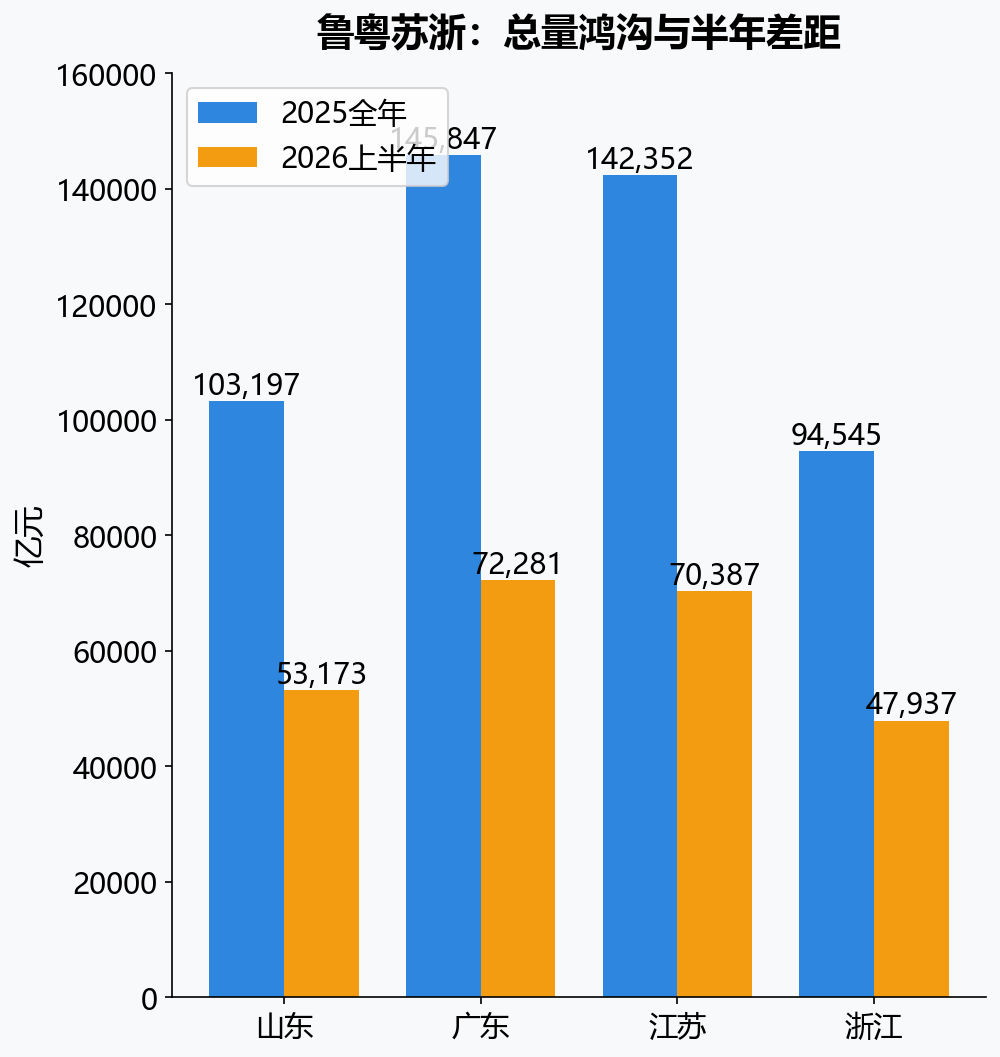
Shandong’s 2025 GDP reached 10.32 trillion yuan, while its 2026 first-half GDP grew 5.6% to 5.3173 trillion yuan.
Why It Matters
For AI companies, Shandong represents a large industrial market with substantial manufacturing assets but an underdeveloped digital and R&D ecosystem. If policy shifts from protecting legacy industries to funding long-term technology bets, the province could become an important testbed for industrial AI and robotics.
What To Do Next
Identify a Shandong manufacturing partner and run a 90-day pilot for predictive maintenance or visual inspection using an industrial edge-AI stack.
Key Points
- •Shandong’s 2025 GDP reached 10.32 trillion yuan, while its 2026 first-half GDP grew 5.6% to 5.3173 trillion yuan.
- •Traditional industries account for about 70% of industrial output, and heavy industries represent about 70% of traditional industries.
- •Only about 7% of above-designated-size industrial enterprises have established R&D institutions, indicating weak innovation infrastructure.
- •Emerging sectors are growing quickly, including lithium batteries, industrial robots, equipment manufacturing, and AI core industries.
- •The proposed remedy is to back scalable ecosystem companies and focus on AI-plus-manufacturing, industrial internet, hydrogen, and marine equipment.
🧠 Deep Insight
AI-generated analysis for this event.
🔑 Enhanced Key Takeaways
- •Shandong has implemented a 'Digital Transformation of Manufacturing' initiative, specifically targeting the integration of 5G and industrial internet platforms across its massive chemical and steel sectors to reduce energy consumption.
- •The provincial government established a 10-billion-yuan 'New Kinetic Energy Conversion Fund' to provide equity investment for AI startups that specifically solve bottlenecks in heavy equipment manufacturing.
- •Shandong's 'AI-plus' strategy is heavily tied to the 'Qilu Cloud' infrastructure, a provincial-level computing network designed to provide low-latency AI training resources for local industrial enterprises.
- •Recent policy shifts have prioritized the 'Shandong-Japan-Korea' industrial chain integration, aiming to import advanced robotics and AI-driven precision manufacturing technologies to upgrade local supply chains.
- •The province is actively promoting 'Lighthouse Factories'—World Economic Forum-recognized manufacturing sites—as the primary model for AI adoption, with a goal to increase the number of such facilities to over 20 by the end of 2027.
🛠️ Technical Deep Dive
- Implementation of Industrial Internet of Things (IIoT) sensors across legacy heavy machinery to enable predictive maintenance and real-time digital twin modeling.
- Deployment of edge computing nodes within steel and chemical plants to process sensor data locally, reducing reliance on public cloud infrastructure for critical operational technology (OT) systems.
- Integration of large-scale industrial models (LMs) trained on proprietary manufacturing datasets to optimize production scheduling and supply chain logistics.
- Utilization of 5G-Advanced (5.5G) networks to support high-density connectivity for autonomous guided vehicles (AGVs) and robotic arms in smart factory environments.
🔮 Future ImplicationsAI analysis grounded in cited sources
⏳ Timeline
Weekly AI Recap
Read this week's curated digest of top AI events →
👉Related Updates

AI-curated news aggregator. All content rights belong to original publishers.
Original source: 虎嗅 ↗