Seres faces financial strain amid heavy Huawei partnership costs
💡Understand the financial risks of AI-integrated automotive partnerships and the burden of high-tech licensing costs.
⚡ 30-Second TL;DR
What Changed
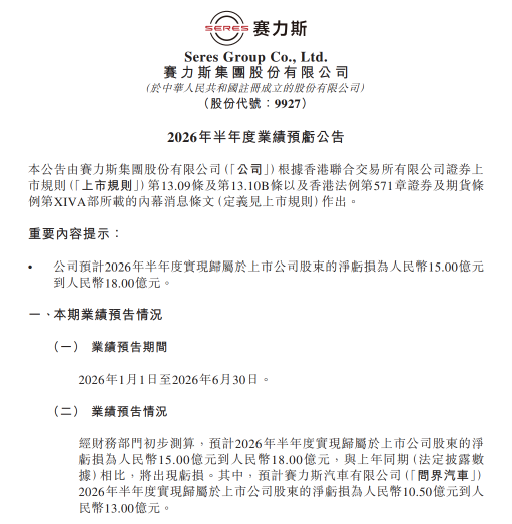
Projected H1 2026 net loss of 1.5 to 1.8 billion RMB.
Why It Matters
The financial struggle highlights the sustainability risks of 'foundry-style' AI-integrated automotive partnerships where high tech-licensing costs can erode hardware margins.
What To Do Next
Analyze the cost-to-revenue ratio of your AI-integrated hardware products to ensure that licensing or partnership fees do not cannibalize your long-term profitability.
Key Points
- •Projected H1 2026 net loss of 1.5 to 1.8 billion RMB.
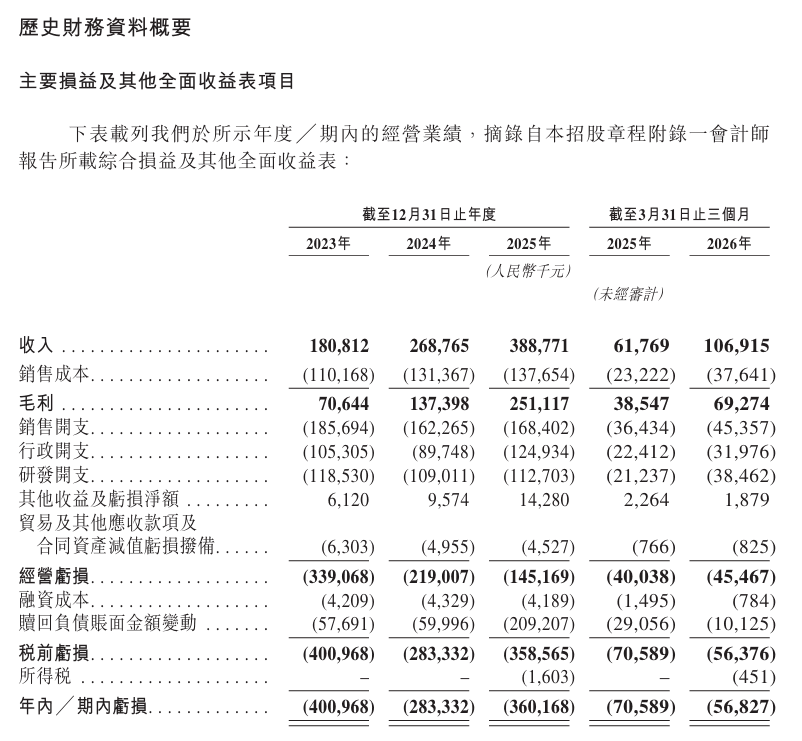
- •High R&D expenses (17.9 billion RMB in Q1 2026) significantly impacting profit margins.
- •Over 75 billion RMB paid to Huawei for partnership costs between 2022 and 2025.
- •AITO's share of Harmony Intelligent Mobility Alliance (HIMA) sales is declining.
🧠 Deep Insight
AI-generated analysis for this event — not the original article.
🔑 Enhanced Key Takeaways
- •Seres' financial burden is exacerbated by the 'Huawei tax' model, where Huawei receives a significant percentage of the vehicle's wholesale price as a service and technology fee.
- •The company has shifted its capital allocation strategy toward aggressive factory automation and AI-driven manufacturing to offset rising labor costs associated with high-volume production.
- •Regulatory filings indicate that Seres is under pressure from minority shareholders regarding the transparency of the profit-sharing agreement with Huawei's Intelligent Automotive Solution (IAS) business unit.
- •Market analysts note that Seres' reliance on Huawei's sales channels has limited its ability to build independent brand equity, making it vulnerable to HIMA's internal portfolio shifts.
- •Recent supply chain audits reveal that Seres is attempting to localize more components to reduce dependency on Huawei-vetted premium suppliers, aiming to improve gross margins by 2027.
📊 Competitor Analysis▸ Show
| Feature | Seres (AITO) | Li Auto | NIO | XPeng |
|---|---|---|---|---|
| Primary Powertrain | EREV (Range Extender) | EREV | BEV / Battery Swap | BEV |
| Software Ecosystem | Huawei HarmonyOS | In-house / LiOS | In-house / SkyOS | In-house / XOS |
| Pricing Strategy | Mid-to-High Premium | High Premium | Luxury | Mid-to-High |
| Profitability Model | High R&D/Partner Fees | Direct Sales/Efficiency | High R&D/Infrastructure | High R&D/Autonomy |
🛠️ Technical Deep Dive
- Seres utilizes the Huawei DriveONE powertrain system, which integrates the motor, controller, and reducer into a single unit to optimize space and efficiency.
- The AITO vehicle architecture is built on the DE-i super electric drive intelligent platform, designed specifically to support both range-extended and pure electric configurations.
- Integration with Huawei's ADS (Advanced Driving System) 3.0 relies on a fusion of LiDAR, millimeter-wave radar, and high-definition cameras processed via Huawei's proprietary MDC computing platform.
- The chassis control system incorporates the Huawei DATS (Dynamic Adaptive Torque System) to reduce vehicle jitter and improve handling stability during rapid acceleration and cornering.
🔮 Future ImplicationsAI analysis grounded in cited sources
⏳ Timeline
📰 Event Coverage
Weekly AI Recap
Read this week's curated digest of top AI events →
👉Related Updates

AI-curated news aggregator. All content rights belong to original publishers.
Original source: 虎嗅 ↗
This is a summary, not the original. Read the source, or get the weekly briefing.
The weekly digest
One email a week. Unsubscribe anytime.