Sensor Firm Raises $14M for Embodied AI
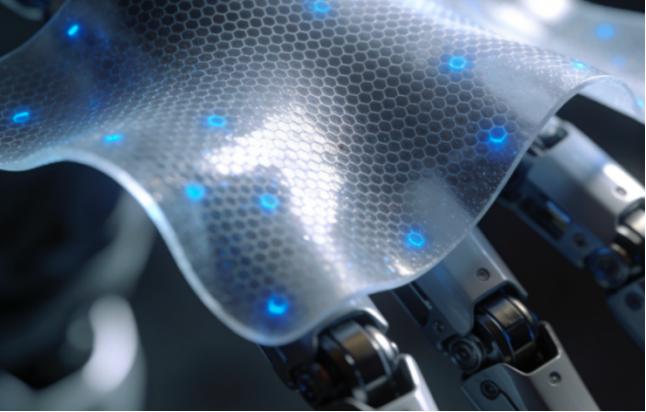
💡Major funding for flexible sensors critical to embodied AI robotics advances.
⚡ 30-Second TL;DR
What Changed
Series A funding ~100M RMB from Jin Qiu Fund, SMIC Poly, others
Why It Matters
Accelerates tactile tech essential for dexterous embodied AI, potentially enabling advanced humanoid manipulation. Strengthens China’s sensor supply chain for robotics amid global race.
What To Do Next
Sample PVDF tactile sensors from Lingdong Jiaxin for robot gripper prototypes.
Key Points
- •Series A funding ~100M RMB from Jin Qiu Fund, SMIC Poly, others
- •PVDF sensors enable high-density tactile perception for robot grippers
- •2025 service robot sensor shipments exceed 10M units
- •Lithium battery PVDF ultrasound monitoring partners top firms for mass prod in 2-3 years
🧠 Deep Insight
AI-generated analysis for this event — not the original article.
🔑 Enhanced Key Takeaways
- •Lingdong Jiaxin's PVDF technology utilizes a proprietary thin-film manufacturing process that allows for high-sensitivity, wide-frequency response, and extreme durability compared to traditional MEMS-based capacitive tactile sensors.
- •The company's strategic collaboration with Shanghai Jiao Tong University (SJTU) focuses specifically on the integration of tactile feedback loops with AI-driven motor control algorithms to reduce latency in dexterous manipulation.
- •Beyond robotics, the company is leveraging its PVDF material's piezoelectric properties to develop non-invasive, real-time internal stress monitoring for solid-state battery cells, addressing a critical safety bottleneck in EV energy density.
📊 Competitor Analysis▸ Show
| Feature | Lingdong Jiaxin (PVDF) | Traditional MEMS Tactile | Optical Tactile (e.g., GelSight) |
|---|---|---|---|
| Form Factor | Ultra-thin, flexible | Rigid/Bulky | Bulky (requires camera) |
| Sensitivity | High (Dynamic/Static) | Moderate | High (Surface texture) |
| Durability | High (Impact resistant) | Low (Fragile) | Moderate |
| Integration | High (Conformal) | Low | Low |
🛠️ Technical Deep Dive
- •Material: Polyvinylidene Fluoride (PVDF) piezoelectric thin film, characterized by high piezoelectric coefficients (d31, d33) and high mechanical flexibility.
- •Sensing Mechanism: Converts mechanical deformation (pressure, vibration, shear) directly into electrical signals without the need for external power at the sensing site (passive sensing).
- •Signal Processing: Employs high-impedance charge amplifiers to interface with high-density sensor arrays, minimizing signal-to-noise ratio issues in robotic skin applications.
- •Application Architecture: Multi-layer sensor skin design allowing for spatial resolution mapping of contact forces, essential for 'closed-loop' tactile feedback in humanoid dexterous hands.
🔮 Future ImplicationsAI analysis grounded in cited sources
⏳ Timeline
Weekly AI Recap
Read this week's curated digest of top AI events →
👉Related Updates
AI-curated news aggregator. All content rights belong to original publishers.
Original source: 36氪 ↗
This is a summary, not the original. Read the source, or get the weekly briefing.
The weekly digest
One email a week. Unsubscribe anytime.