Source钛媒体•Stalecollected in 32m
Semiconductor IP Turns Red-Hot
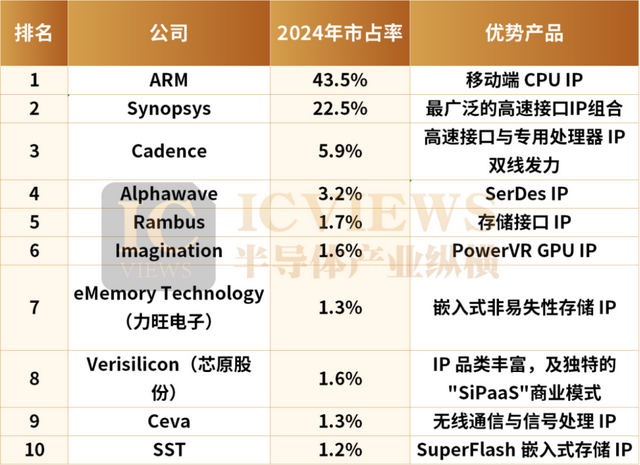
#chip-design#compute-power#market-trendsemiconductor-ipsemiconductor-ip
💡Semicon IP boom eases AI chip design—key for custom hardware builders.
⚡ 30-Second TL;DR
What Changed
Semiconductor IP demand surging rapidly
Why It Matters
Boosts AI hardware development by easing custom chip design access.
What To Do Next
Research top semiconductor IP vendors like Arm for your next AI accelerator project.
Who should care:Enterprise & Security Teams
Key Points
- •Semiconductor IP demand surging rapidly
- •Golden era for computing power infrastructure providers
- •Key enablers for AI and high-performance chips
🧠 Deep Insight
AI-generated analysis for this event — not the original article.
🔑 Enhanced Key Takeaways
- •The surge in IP licensing is driven by the 'chiplet' revolution, which allows designers to integrate heterogeneous dies from different vendors, significantly reducing time-to-market for complex AI SoCs.
- •Major IP providers are shifting from traditional 'hard' IP (fixed layout) to 'soft' IP (synthesizable RTL) and 'subsystem' IP, which includes pre-verified software stacks to accelerate AI model deployment.
- •Geopolitical fragmentation is forcing a bifurcation in the IP market, with regional players increasingly focusing on RISC-V based IP to mitigate supply chain risks associated with proprietary architectures like x86 or ARM.
🔮 Future ImplicationsAI analysis grounded in cited sources
Consolidation of the IP market will accelerate through 2027.
Large semiconductor firms are increasingly acquiring niche IP providers to secure exclusive access to critical AI-accelerator building blocks.
RISC-V will capture over 30% of the AI-specific IP market by 2028.
The open-source nature of RISC-V allows for the custom instruction set extensions required for specialized AI workloads without licensing constraints.
📰
Weekly AI Recap
Read this week's curated digest of top AI events →
👉Related Updates



AI-curated news aggregator. All content rights belong to original publishers.
Original source: 钛媒体 ↗
This is a summary, not the original. Read the source, or get the weekly briefing.
The weekly digest
One email a week. Unsubscribe anytime.