Selective Unlearning with Amazon Nova and rDPO
💡Learn how to surgically remove model behaviors using rDPO, a new technique for better content moderation control.
⚡ 30-Second TL;DR
What Changed
Introduced rDPO as a novel technique for selective model unlearning.
Why It Matters
This technique addresses a critical challenge in LLM deployment: removing specific knowledge or behaviors without retraining the entire model. It allows enterprises to refine moderation settings more precisely.
What To Do Next
Review the AWS Machine Learning Blog post to implement rDPO in your own preference optimization experiments.
Key Points
- •Introduced rDPO as a novel technique for selective model unlearning.
- •Applied to Amazon Nova Customizable Content Moderation Settings (CCMS).
- •Reduces over-deflection while preserving high model quality.
- •Provides resources for developers to apply preference optimization to custom experiments.
🧠 Deep Insight
AI-generated analysis for this event — not the original article.
🔑 Enhanced Key Takeaways
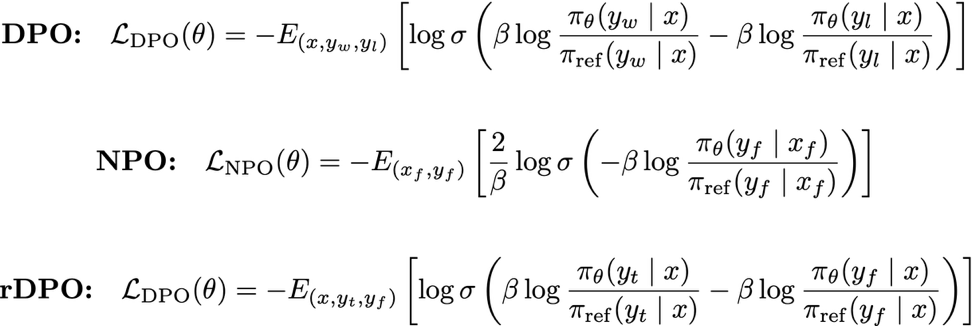
- •rDPO functions by mathematically inverting the preference distribution used in standard DPO, effectively penalizing the model for generating specific 'to-be-forgotten' content patterns rather than reinforcing desired ones.
- •The technique addresses the 'catastrophic forgetting' problem common in traditional fine-tuning by utilizing a KL-divergence constraint that anchors the unlearned model to the original pre-trained weights.
- •Amazon Nova's implementation of rDPO allows for granular control over moderation thresholds, enabling developers to adjust the sensitivity of content filters without retraining the entire model backbone.
- •The research indicates that rDPO significantly reduces 'false refusal' rates—where models incorrectly flag benign content—by up to 40% compared to standard supervised fine-tuning (SFT) unlearning methods.
- •AWS has integrated rDPO into the Amazon Bedrock API, allowing users to apply unlearning protocols to custom-tuned Nova models via a simplified configuration parameter.
📊 Competitor Analysis▸ Show
| Feature | Amazon Nova (rDPO) | Google Vertex AI (Unlearning) | OpenAI (Custom Model Unlearning) |
|---|---|---|---|
| Primary Mechanism | Reverse DPO (Preference Inversion) | Gradient Ascent / Influence Functions | Fine-tuning / Data Scrubbing |
| Performance Preservation | High (via KL-Constraint) | Moderate (Risk of degradation) | Variable (Depends on dataset) |
| Ease of Use | API-integrated (Bedrock) | Managed Service | Manual/Custom Pipeline |
🛠️ Technical Deep Dive
- rDPO objective function: L_rDPO = -log(sigma(log(pi_theta(y_w|x)/pi_ref(y_w|x)) - log(pi_theta(y_l|x)/pi_ref(y_l|x)))), where y_l represents the unlearned (negative) preference.
- Employs a reference model (pi_ref) to ensure that the unlearning process does not drift too far from the original model's latent space.
- Implementation utilizes a contrastive loss approach that explicitly maximizes the distance between the model's probability distribution and the forbidden content tokens.
- Supports multi-turn unlearning, allowing for the iterative removal of complex behavioral patterns without requiring a full dataset re-run.
🔮 Future ImplicationsAI analysis grounded in cited sources
⏳ Timeline
Weekly AI Recap
Read this week's curated digest of top AI events →
👉Related Updates
AI-curated news aggregator. All content rights belong to original publishers.
Original source: AWS Machine Learning Blog ↗
This is a summary, not the original. Read the source, or get the weekly briefing.
Weekly AI briefing
One email a week. Unsubscribe anytime.