Securing AI Agents: A Practical Guide for Development Teams
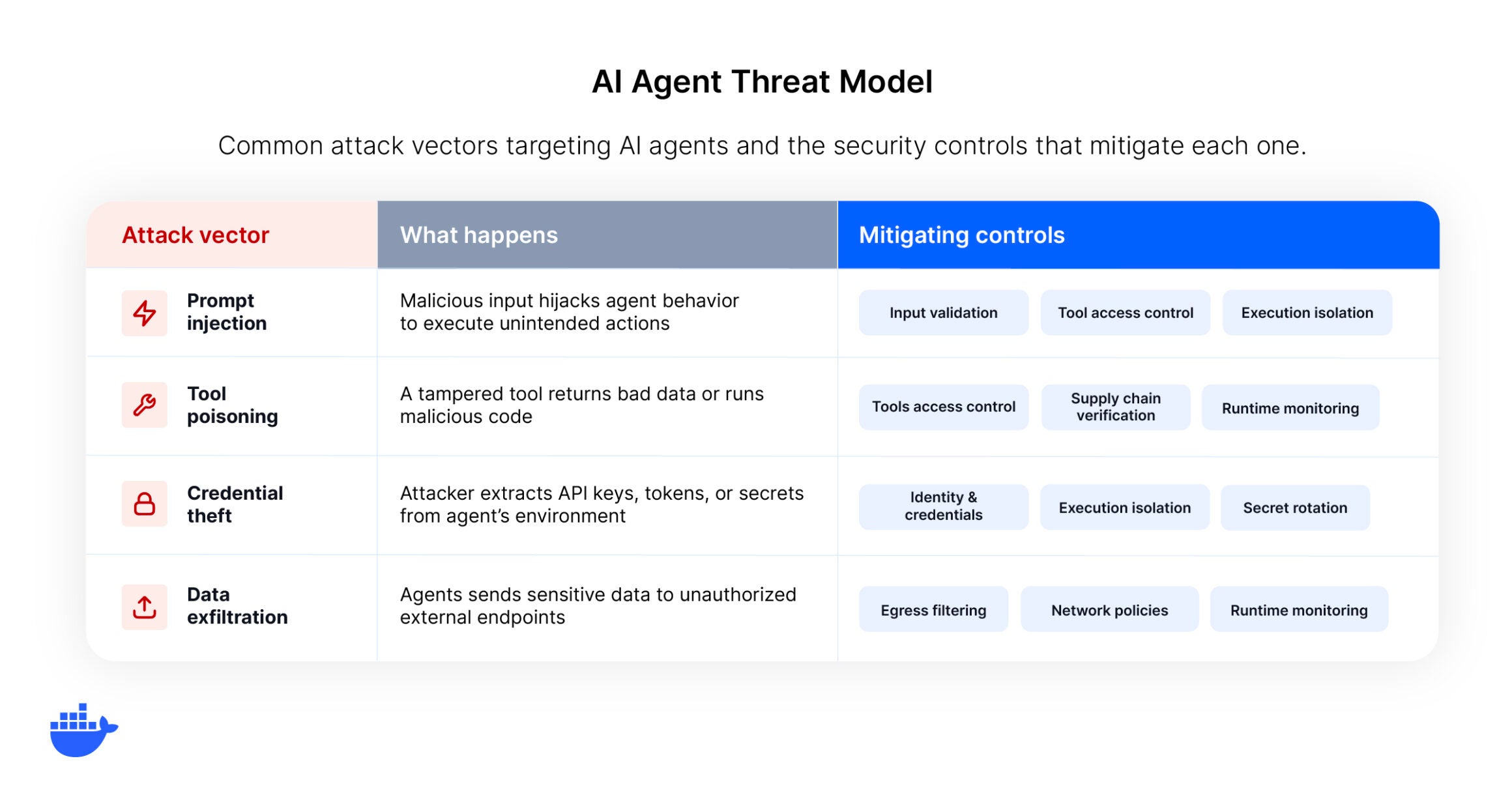
💡Learn how to bridge the critical security gap between rapid AI agent deployment and enterprise-grade safety.
⚡ 30-Second TL;DR
What Changed
45% of organizations report difficulties in securing tools used by AI agents.
Why It Matters
As AI agents become core to business workflows, failing to secure them risks data breaches and unauthorized system access. Development teams must prioritize security-by-design to maintain enterprise compliance.
What To Do Next
Audit your current AI agent toolset and implement strict access controls for every API or external service your agents interact with.
Key Points
- •45% of organizations report difficulties in securing tools used by AI agents.
- •AI agents are reaching production environments faster than security practices can evolve.
- •The primary challenge is bridging the gap between rapid deployment and enterprise-grade security standards.
🧠 Deep Insight
Background and context from public sources — not the original article. 31 sources cited.
🔑 Enhanced Key Takeaways
- •AI agents introduce unique security risks due to their inherent autonomy, non-deterministic behavior, and extensive interaction with external systems and tools, expanding the attack surface beyond traditional LLM applications.
- •The OWASP Top 10 for Agentic Applications (ASI) 2026 identifies specific critical risks such as Agent Goal Hijack, Tool Misuse & Exploitation, Memory & Context Poisoning, and Insecure Inter-Agent Communication, which are distinct from traditional LLM vulnerabilities.
- •A significant 'AI Agent Identity Crisis' exists, where organizations struggle with identity governance for autonomous agents, often resorting to sharing human credentials and access tokens due to a lack of dedicated agent identity management solutions.
- •Advanced prompt injection attacks, including indirect and multimodal forms, pose evolving threats by embedding malicious instructions in untrusted content or non-text formats, bypassing traditional text-based defenses.
- •Data poisoning attacks, which corrupt AI model training data, represent a stealthy and persistent threat capable of fundamentally altering model behavior, leading to compromised decision-making and biased outcomes.
📊 Competitor Analysis▸ Show
| Feature/Capability | Zenity | Noma Security | Palo Alto Networks Cortex AgentiX |
|---|---|---|---|
| Focus | Agent-centric security & governance from buildtime to runtime, intent-based detection & response. | Continuous discovery for AI assets and agents, AI security posture management, risk prioritization, AI runtime protection. | Enterprise-grade agentic AI security, combining workflow autonomy with comprehensive governance controls across security operations. |
| Coverage | SaaS, home-grown agentic platforms (Cloud), and end-user devices (Endpoint) with unified visibility. | Full AI inventory, determining data and system access for AI applications and agents. | Automates investigation lifecycles across email threats, endpoint forensics, threat intelligence, network security, cloud security, and IT operations. |
| Key Differentiators | Recognized by Gartner as a Cool Vendor in Agentic AI TRiSM; offers comprehensive visibility and observability, deterministic control over actions. | Provides a full AI inventory, automatically discovering AI applications and agents and their access. | Persona-based system agents, natural language prompting for dynamically generated plans across integrated tools and data sources. |
| Pricing | Not available in search results | Not available in search results | Not available in search results |
| Benchmarks | Not available in search results | Not available in search results | Not available in search results |
🛠️ Technical Deep Dive
- AI Agent Security Frameworks: Combine governance (defining agent permissions, human oversight), technical safeguards (least-privilege access, sandboxing, input validation, continuous logging), and operational controls (auditing, anomaly detection, regular updates).
- OWASP Top 10 for Agentic Applications (ASI01:2026): Identifies critical risks including Agent Goal Hijack (ASI01), Tool Misuse & Exploitation (ASI02), Agent Identity & Privilege Abuse (ASI03), Agentic Supply Chain Compromise (ASI04), Unexpected Code Execution (ASI05), Memory & Context Poisoning (ASI06), Insecure Inter-Agent Communication (ASI07), Cascading Agent Failures (ASI08), Human-Agent Trust Exploitation (ASI09), and Rogue Agents (ASI10).
- Prompt Injection Defenses: Employ a defense-in-depth strategy with prompt shields (sanitizing incoming prompts), spotlighting (isolating external content), plan drift detection (monitoring multi-step reasoning), critic agents (auditing inputs/outputs), tool chain analysis (assessing risky tool sequences), security guardrails, information flow control, and human-in-the-loop verification for risky actions.
- Data Poisoning Mitigation: Requires continuous monitoring of model behavior, robust data integrity validation, anomaly detection, adversarial training, strong data validation pipelines, zero-trust access controls, and proactive red teaming. Strict access controls and encryption for training datasets are also crucial.
- Secure Agent Architecture Principles: Implement distinct identities and least privilege for each agent instance, control access through central gateways that enforce rules and log actions, and maintain continuous monitoring and behavioral evaluation throughout the agent's lifecycle. Sandbox environments and human checkpoints for high-risk actions are also recommended.
- Model Context Protocol (MCP): A protocol, notably defined by Anthropic, that enables Large Language Models (LLMs) to securely access and interact with external tools, environments, and memory, facilitating contextual, persistent, and autonomous agent behavior. Amazon Bedrock AgentCore gateway uses Cedar policies for deterministic access control and Lambda interceptors for dynamic validation and payload transformation.
🔮 Future ImplicationsAI analysis grounded in cited sources
⏳ Timeline
📎 Sources (31)
Factual claims are grounded in the sources below. Forward-looking analysis is AI-generated interpretation.
- ibm.com
- aimultiple.com
- substack.com
- medium.com
- trydeepteam.com
- stellarcyber.ai
- bvp.com
- strata.io
- wiz.io
- microsoft.com
- atlan.com
- obsidiansecurity.com
- ibm.com
- fortinet.com
- zenity.io
- crn.com
- paloaltonetworks.com
- zenity.io
- owasp.org
- cisco.com
- wiz.io
- microsoft.com
- amazon.com
- amazon.com
- substack.com
- gartner.com
- splunk.com
- madeai.com
- cloudflare.com
- owasp.org
- trendmicro.com
Weekly AI Recap
Read this week's curated digest of top AI events →
👉Related Updates
AI-curated news aggregator. All content rights belong to original publishers.
Original source: Docker Blog ↗
This is a summary, not the original. Read the source, or get the weekly briefing.
The weekly digest
One email a week. Unsubscribe anytime.