Seagate: AI Boom Sparks Memory Price Supercycle
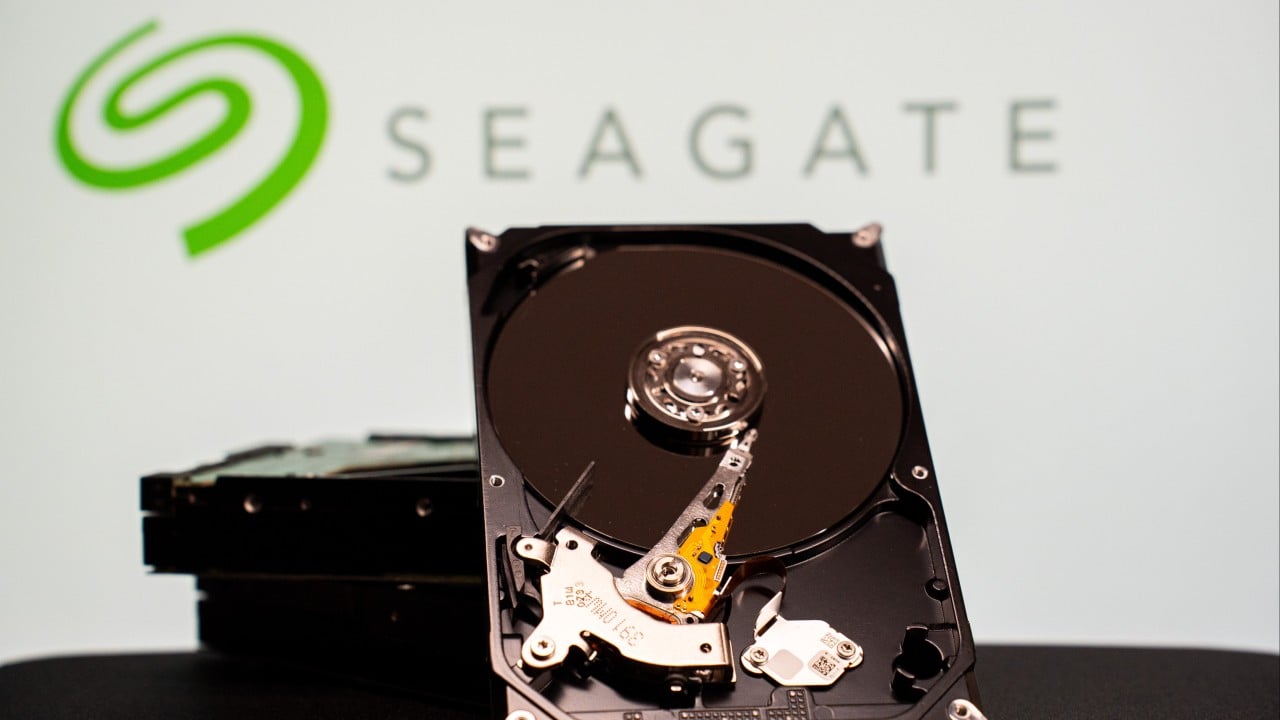
💡AI storage costs to stay high—budget now for Seagate's predicted supercycle
⚡ 30-Second TL;DR
What Changed
Memory price hikes expected as 'new normal' for next few years
Why It Matters
Rising memory prices will increase costs for AI training and inference infrastructure, forcing practitioners to optimize storage usage or seek alternatives. This supercycle could strain data center budgets amid ongoing AI expansion.
What To Do Next
Assess your AI workload's storage needs and explore cost-optimized HDD tiers from Seagate.
Key Points
- •Memory price hikes expected as 'new normal' for next few years
- •AI boom creates unusual storage supercycle, per Seagate CCO Ban-Seng Teh
- •Differs from past cycles of shortages and oversupply
🧠 Deep Insight
Background and context from public sources — not the original article. 9 sources cited.
🔑 Enhanced Key Takeaways
- •Seagate has achieved a technological lead in HAMR (Heat-Assisted Magnetic Recording) commercialization, enabling 40TB+ drive sampling in late 2025 with volume production scaling through early 2026, while competitors like Western Digital are not expected to ramp HAMR volume until late 2026 or 2027[1]
- •Enterprise HDDs maintain a 7:1 price advantage over enterprise SSDs as of 2026, making them the only economically viable solution for AI data lake storage despite SSD alternatives, fundamentally reshaping storage architecture decisions[1]
- •AI data centers are absorbing approximately 70% of high-end DRAM supply in 2026, a dramatic structural inversion from prior cycles, with memory pricing now shifting on an hourly basis as supply remains constrained through 2027[2][4]
- •HDD prices have risen an estimated 50% year-over-year in 2026 due to post-2023 inventory correction caution and supply constraints—a phenomenon rarely seen in computer hardware history[1]
- •The market has bifurcated into roughly 100 top-tier buyers with supply leverage and over 190,000 small and mid-size enterprises competing for remaining inventory, forcing smaller firms to accept hourly pricing volatility[4]
📊 Competitor Analysis▸ Show
| Metric | Seagate | Western Digital | Micron | SanDisk |
|---|---|---|---|---|
| HAMR Technology Status | Volume production scaling early 2026[1] | Not expected until late 2026/2027[1] | N/A | N/A |
| HDD Capacity Roadmap | 40TB sampling late 2025; 50TB by late 2026; 100TB by 2030[1] | 100TB roadmap mentioned; scaling beyond 40TB[3] | N/A | N/A |
| Market Position | Captured lion's share of data lake market[1] | Competitive via ePMR technology (32TB)[1] | Only meeting 50-67% of core customer demand[5] | Supply-constrained; record margins[3] |
| 2025 Stock Performance | 225% return in S&P 500[1] | Bullish case on 100TB roadmap; defensive play[3] | Record profits; strong positioning[3] | Record profits; strong positioning[3] |
🛠️ Technical Deep Dive
- HAMR Technology (Seagate): Heat-Assisted Magnetic Recording enables higher areal density; Seagate's commercialization lead allows 40TB+ drives in volume production as of early 2026[1]
- ePMR Technology (Western Digital): Energy-enhanced PMR reaches 32TB capacities as competitive alternative to HAMR, but lacks volume production scale[1]
- Drive Capacity Standards: 30TB+ drives are the volume standard for data centers as of 2026; 40TB drives represent the next inflection point[1]
- Storage Architecture: Enterprise SSDs positioned as complementary to HDDs in high-performance inference tier rather than replacement; HDDs dominate cold/warm data storage for AI training[1]
- Supply Chain Dynamics: Memory quotes now limited to 1-30 days with pricing finalized at shipment; some contracts lock pricing only when product leaves factory[2]
🔮 Future ImplicationsAI analysis grounded in cited sources
⏳ Timeline
📎 Sources (9)
Factual claims are grounded in the sources below. Forward-looking analysis is AI-generated interpretation.
- markets.financialcontent.com — Finterra 2026 3 3 Seagate Technology Stx the Storage Supercycle and the AI Data Lake Revolution
- avnet.com — 2026 Memory Shortage AI Supercycle
- youtube.com — Watch
- Tom's Hardware — Memory Prices Now Shifting Hourly As Smaller Firms Fight Over Scraps
- businessinsider.com — AI Memory Shortage Supercuycle Stocks to Watch Chip Semiconductor Demand 2026 2
- neowin.net — Thanks to AI Wd and Seagate Ssds Are About to Get Much More Expensive
- investor.wedbush.com — Marketminute 2026 1 9 the AI Storage Supercycle Memory and Storage Stocks Hit Record Highs As Infrastructure Shift Accelerates
- aol.com — AI Memory Supercycle 4 Stocks 203033908
- youtube.com — Watch
Weekly AI Recap
Read this week's curated digest of top AI events →
👉Related Updates
AI-curated news aggregator. All content rights belong to original publishers.
Original source: SCMP Technology ↗
This is a summary, not the original. Read the source, or get the weekly briefing.
Weekly AI briefing
One email a week. Unsubscribe anytime.