Scientific Advisor reveals physics behind The Wandering Earth 2
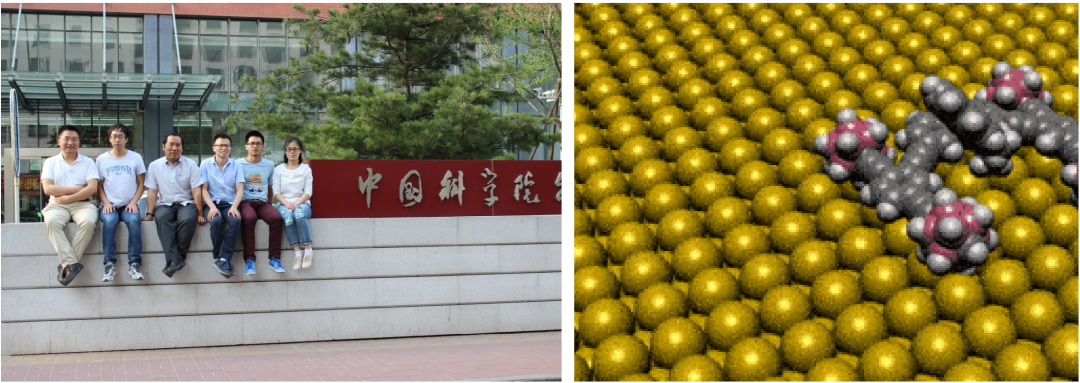
Learn how top scientists collaborate with filmmakers to ground sci-fi in real-world physics and material science.
30-Second TL;DR
What Changed
Scientific advisors bridge the gap between hard physics and cinematic storytelling.
Why It Matters
Demonstrates the growing importance of scientific accuracy in high-budget sci-fi, influencing public perception of emerging materials science and space technology.
What To Do Next
Explore the application of material science simulations in digital twin environments to visualize complex physical constraints.
Key Points
- •Scientific advisors bridge the gap between hard physics and cinematic storytelling.
- •Carbon nanotubes were used as the theoretical basis for the space elevator in the film.
- •The film utilized heavy nuclear fusion as a scientifically plausible explanation for destroying the moon.
- •Real-world research on long-chain carbon nanotubes informs the feasibility of futuristic space infrastructure.
Deep Insight
AI-generated analysis for this event — not the original article.
Enhanced Key Takeaways
- •Liang Wenjie's involvement was part of a broader 'Science Consultant' program initiated by the Chinese film industry to improve the 'hard science fiction' quality of domestic productions.
- •The film's space elevator design was specifically influenced by the 'space tether' concept, requiring calculations that accounted for the Earth's rotation and atmospheric drag at high altitudes.
- •The production team collaborated with the Chinese Academy of Sciences (CAS) to create a 'scientific handbook' for the film, which served as a reference for art directors and prop designers to ensure visual consistency.
- •The depiction of the 'Moon Engines' involved simulating the gravitational impact of lunar destruction, utilizing actual orbital mechanics software to visualize the debris field trajectory.
- •Liang Wenjie emphasized that the role of the advisor was not just to ensure accuracy, but to identify 'scientific aesthetics'—visualizing abstract physics in ways that are both plausible and narratively compelling.
Technical Deep Dive
- Space Elevator Physics: The film utilized the concept of a carbon nanotube-based tether system, requiring a tensile strength exceeding 100 GPa, which currently exceeds the limits of mass-produced materials but aligns with theoretical limits of single-walled carbon nanotubes.
- Nuclear Fusion Propulsion: The 'Planetary Engines' were modeled on the concept of Deuterium-Tritium (D-T) fusion, with the scientific team calculating the necessary energy output to move the Earth's mass, resulting in the 'heavy nuclear fusion' narrative device.
- Orbital Mechanics: The destruction of the moon was simulated using N-body gravitational simulations to determine the dispersal of lunar fragments and the subsequent impact on Earth's tides and climate.
Future ImplicationsAI analysis grounded in cited sources
Timeline
- 2019-02The Wandering Earth is released, establishing the foundation for China's hard sci-fi film industry.
- 2020-11Production begins for The Wandering Earth 2, with scientific advisors integrated into the pre-production phase.
- 2023-01The Wandering Earth 2 is released in theaters, featuring extensive scientific consulting from CAS researchers.
- 2023-01The Three-Body Problem TV series premieres, further cementing the collaboration between CAS scientists and media production.
Weekly AI Recap
Read this week's curated digest of top AI events →
AI-curated news aggregator. All content rights belong to original publishers.
Original source: 虎嗅 ↗
This is a summary, not the original. Read the source, or get the weekly briefing.
The weekly digest
One email a week. Unsubscribe anytime.