Scaling Embodied-AI Founders Through Supply Chains
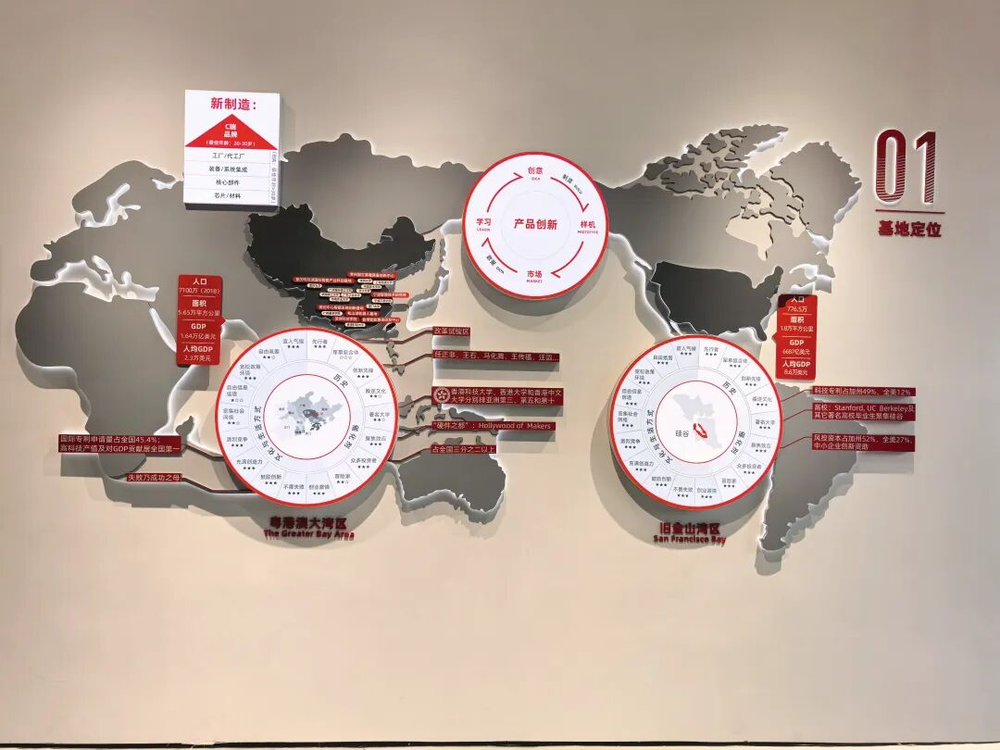
See why embodied-AI startups are shifting from “Demo or die” to “Deploy or die.”
30-Second TL;DR
What Changed
XbotPark and related programs have incubated over 280 hard-tech companies, including four listed companies and 12 unicorns or near-unicorns.
Why It Matters
The model suggests that robotics startups can gain an advantage from integrated talent training, rapid prototyping, and regional manufacturing networks rather than isolated laboratory breakthroughs. For AI founders, deployment speed and supply-chain access may become as important as model capability.
What To Do Next
Map your robotics product's sensor, actuator, and controller suppliers, then run a small-batch deployment pilot before expanding model training.
Key Points
- •XbotPark and related programs have incubated over 280 hard-tech companies, including four listed companies and 12 unicorns or near-unicorns.
- •Embodied intelligence is framed as AI combined with hardware and specific scenarios, spanning homes, factories, logistics, land, water, and air.
- •China's improvements in sensors, lidar, tactile sensing, actuators, controllers, and supply-chain customization are accelerating robotics iteration.
- •The incubation model provides shared prototyping facilities, supplier displays, and on-site engineers so startups can rapidly develop small batches.
- •Li advises investors to prioritize real customer problems, business closure, and deployment instead of following embodied-AI hype.
Deep Insight
AI-generated analysis for this event — not the original article.
Enhanced Key Takeaways
- •Li Zexiang's methodology is deeply rooted in the 'New Engineering Education' (NEE) reform, which he co-initiated at HKUST to bridge the gap between academic research and industrial application by emphasizing project-based learning.
- •The ecosystem leverages the 'Songshan Lake' industrial cluster, which provides a unique geographical advantage by integrating rapid prototyping capabilities with the Pearl River Delta's mature manufacturing supply chain.
- •Beyond robotics, the incubation model has successfully diversified into sectors like smart medical devices, new energy, and advanced manufacturing, demonstrating the scalability of the 'hard-tech' incubation framework.
- •Li Zexiang frequently collaborates with regional governments to establish 'Innovation Centers' that act as local hubs for talent recruitment and policy support, effectively lowering the barrier to entry for student entrepreneurs.
- •The incubation process utilizes a 'mentor-led' approach where successful alumni founders often return to provide technical guidance and investment to new cohorts, creating a self-sustaining knowledge-sharing loop.
Technical Deep Dive
- The incubation model utilizes a modular hardware architecture approach, encouraging startups to use standardized, open-source controller frameworks to reduce time-to-market for initial prototypes.
- Emphasis is placed on 'Full-Stack' integration, where startups are trained to develop both the embedded software (firmware/control algorithms) and the mechanical hardware concurrently to ensure system-level optimization.
- Supply chain integration involves a proprietary database of local component manufacturers, allowing startups to perform 'Design for Manufacturing' (DFM) iterations in days rather than months.
- Deployment strategies focus on 'Edge-First' computing, where AI inference is performed locally on the robot to minimize latency and dependency on cloud connectivity in industrial environments.
Future ImplicationsAI analysis grounded in cited sources
Timeline
- 1999-01Li Zexiang co-founds DJI, establishing the foundational success model for his later incubation efforts.
- 2014-09Li Zexiang, along with colleagues, officially establishes the XbotPark incubation platform in Dongguan.
- 2016-06The 'New Engineering Education' (NEE) program is formalized to systematically train students for hard-tech entrepreneurship.
- 2021-12XbotPark announces the expansion of its incubation network to include more diverse geographic locations and industry verticals.
- 2024-05Li Zexiang publicly emphasizes the pivot toward 'Embodied AI' as the next critical phase for the incubated startup ecosystem.
Weekly AI Recap
Read this week's curated digest of top AI events →
AI-curated news aggregator. All content rights belong to original publishers.
Original source: 虎嗅 ↗
This is a summary, not the original. Read the source, or get the weekly briefing.
The weekly digest
One email a week. Unsubscribe anytime.