Satya Nadella warns enterprises against proprietary AI model risks
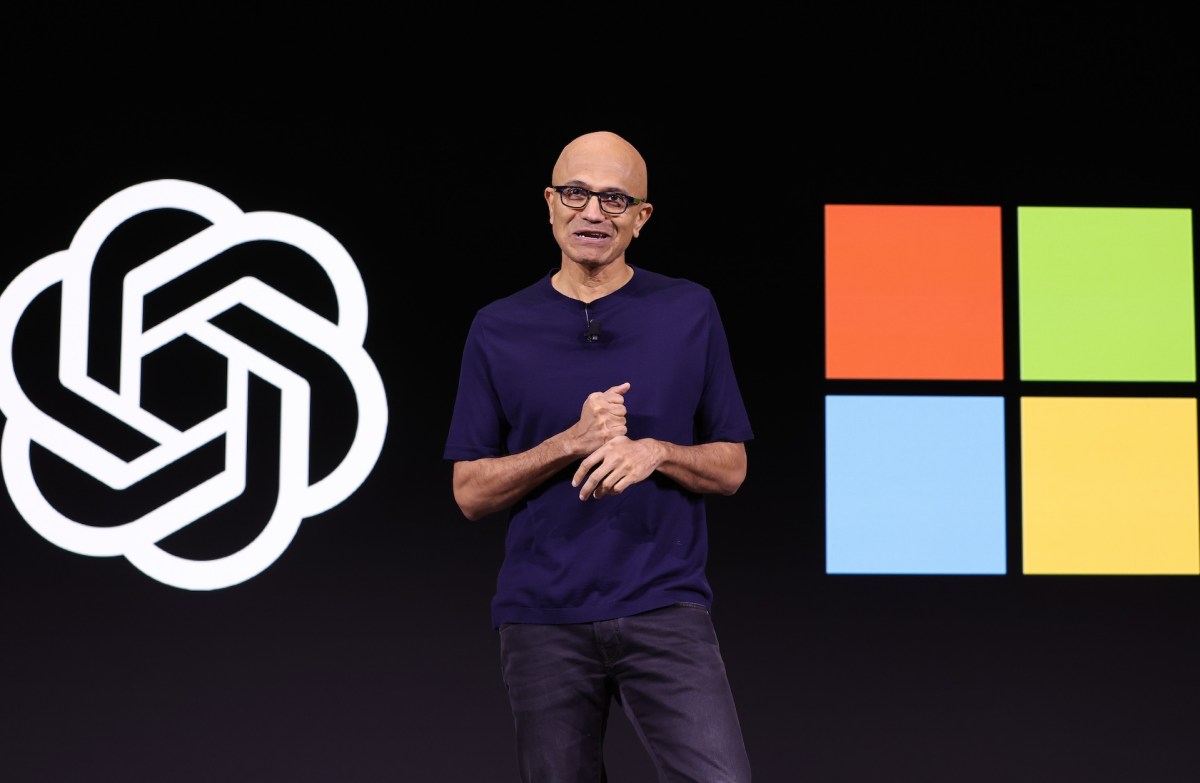
💡Understand Microsoft's strategic pivot on proprietary AI models and what it means for your enterprise architecture.
⚡ 30-Second TL;DR
What Changed
Microsoft CEO Satya Nadella warns against over-reliance on third-party proprietary models.
Why It Matters
This signals a potential shift in Microsoft's enterprise strategy, likely encouraging more hybrid or self-hosted model architectures to mitigate vendor lock-in.
What To Do Next
Audit your current AI stack to identify critical dependencies on proprietary APIs and evaluate open-source alternatives for core workflows.
Key Points
- •Microsoft CEO Satya Nadella warns against over-reliance on third-party proprietary models.
- •Enterprises are cautioned about the strategic risks of using models from providers like OpenAI and Anthropic.
- •The warning suggests a shift in focus toward more diversified or controlled AI deployment strategies.
🧠 Deep Insight
AI-generated analysis for this event — not the original article.
🔑 Enhanced Key Takeaways
- •Nadella's warning aligns with Microsoft's internal 'Small Language Model' (SLM) strategy, emphasizing the deployment of Phi-series models that offer higher cost-efficiency and data sovereignty for edge computing.
- •The strategic pivot reflects growing enterprise concerns regarding 'model drift' and the lack of transparency in black-box proprietary APIs, which can complicate regulatory compliance in sectors like finance and healthcare.
- •Microsoft is actively promoting 'Model-as-a-Service' (MaaS) architectures via Azure AI, allowing enterprises to fine-tune open-weights models rather than relying exclusively on closed-source foundation models.
- •Industry analysts note that this stance serves as a hedge against potential antitrust scrutiny, positioning Microsoft as an enabler of AI diversity rather than a gatekeeper of a single proprietary ecosystem.
- •The warning underscores a shift toward 'hybrid AI' architectures, where enterprises utilize proprietary models for complex reasoning tasks while offloading routine operations to smaller, locally hosted, or open-source models.
📊 Competitor Analysis▸ Show
| Feature | Microsoft (Azure/Phi) | OpenAI (GPT-4/o) | Anthropic (Claude) |
|---|---|---|---|
| Deployment | Hybrid/Edge/Cloud | Cloud API | Cloud API |
| Transparency | High (Open-weights) | Low (Closed) | Low (Closed) |
| Primary Focus | Efficiency/Sovereignty | General Reasoning | Safety/Constitutional AI |
| Cost Model | Consumption/Hosting | Token-based | Token-based |
🛠️ Technical Deep Dive
- Microsoft's Phi-3 and Phi-3.5 architectures utilize a 'textbook-quality' data curation approach, focusing on high-density synthetic data to achieve performance parity with larger models.
- Implementation involves ONNX Runtime and Olive optimization tools, enabling these models to run on consumer-grade hardware or restricted enterprise environments without cloud dependency.
- The shift emphasizes parameter-efficient fine-tuning (PEFT) techniques like LoRA (Low-Rank Adaptation) to allow enterprises to customize models without retraining the entire weight set.
🔮 Future ImplicationsAI analysis grounded in cited sources
⏳ Timeline
Weekly AI Recap
Read this week's curated digest of top AI events →
👉Related Updates


AI-curated news aggregator. All content rights belong to original publishers.
Original source: TechCrunch AI ↗
This is a summary, not the original. Read the source, or get the weekly briefing.
The weekly digest
One email a week. Unsubscribe anytime.