Sand.ai secures $100M+ for autoregressive video models
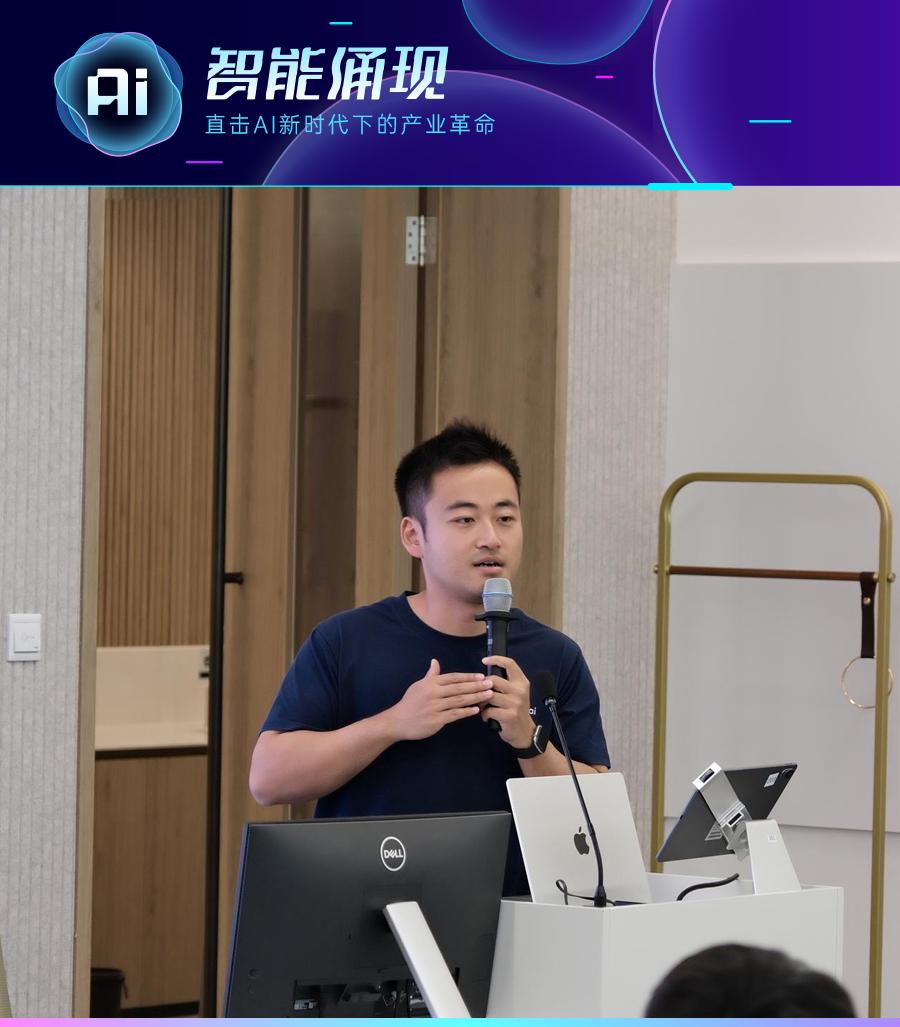
A major funding round for a team betting on autoregressive video models and MoE to redefine world model architectures.
30-Second TL;DR
What Changed
Pioneering autoregressive modeling for video, moving away from pure Diffusion routes.
Why It Matters
Sand.ai's bet on autoregressive video models and MoE architecture challenges the current industry reliance on diffusion models, potentially setting a new standard for efficient, high-fidelity video synthesis.
What To Do Next
Monitor Sand.ai's upcoming open-source MoE video model to benchmark against current SOTA diffusion-based video generators.
Key Points
- •Pioneering autoregressive modeling for video, moving away from pure Diffusion routes.
- •Transitioning to MoE architecture to solve the 'impossible triangle' of cost, speed, and quality.
- •Focusing on 'audio-visual alignment' as a core component of world models.
- •Upcoming model release in Q3 2026 will be open-sourced to the community.
Deep Insight
AI-generated analysis for this event — not the original article.
Enhanced Key Takeaways
- •Sand.ai's founding team includes former senior researchers from ByteDance's AI lab, specifically those who previously worked on the 'MagicVideo' series.
- •The $100 million funding round was led by Sequoia China and Hillhouse Capital, signaling strong institutional backing for the autoregressive video generation paradigm.
- •The company is utilizing a proprietary 'Token-Efficient Video Compression' (TEVC) technique to reduce the sequence length required for autoregressive processing.
- •Sand.ai has established a strategic partnership with major cloud providers to secure H200/B200 GPU clusters specifically for training their MoE-based video models.
- •The upcoming Q3 2026 open-source release will include a 'lightweight' 7B parameter version designed to run on consumer-grade GPUs.
Competitor Analysis
- Sand.ai (MoE)
- Autoregressive MoE
- OpenAI (Sora)
- Diffusion Transformer
- Kling AI
- Diffusion-based
- Luma Dream Machine
- Diffusion-based
- Sand.ai (MoE)
- Yes (Planned Q3 2026)
- OpenAI (Sora)
- No
- Kling AI
- No
- Luma Dream Machine
- No
- Sand.ai (MoE)
- Native Alignment
- OpenAI (Sora)
- Limited
- Kling AI
- Moderate
- Luma Dream Machine
- Moderate
- Sand.ai (MoE)
- Optimized (MoE)
- OpenAI (Sora)
- High
- Kling AI
- Moderate
- Luma Dream Machine
- Moderate
| Feature | Sand.ai (MoE) | OpenAI (Sora) | Kling AI | Luma Dream Machine |
|---|---|---|---|---|
| Architecture | Autoregressive MoE | Diffusion Transformer | Diffusion-based | Diffusion-based |
| Open Source | Yes (Planned Q3 2026) | No | No | No |
| Audio-Visual | Native Alignment | Limited | Moderate | Moderate |
| Inference Cost | Optimized (MoE) | High | Moderate | Moderate |
Technical Deep Dive
- Architecture: Employs a Sparse Mixture-of-Experts (SMoE) layer within the transformer blocks to activate only a subset of parameters per token, reducing FLOPs during inference.
- Tokenization: Uses a 3D-VAE (Variational Autoencoder) to compress video frames into latent tokens, significantly reducing the sequence length compared to pixel-level autoregressive models.
- Training Objective: Implements a multi-modal objective function that jointly optimizes for video frame prediction and audio-visual temporal synchronization.
- Inference Optimization: Utilizes speculative decoding to accelerate autoregressive generation, allowing smaller draft models to predict tokens while the main MoE model verifies them.
Future ImplicationsAI analysis grounded in cited sources
Timeline
- 2025-03Sand.ai founded by Cao Yue and core team.
- 2025-09Completion of Seed round funding and initial prototype of autoregressive video engine.
- 2026-02Successful internal validation of MoE architecture for video sequence generation.
- 2026-06Announcement of $100M+ funding round to scale compute and model development.
Weekly AI Recap
Read this week's curated digest of top AI events →
AI-curated news aggregator. All content rights belong to original publishers.
Original source: 36氪 ↗
This is a summary, not the original. Read the source, or get the weekly briefing.
The weekly digest
One email a week. Unsubscribe anytime.