🐯虎嗅•Stalecollected in 17m
Sand Hill Road Fuels AI Innovation Frenzy
💡Why VCs bet billions on AI bubbles despite crashes—lessons for founders
⚡ 30-Second TL;DR
What Changed
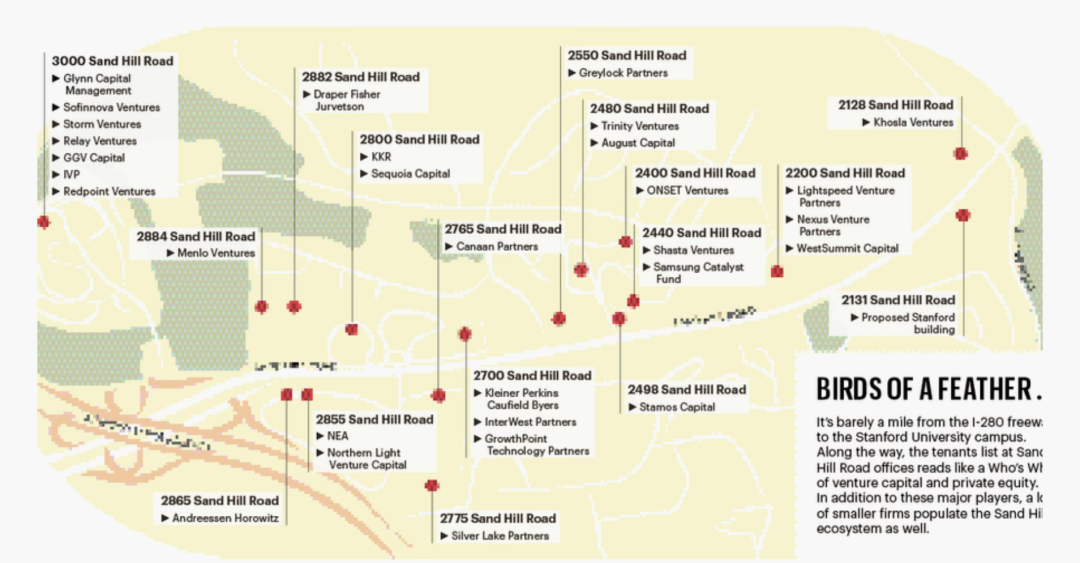
5.6-mile road hosts a16z, KPCB fueling 50 years of tech waves including AI
Why It Matters
Highlights physical hubs' role in AI funding amid remote work; warns of coming AI bubble burst but resilient cycles.
What To Do Next
Map Sand Hill VC networks via Crunchbase for your AI startup's Series A pitch.
Who should care:Founders & Product Leaders
Key Points
- •5.6-mile road hosts a16z, KPCB fueling 50 years of tech waves including AI
- •Stanford's Bayh-Dole enabled patent-to-equity swaps like Google origins
- •VC power law demands 100x returns; AI firms suck up $300B dry powder
- •Post-2021 shift: traditional SaaS freezes, AI bets intensify FOMO
🧠 Deep Insight
AI-generated analysis for this event.
🔑 Enhanced Key Takeaways
- •The 'Sand Hill Road effect' is increasingly challenged by the rise of distributed AI hubs in Austin, Miami, and London, as remote-first collaboration models reduce the necessity of physical proximity to the epicenter.
- •Recent SEC filings indicate a shift in VC allocation strategies, where firms are increasingly prioritizing 'compute-heavy' infrastructure investments over pure-play application-layer startups to capture value in the AI supply chain.
- •The concentration of capital on Sand Hill Road has led to a 'valuation decoupling,' where AI startups with minimal revenue are commanding premiums based on proprietary data access and GPU cluster ownership rather than traditional SaaS metrics.
🔮 Future ImplicationsAI analysis grounded in cited sources
VC funding for non-AI SaaS will drop below 20% of total Sand Hill Road deployment by 2027.
The current capital allocation trend shows a systemic pivot toward AI-native infrastructure, leaving traditional software models with significantly reduced liquidity.
Sand Hill Road firms will increasingly adopt 'Vertical Integration' strategies.
To secure returns in a crowded market, VCs are moving beyond equity to directly financing the physical infrastructure, such as data centers and energy grids, required for AI scaling.
⏳ Timeline
1972-01
Kleiner Perkins and Mayfield Fund establish offices on Sand Hill Road, initiating the cluster effect.
1980-12
Passage of the Bayh-Dole Act, allowing universities to retain rights to inventions funded by federal research.
1998-09
Google is incorporated following early investment from Sand Hill Road venture capitalists.
2015-12
OpenAI is founded, eventually becoming a primary beneficiary of the Sand Hill Road AI funding surge.
2023-01
Generative AI investment cycle accelerates, leading to record-breaking capital concentration in Silicon Valley.
📰
Weekly AI Recap
Read this week's curated digest of top AI events →
👉Related Updates

AI-curated news aggregator. All content rights belong to original publishers.
Original source: 虎嗅 ↗