Samsung SmartThings Launches Elderly Care Features
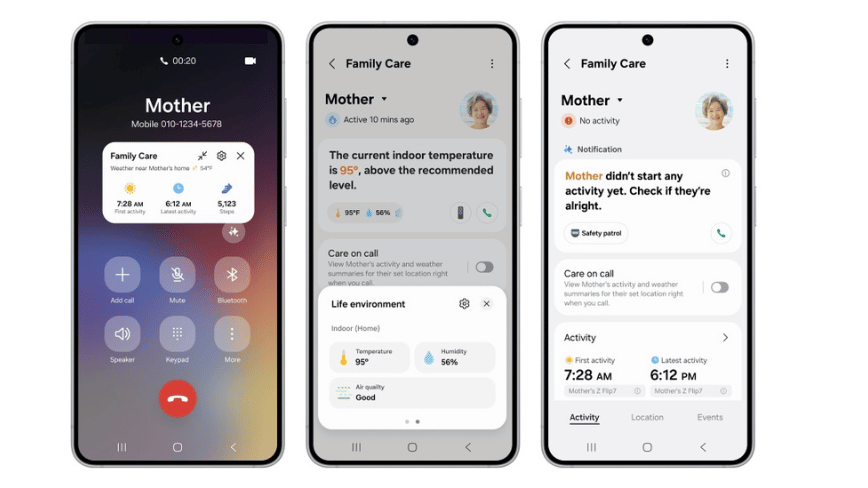
💡Samsung's AI elderly care via smart home devices shows new embodied AI apps for health monitoring
⚡ 30-Second TL;DR
What Changed
Fall detection using robot vacuum cameras
Why It Matters
This positions Samsung as a leader in AI-driven smart home health monitoring, potentially expanding into eldercare markets and influencing competitors to integrate similar AI wellness features.
What To Do Next
Integrate SmartThings API to test Galaxy AI routines for custom eldercare automation in your IoT projects.
Key Points
- •Fall detection using robot vacuum cameras
- •Cognitive decline screening via behavioral patterns
- •Galaxy AI-powered routine creation
- •Millimetre-wave ambient sensing with local processing
- •Environmental safety alerts and activity tracking
🧠 Deep Insight
AI-generated analysis for this event — not the original article.
🔑 Enhanced Key Takeaways
- •The system utilizes Samsung's 'SmartThings Home Care' API, which now supports cross-device data fusion to reduce false positives in fall detection by correlating vacuum camera imagery with motion sensor triggers.
- •Data privacy is managed through a 'Local-First' architecture where behavioral pattern analysis for cognitive screening is processed on the SmartThings Hub (v4 or later) rather than the cloud, complying with GDPR and HIPAA-adjacent health data standards.
- •The integration includes a 'Caregiver Dashboard' that provides actionable insights rather than raw data, allowing family members to set custom thresholds for 'normal' activity levels based on historical baseline data.
📊 Competitor Analysis▸ Show
| Feature | Samsung SmartThings Care | Amazon Alexa Together | Google Nest Aware |
|---|---|---|---|
| Primary Hardware | Robot Vacuums/Hubs | Echo Devices | Nest Cams/Speakers |
| Fall Detection | Vision-based (Vacuum) | Acoustic-based | Vision/Audio-based |
| Pricing Model | Included in SmartThings | Subscription ($19.99/mo) | Subscription ($8-$15/mo) |
| Data Processing | Local (Edge) | Cloud-based | Cloud-based |
🛠️ Technical Deep Dive
- Millimetre-Wave Sensing: Utilizes 60GHz radar modules integrated into newer SmartThings Hubs to detect micro-movements (breathing/heart rate) without requiring cameras in private spaces.
- Galaxy AI Integration: Employs a lightweight Large Language Model (LLM) optimized for edge devices to interpret behavioral anomalies (e.g., 'unusual kitchen activity at 3 AM') and generate natural language summaries for caregivers.
- Vision Processing: Robot vacuum cameras utilize onboard NPU (Neural Processing Unit) to perform pose estimation, ensuring raw video frames are discarded immediately after the fall event is confirmed.
🔮 Future ImplicationsAI analysis grounded in cited sources
⏳ Timeline
Weekly AI Recap
Read this week's curated digest of top AI events →
👉Related Updates


AI-curated news aggregator. All content rights belong to original publishers.
Original source: The Next Web (TNW) ↗
This is a summary, not the original. Read the source, or get the weekly briefing.
The weekly digest
One email a week. Unsubscribe anytime.