Samsung Shrinks China’s Offline Store Network
Samsung’s retail pullback could reshape device access and partnership channels for AI products in China.
30-Second TL;DR
What Changed
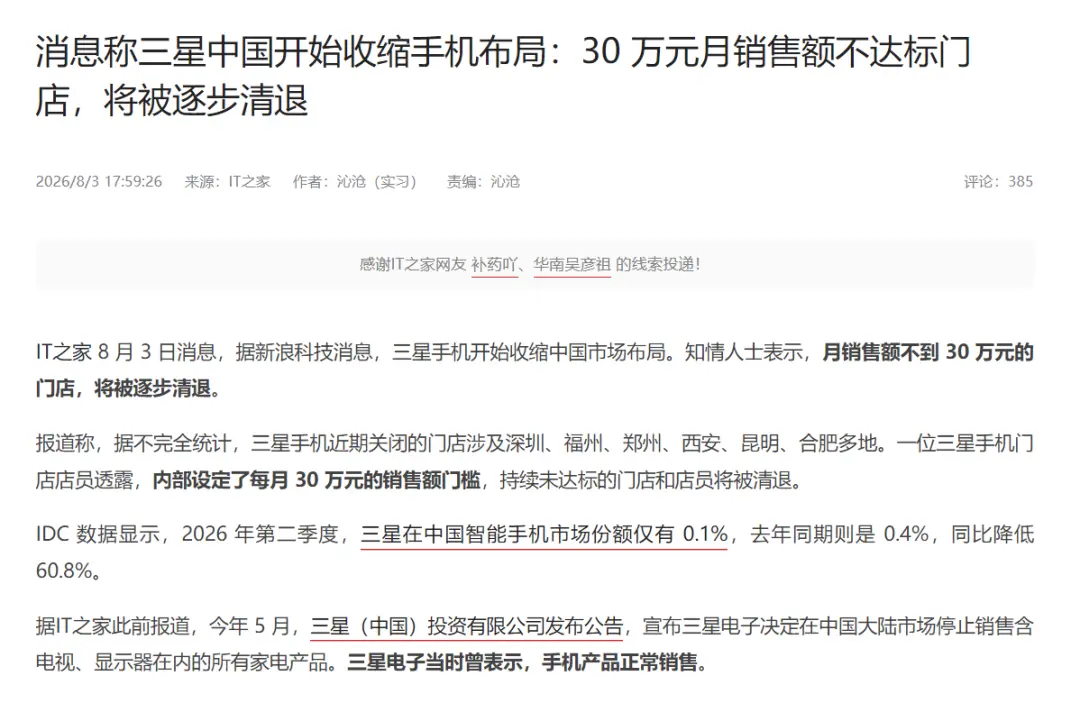
Samsung is reportedly reducing its offline smartphone store presence in multiple Chinese cities.
Why It Matters
For technology companies and enterprise partners, the move signals a possible shift toward more selective retail coverage and greater reliance on online channels in China. It may also affect local device demonstrations, support access, and partnership opportunities.
What To Do Next
If your AI product depends on Samsung distribution or device partnerships in China, map alternative online and regional channel partners before the next sales cycle.
Key Points
- •Samsung is reportedly reducing its offline smartphone store presence in multiple Chinese cities.
- •Affected locations include Shenzhen, Fuzhou, Zhengzhou, Xi’an, Kunming, and Hefei.
- •The reported closure threshold is monthly sales below RMB 300,000.
- •The development suggests continued pressure on Samsung’s smartphone retail business in China.
Deep Insight
AI-generated analysis for this event — not the original article.
Enhanced Key Takeaways
- •Samsung's market share in China has plummeted from over 20% in 2013 to consistently below 1% in recent years, forcing a strategic pivot toward premium-only retail experiences.
- •The store closures are part of a broader 'efficiency-first' retail strategy that prioritizes high-traffic flagship experience centers in Tier-1 cities over expansive, low-performing regional outlets.
- •Local Chinese competitors like Xiaomi, OPPO, and vivo have successfully utilized O2O (Online-to-Offline) integration and aggressive channel subsidies, which Samsung's traditional retail model has struggled to match.
- •The RMB 300,000 monthly sales threshold is reportedly part of a 'Retail Optimization Program' aimed at reducing operational overhead and inventory carrying costs in a saturated market.
- •Samsung is increasingly shifting its focus toward the foldable smartphone segment (Galaxy Z series) in China, aiming to capture the high-end niche market rather than competing on volume in the mid-range sector.
Competitor Analysis
- Samsung (China)
- Premium/Niche
- Xiaomi
- Mass Market/AIoT
- Huawei
- Premium/Ecosystem
- OPPO/vivo
- Mid-to-High/Offline
- Samsung (China)
- Shrinking/Consolidating
- Xiaomi
- Extensive/Omnichannel
- Huawei
- Expanding/Flagship
- OPPO/vivo
- Massive/Deep Penetration
- Samsung (China)
- High-End (Foldables)
- Xiaomi
- Value-for-Money
- Huawei
- Premium/Tech-Led
- OPPO/vivo
- Mid-Range/Design-Led
| Feature/Metric | Samsung (China) | Xiaomi | Huawei | OPPO/vivo |
|---|---|---|---|---|
| Market Strategy | Premium/Niche | Mass Market/AIoT | Premium/Ecosystem | Mid-to-High/Offline |
| Retail Presence | Shrinking/Consolidating | Extensive/Omnichannel | Expanding/Flagship | Massive/Deep Penetration |
| Pricing Focus | High-End (Foldables) | Value-for-Money | Premium/Tech-Led | Mid-Range/Design-Led |
Future ImplicationsAI analysis grounded in cited sources
Timeline
- 2013-01Samsung reaches its peak market share in China, leading the smartphone sector.
- 2016-10Samsung begins losing significant market share following the Galaxy Note 7 battery incidents.
- 2019-10Samsung shuts down its last remaining smartphone manufacturing plant in China (Huizhou).
- 2023-05Samsung announces a renewed focus on the Chinese market centered on foldable technology and premium services.
- 2026-08Reports emerge regarding the systematic closure of underperforming offline retail stores across multiple Chinese provinces.
Weekly AI Recap
Read this week's curated digest of top AI events →
Related Updates


AI-curated news aggregator. All content rights belong to original publishers.
Original source: cnBeta (Full RSS) ↗
This is a summary, not the original. Read the source, or get the weekly briefing.
The weekly digest
One email a week. Unsubscribe anytime.