Sakura Internet and TEPCO Discuss AI Power Demand
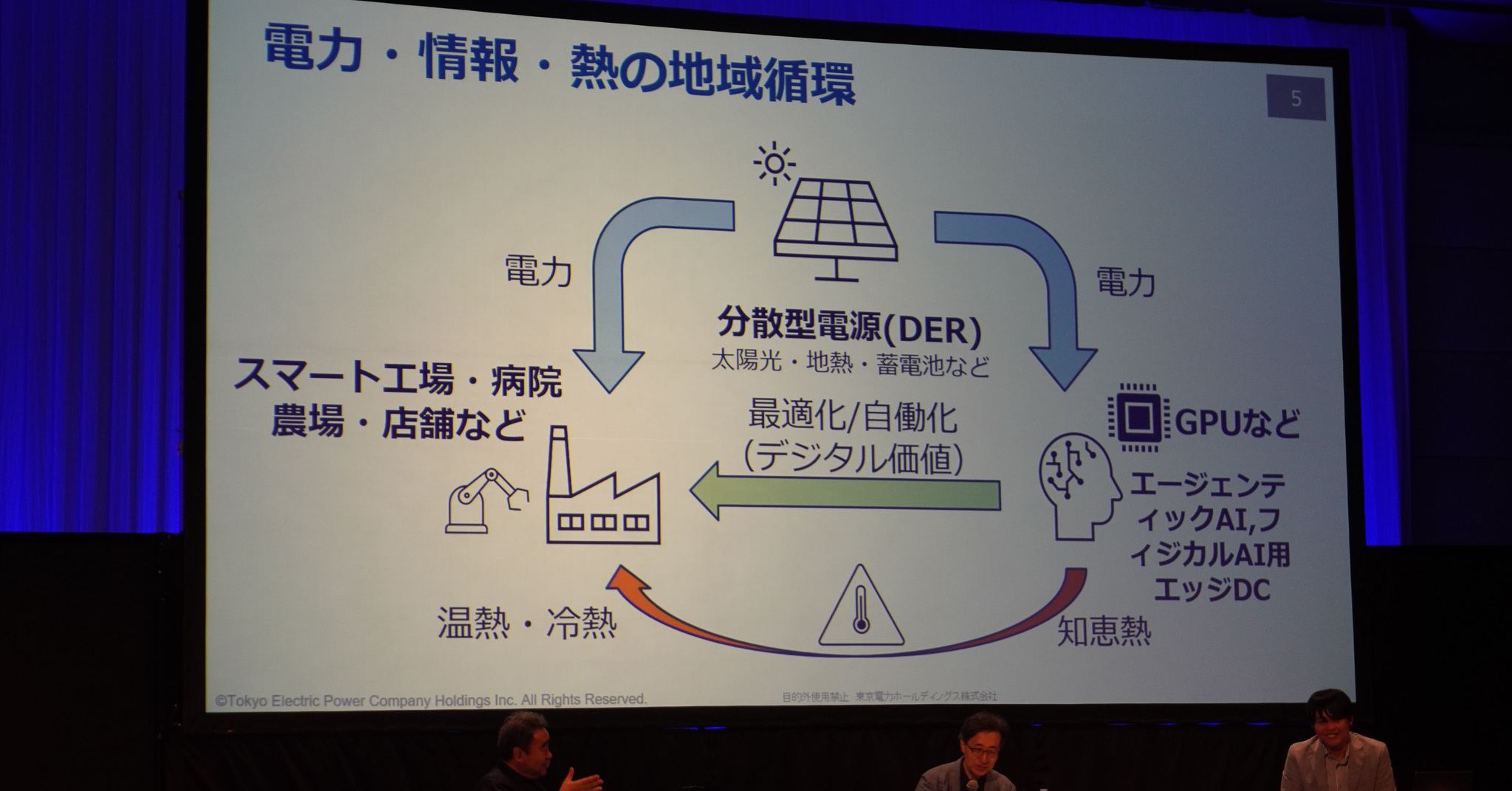
💡Learn how Japanese tech leaders are solving the AI power crisis through grid-integrated data center strategies.
⚡ 30-Second TL;DR
What Changed
AI infrastructure expansion is creating unprecedented pressure on existing power grids.
Why It Matters
This collaboration signals a growing trend where data center operators must partner directly with utility companies to ensure sustainable AI scaling. It may lead to new energy-efficient infrastructure standards for Japanese AI providers.
What To Do Next
If you are building large-scale AI infrastructure in Japan, evaluate your energy procurement strategy and look for partnerships with local grid operators to ensure long-term power stability.
Key Points
- •AI infrastructure expansion is creating unprecedented pressure on existing power grids.
- •Sakura Internet and TEPCO are exploring 'Watt-Bit' coordination to align data processing with energy availability.
- •The discussion highlights the shift toward energy-aware data center architecture in Japan.
🧠 Deep Insight
Background and context from public sources — not the original article. 19 sources cited.
🔑 Enhanced Key Takeaways
- •The 'Watt-Bit Collaboration' is a government-convened advisory body in Japan that aims to strategically redistribute compute capacity from urban centers to regions with abundant renewable energy and available grid capacity, such as Hokkaido, Tohoku, Chubu, and Kyushu.
- •Sakura Internet has significantly invested in high-performance computing, launching its 'Koukaryoku' generative AI cloud services in January 2024, which utilize NVIDIA H100 and H200 GPUs to address the escalating demand for AI workloads.
- •TEPCO Power Grid (TEPCO PG) is undertaking substantial grid reinforcement, including a ¥200 billion investment in northwestern Chiba prefecture and an additional ¥220 billion for distribution network enhancements, alongside plans to develop data centers adjacent to the Kashiwazaki-Kariwa nuclear power plant to secure stable power for AI.
- •Japan's government initiated a program in May 2026 to fund the development and testing of low-carbon technologies for data centers, offering up to JPY500 million (US$3.2 million) in subsidies for projects spanning fiscal years 2026 through 2029.
- •The global electricity demand from data centers is projected to more than double by 2030, reaching approximately 945 terawatt-hours, a figure exceeding Japan's current total annual electricity consumption, underscoring the critical need for energy optimization.
🛠️ Technical Deep Dive
- 'Watt-Bit' integration focuses on optimizing electricity supply and demand by dynamically coordinating data processing (bits) with energy availability (watts), potentially through workload shifting between geographically dispersed data centers.
- TEPCO and Hitachi have demonstrated successful grid-linked energy management, enabling the shifting of computing workloads across data centers in different regions (e.g., Tokyo and Kanagawa Prefecture) to efficiently utilize local renewable energy sources and provide grid stability.
- Sakura Internet's Ishikari Data Center employs direct liquid cooling (DLC) systems, which are designed to reduce cooling power consumption by directly targeting high-heat server components with cold water, thereby also increasing GPU server density from two to up to five units per rack.
- Modern AI-optimized servers, particularly those equipped with high-end GPUs like NVIDIA H100/H200, exhibit significantly higher power consumption (700-1,200 watts per chip) compared to traditional CPUs (150-200 watts), necessitating advanced cooling and power delivery solutions.
- Japan's strategy for urban data centers involves developing smaller, high-density facilities that incorporate advanced power architectures such as ±400V DC distribution, parallel UPS systems, silicon carbide (SiC) power electronics, and solid-state transformers (SSTs) to enhance efficiency and optimize space.
- The University of Tokyo and Fujitsu are conducting trials as part of the Watt-Bit Collaboration Project to verify inter-regional workload shifting between data centers, aiming to balance electricity supply and demand.
🔮 Future ImplicationsAI analysis grounded in cited sources
⏳ Timeline
📎 Sources (19)
Factual claims are grounded in the sources below. Forward-looking analysis is AI-generated interpretation.
Weekly AI Recap
Read this week's curated digest of top AI events →
👉Related Updates
AI-curated news aggregator. All content rights belong to original publishers.
Original source: ITmedia AI+ (日本) ↗
This is a summary, not the original. Read the source, or get the weekly briefing.
Weekly AI briefing
One email a week. Unsubscribe anytime.