⚛️Ars Technica•Freshcollected in 79m
Russia's Falcon 9 rival: Grasshopper-style tests set for 2028
💡Reusable rocket tech is key to the future of space-based AI infrastructure and global connectivity.
⚡ 30-Second TL;DR
What Changed
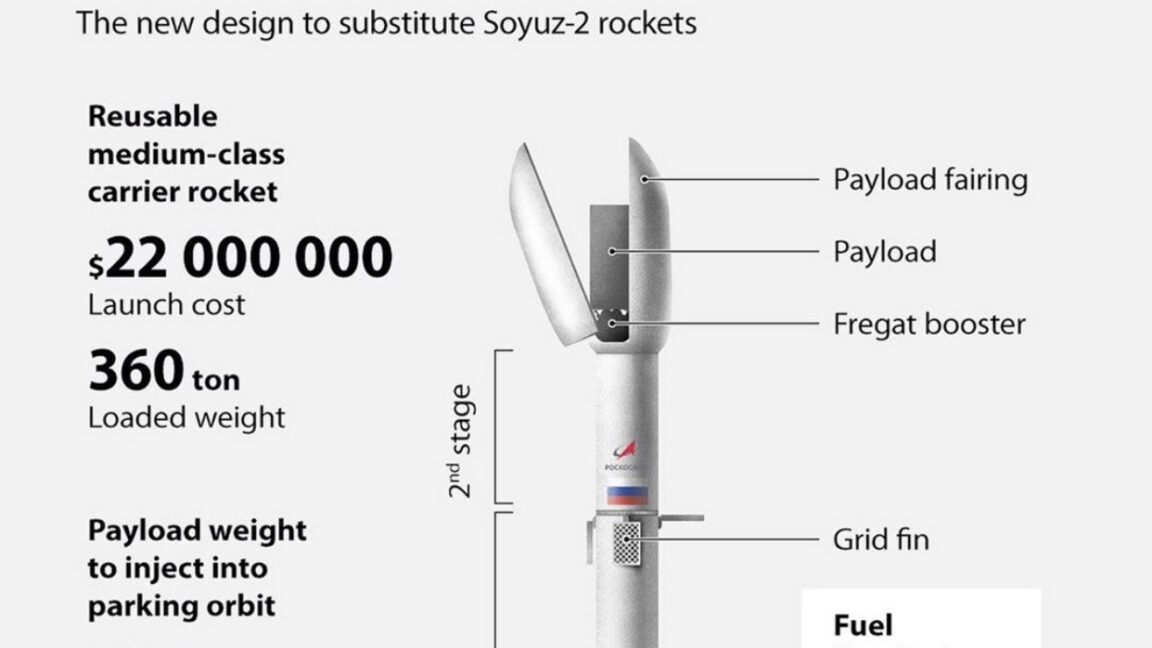
Russia aims to develop a reusable rocket system
Why It Matters
The development of reusable launch vehicles is critical for lowering the cost of space-based infrastructure, which directly impacts satellite-based AI and edge computing deployments.
What To Do Next
Monitor the progress of VTVL control systems, as these autonomous landing algorithms are highly relevant to advanced robotics and drone navigation.
Who should care:Developers & AI Engineers
Key Points
- •Russia aims to develop a reusable rocket system
- •Testing phase modeled after SpaceX's early Grasshopper trials
- •Timeline for initial flight testing is currently set for 2028
🧠 Deep Insight
AI-generated analysis for this event.
🔑 Enhanced Key Takeaways
- •The program is reportedly being spearheaded by Roscosmos in collaboration with the Makeyev Rocket Design Bureau, shifting away from previous reliance on the Khrunichev Center for this specific architecture.
- •The vehicle, internally referred to as 'Amur-SPG' (or a derivative thereof), is designed to utilize liquefied natural gas (LNG) and liquid oxygen as propellants, mirroring the fuel choice of SpaceX's Starship rather than the RP-1 used by Falcon 9.
- •Russian engineers are focusing on a grid fin control system similar to SpaceX's design, though they are reportedly exploring alternative hydraulic-electric hybrid actuators to handle extreme thermal loads during atmospheric reentry.
- •The 2028 timeline follows significant budget restructuring within the Russian federal space program, which previously prioritized the development of the Angara launch vehicle family over reusable technologies.
- •Ground testing facilities at the Vostochny Cosmodrome are currently undergoing upgrades to accommodate vertical landing pad infrastructure, a prerequisite for the Grasshopper-style flight trials.
📊 Competitor Analysis▸ Show
| Feature | Russia (Amur-SPG) | SpaceX (Falcon 9) | Rocket Lab (Neutron) |
|---|---|---|---|
| Propellant | LNG/LOX | RP-1/LOX | LNG/LOX |
| Reusability | Vertical Landing | Vertical Landing | Vertical Landing |
| Status | Development (2028) | Operational | Operational |
| Payload (LEO) | ~10.5 Tons | ~22.8 Tons | ~13 Tons |
🛠️ Technical Deep Dive
- Propulsion: The vehicle utilizes a staged combustion cycle engine optimized for methane-based fuel to improve reusability by reducing soot accumulation in the engine bell.
- Landing Legs: Design specifications indicate a four-leg deployment system utilizing carbon-fiber reinforced polymers to minimize mass while maintaining structural integrity during high-velocity touchdown.
- Guidance: The system incorporates a proprietary inertial navigation unit integrated with real-time GNSS correction, designed to operate in high-interference environments.
- Thermal Protection: The base heat shield utilizes an ablative composite material, though researchers are testing reusable ceramic tiles for the engine section to extend the service life between flights.
🔮 Future ImplicationsAI analysis grounded in cited sources
Russia will struggle to achieve rapid turnaround times comparable to SpaceX.
The current infrastructure at Vostochny lacks the automated refurbishment facilities and high-cadence launch logistics necessary for rapid reuse.
The Amur-SPG program will face significant supply chain constraints.
Ongoing international sanctions restrict access to high-end radiation-hardened microelectronics and advanced composite manufacturing equipment required for modern reusable rockets.
⏳ Timeline
2020-10
Roscosmos signs the initial design contract for the Amur-LNG reusable rocket.
2022-02
Development slows significantly following the onset of international sanctions impacting aerospace procurement.
2024-05
Roscosmos announces a strategic pivot to prioritize reusable methane-based launch systems.
2025-11
Successful static fire testing of the RD-0169 methane engine prototype.
📰
Weekly AI Recap
Read this week's curated digest of top AI events →
👉Related Updates

AI-curated news aggregator. All content rights belong to original publishers.
Original source: Ars Technica ↗