⚛️Ars Technica•Freshcollected in 71m
Pentagon's Space Development Agency faces deployment delays
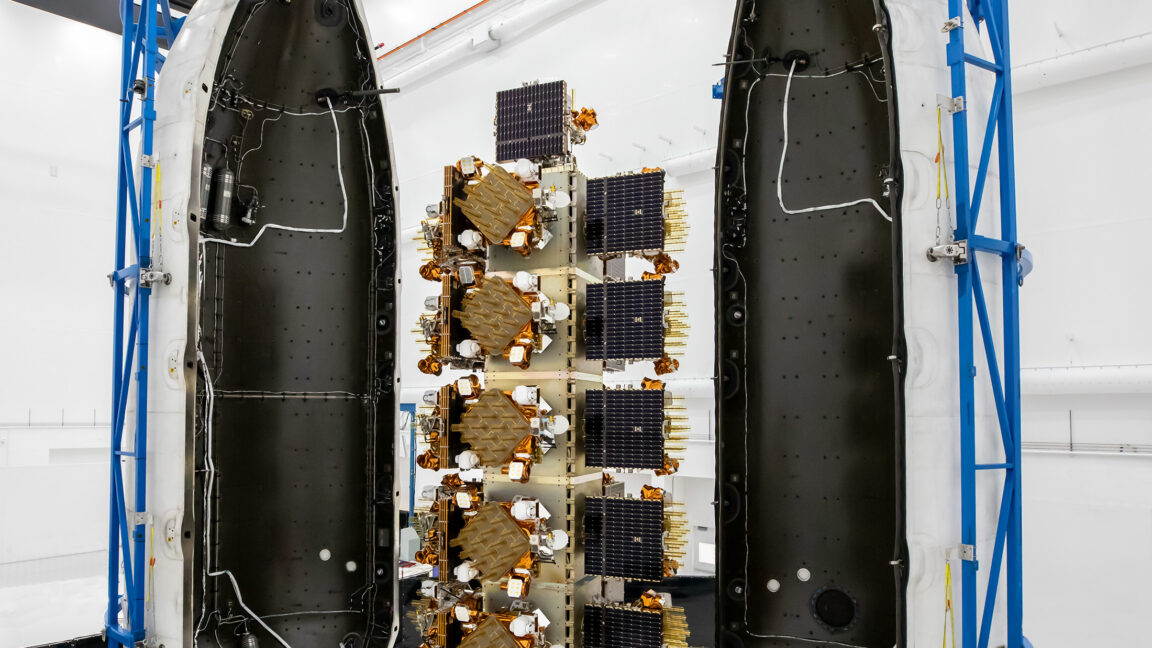
💡Understand the infrastructure bottlenecks affecting critical defense AI satellite deployments.
⚡ 30-Second TL;DR
What Changed
SDA is failing to keep pace with urgent operational requirements
Why It Matters
Delays in space-based defense systems could impact the integration of AI-driven satellite tracking and response networks.
What To Do Next
Monitor SDA procurement updates to identify potential opportunities for AI-based satellite data processing contracts.
Who should care:Enterprise & Security Teams
Key Points
- •SDA is failing to keep pace with urgent operational requirements
- •Operation Epic Fury highlights daily missile threats
- •Defense infrastructure deployment speed is under scrutiny
🧠 Deep Insight
AI-generated analysis for this event.
🔑 Enhanced Key Takeaways
- •The delays are primarily attributed to supply chain bottlenecks in the production of optical inter-satellite links (OISLs) required for the Proliferated Warfighter Space Architecture (PWSA).
- •Internal Pentagon audits have identified that the SDA's 'spiral development' model is struggling to integrate legacy ground control systems with new low-Earth orbit (LEO) satellite constellations.
- •Operation Epic Fury has revealed a critical shortfall in the agency's ability to achieve 'sensor-to-shooter' latency targets under 30 seconds in contested environments.
- •Congressional oversight committees have threatened to withhold Tranche 2 funding unless the SDA demonstrates a successful orbital demonstration of the mesh networking capability by Q4 2026.
- •The SDA has shifted its procurement strategy to include more commercial off-the-shelf (COTS) components to mitigate the reliance on specialized radiation-hardened processors that have faced significant lead-time increases.
📊 Competitor Analysis▸ Show
| Feature | Space Development Agency (PWSA) | Commercial LEO Constellations (e.g., Starlink/Kuiper) | Traditional GEO Defense Satellites |
|---|---|---|---|
| Primary Mission | Missile Warning/Tracking | Broadband/Communications | Strategic Intelligence |
| Latency | Ultra-Low (LEO Mesh) | Low (LEO) | High (GEO) |
| Resilience | High (Proliferated) | Moderate | Low (Single Point of Failure) |
| Deployment Speed | Rapid (Spiral) | Very Rapid | Slow (Multi-year) |
🛠️ Technical Deep Dive
- Architecture: Proliferated Warfighter Space Architecture (PWSA) utilizing a mesh network of satellites in LEO.
- Inter-Satellite Links: Optical inter-satellite links (OISLs) operating at 1550nm wavelength for high-bandwidth, low-probability-of-intercept communication.
- Sensor Payload: Wide-field-of-view (WFOV) infrared sensors for missile tracking and medium-field-of-view (MFOV) sensors for fire control.
- Processing: Transitioning to software-defined payloads to allow for on-orbit updates to signal processing algorithms.
- Networking: Implementation of Space-based Battle Management, Command, and Control (BMC2) nodes to automate data fusion.
🔮 Future ImplicationsAI analysis grounded in cited sources
SDA will pivot to a 'Buy-and-Integrate' model for Tranche 3.
Persistent delays in custom hardware development are forcing the agency to prioritize commercial satellite buses over bespoke defense-grade platforms.
Budget sequestration risks for FY2027.
Failure to meet deployment milestones for the Tranche 1 constellation has eroded legislative confidence, making future funding increases unlikely.
⏳ Timeline
2019-03
Space Development Agency officially established by the Department of Defense.
2022-01
SDA awards initial contracts for Tranche 0 of the Proliferated Warfighter Space Architecture.
2023-04
Successful launch of the first Tranche 0 demonstration satellites.
2025-09
SDA announces initial operational capability (IOC) delays for Tranche 1 due to integration challenges.
📰
Weekly AI Recap
Read this week's curated digest of top AI events →
👉Related Updates


AI-curated news aggregator. All content rights belong to original publishers.
Original source: Ars Technica ↗