Rumor Claims Alibaba Managers Face Hiring Blacklist
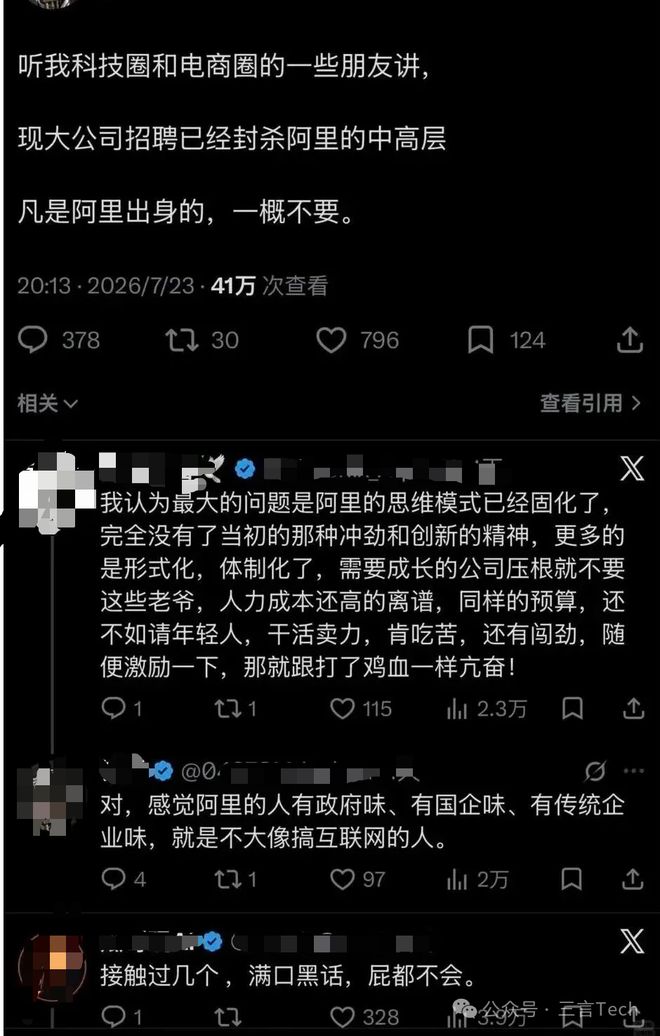
A rumor about Alibaba hiring bans could signal broader shifts in tech talent mobility—if verified.
30-Second TL;DR
What Changed
The alleged hiring restriction reportedly targets Alibaba's mid- and senior-level employees.
Why It Matters
If confirmed, such a hiring bias could affect executive mobility across China's technology sector and make companies more cautious about evaluating candidates based on employer history. Because the claim is unverified, practitioners should avoid treating it as evidence of a formal industry-wide policy.
What To Do Next
Review your hiring rubric and remove employer-name filters so AI candidates are evaluated on measurable engineering, research, and leadership outcomes.
Key Points
- •The alleged hiring restriction reportedly targets Alibaba's mid- and senior-level employees.
- •The claim says candidates with Alibaba backgrounds are being rejected across major companies.
- •The information comes from unnamed technology and e-commerce industry contacts.
- •No company, recruiter, or official employment policy was identified in the report.
Deep Insight
AI-generated analysis for this event — not the original article.
Enhanced Key Takeaways
- •The phenomenon is often referred to in Chinese tech circles as the 'Alibaba Alumni Stigma,' where former employees are perceived as having a rigid 'corporate culture' that does not translate well to smaller, more agile startups.
- •Industry analysts suggest this bias stems from the 'Ali-flavor' (Ali-wei), a term describing a specific management style characterized by heavy emphasis on PPT presentations, complex internal processes, and top-down reporting structures.
- •Data from Chinese recruitment platforms indicates that while senior Alibaba talent remains highly sought after for specific roles, there is a measurable 'salary premium' decline for mid-level managers transitioning to non-tech sectors.
- •Some HR experts argue that this 'blacklist' is actually a form of 'cultural fit' filtering, as companies fear that former Alibaba employees may struggle to adapt to environments lacking the massive resource support Alibaba provides.
- •The rumor gained significant traction following a broader industry trend of 'de-Ali-fication' (qu-Ali-hua), where companies actively avoid hiring from a single dominant firm to prevent internal cultural homogenization.
Future ImplicationsAI analysis grounded in cited sources
Timeline
- 2019-01Alibaba initiates 'New Retail' organizational restructuring, leading to significant internal personnel shifts.
- 2021-04Alibaba receives a record 18.2 billion yuan antitrust fine, triggering a period of intense internal scrutiny and management turnover.
- 2023-03Alibaba announces the '1+6+N' organizational change, decentralizing business units and increasing the number of former employees entering the job market.
- 2024-09Reports emerge on Chinese social media regarding the difficulty of 'Ali-alumni' finding roles in smaller, non-tech firms.
Weekly AI Recap
Read this week's curated digest of top AI events →
Related Updates
AI-curated news aggregator. All content rights belong to original publishers.
Original source: cnBeta (Full RSS) ↗
This is a summary, not the original. Read the source, or get the weekly briefing.
The weekly digest
One email a week. Unsubscribe anytime.