Robot Grads Lag as Jobs Shift to Embodied AI
💡Embodied AI education shift creates urgent upskilling needs for robot devs
⚡ 30-Second TL;DR
What Changed
Vocational curricula cover basics like offline programming but miss fault diagnosis/PLC integration.
Why It Matters
Signals robotics education pivot to embodied AI, pressuring vocational programs to upgrade or risk irrelevance. Boosts demand for composite skills in perception-AI integration.
What To Do Next
Enroll in Tsinghua's embodied AI courses or replicate their hardware projects on GitHub.
Key Points
- •Vocational curricula cover basics like offline programming but miss fault diagnosis/PLC integration.
- •Tsinghua's new institute focuses on robot perception, execution, autonomous decision-making.
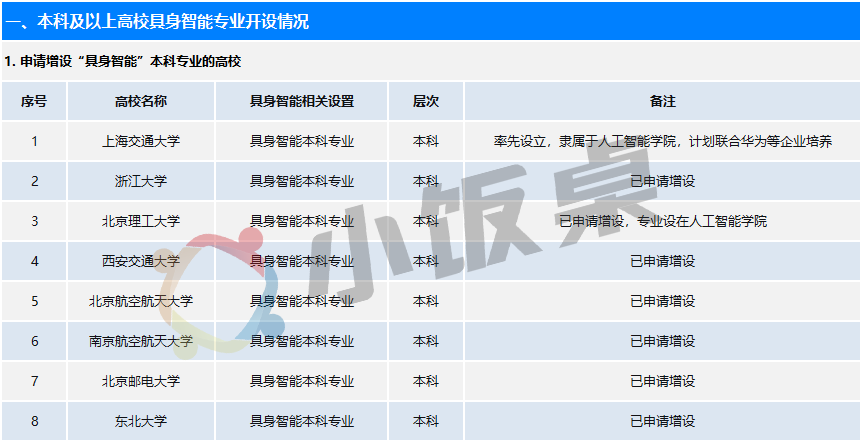
- •Shanghai Jiao Tong builds embodied AI courses with hardware labs and industry projects.
- •Industry shifts to AI-driven adaptive robots over static automation.
🧠 Deep Insight
Background and context from public sources — not the original article. 6 sources cited.
🔑 Enhanced Key Takeaways
- •China's embodied AI robotics sector generated approximately 40% revenue growth in Beijing alone during the first half of 2025, with the region accounting for roughly one-third of national humanoid robotics revenue, indicating rapid commercialization beyond academic initiatives[5].
- •The National and Local Co-built Embodied Artificial Intelligence Robotics Innovation Center (HUMANOID) launched at the 2025 World Artificial Intelligence Conference with central ministry and provincial government backing, establishing dedicated funding channels and national research hubs to accelerate humanoid robotics development[5].
- •China's robotics policy documents identify specific technological bottlenecks requiring breakthrough solutions: motion planning, cognitive AI, bionic sensing, and dexterous control systems, reflecting a structured national strategy beyond university-level curriculum reforms[5].
- •Major technology companies including Huawei and UBTECH are treating humanoid robotics as strategic extensions of core AI and smart hardware operations rather than speculative ventures, with Huawei deploying 5G-A humanoid robots addressing multi-agent coordination challenges[5].
🛠️ Technical Deep Dive
Embodied Intelligence Definition
AI systems that work on physical bodies and learn from real-world interactions, integrating sensing, memory, computing, and communication for human-machine collaboration[2][4].
Key Research Areas
Hardware Integration
AI processors originally developed for automotive autonomy—including neural processing units (NPUs), graphics processing units (GPUs), and CPU/system-on-chip (SoC) architectures—are being repurposed in humanoid robots to support environment modeling, motion planning, and real-time decision-making[5].
Research Achievements
Tsinghua's Embodied AI Lab has developed: Arraybot (fun robot platform), 9DTact (tactile sensor), DP3 (imitation learning algorithm), MENTOR (real-robot reinforcement learning), and DenseMatcher (cross-category generalization), with recognition including CVPR workshop best long paper and ICRA workshop best paper awards[3].
🔮 Future ImplicationsAI analysis grounded in cited sources
⏳ Timeline
📎 Sources (6)
Factual claims are grounded in the sources below. Forward-looking analysis is AI-generated interpretation.
- ies.org.sg — Tsinghua University Launches Advance Robotics Research Institute
- scmp.com — Chinas Tsinghua University Sets Research Institute Latest Push Robotics Talent
- iiis.tsinghua.edu.cn — Tsinghua Embodied AI Lab
- youtube.com — Watch
- jamestown.substack.com — Embodied Intelligence the Prcs Whole
- bnrist.tsinghua.edu.cn — Self Progressive Embodied AI Interdisciplinary I
Weekly AI Recap
Read this week's curated digest of top AI events →
👉Related Updates
AI-curated news aggregator. All content rights belong to original publishers.
Original source: 虎嗅 ↗
This is a summary, not the original. Read the source, or get the weekly briefing.
Weekly AI briefing
One email a week. Unsubscribe anytime.