Reviving Approval Agents Sans IDA
💡Rescues alignment intuition from flawed IDA—key for brain-like AGI builders
⚡ 30-Second TL;DR
What Changed
Skepticism of IDA but endorsement of approval-directed agents concept
Why It Matters
This could inspire alternative alignment paths beyond scalable oversight methods like IDA, potentially applicable to neuro-symbolic or brain-emulating AGI architectures. Researchers may pivot to human-like reward engineering for robust approval direction.
What To Do Next
Read Abram Demski's 'Stable Pointers to Value II' to prototype observation-utility agents in your RL experiments.
Key Points
- •Skepticism of IDA but endorsement of approval-directed agents concept
- •High-level vision from Abram Demski on avoiding deception via human evaluation
- •Brain-like AGI example using 'Approval Reward' for honesty pride
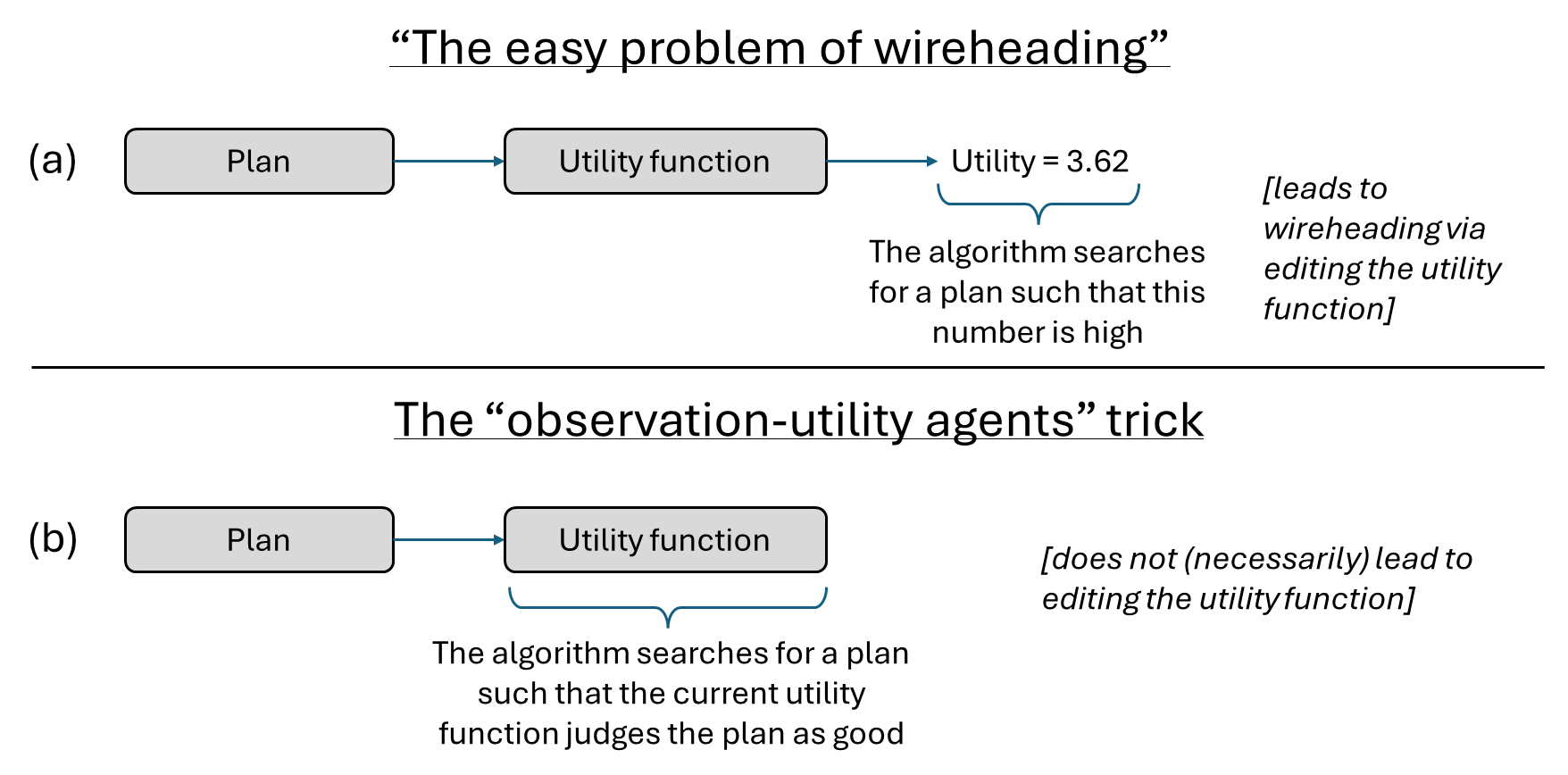
- •Analogy to observation-utility agents preventing utility editing or manipulation
🧠 Deep Insight
Background and context from public sources — not the original article. 8 sources cited.
🔑 Enhanced Key Takeaways
- •Paul Christiano's IDA emphasizes building competitive safe AI versions for every unsafe technique to counter competitive pressures from unaligned systems.[1]
- •Security amplification in IDA limits information exposure between subsystems to prevent distilled AI from causing amplified AI failures during oversight.[1]
- •Critics note IDA with low-bandwidth oversight shifts from learning human reasoning to AI imitating explicit human reasoning, potentially missing implicit human knowledge.[5]
🔮 Future ImplicationsAI analysis grounded in cited sources
⏳ Timeline
📎 Sources (8)
Factual claims are grounded in the sources below. Forward-looking analysis is AI-generated interpretation.
- forum.effectivealtruism.org — My Understanding of Paul Christiano S Iterated Amplification
- alignmentforum.org — Critical Review of Christiano S Disagreements with Yudkowsky
- 80000hours.org — Paul Christiano AI Alignment Solutions
- axrp.net — Episode 12 AI Xrisk Paul Christiano
- alignmentforum.org — Understanding Iterated Distillation and Amplification Claims
- aiimpacts.org — Conversation with Paul Christiano
- ai-alignment.com — My Research Methodology B94f2751cb2c
- ai-alignment.com — Hard Core Subproblems 8948463455ef
Weekly AI Recap
Read this week's curated digest of top AI events →
👉Related Updates
AI-curated news aggregator. All content rights belong to original publishers.
Original source: AI Alignment Forum ↗
This is a summary, not the original. Read the source, or get the weekly briefing.
Weekly AI briefing
One email a week. Unsubscribe anytime.