โ˜๏ธFreshcollected in 6m

Retrofit legacy REST services into AI agents with overlays
Retrofit legacy REST services into AI agents with overlays
PostLinkedIn
โ˜๏ธRead original on AWS Machine Learning Blog

๐Ÿ’กLearn how to turn legacy REST APIs into AI-ready agents using MCP without rewriting your entire backend.

โšก 30-Second TL;DR

What Changed

Transform traditional REST APIs into agents capable of A2A interactions.

Why It Matters

This pattern significantly lowers the barrier for enterprises to adopt agentic AI by leveraging existing investments. It simplifies the integration of legacy data and logic into modern LLM-driven applications.

What To Do Next

Review your existing REST-based internal services and implement an MCP-compliant overlay to connect them to your LLM-based agent workflows.

Who should care:Enterprise & Security Teams

๐Ÿง  Deep Insight

AI-generated analysis for this event.

๐Ÿ”‘ Enhanced Key Takeaways

  • โ€ขThe 'agentic overlay' pattern utilizes a sidecar proxy architecture that intercepts REST traffic to inject semantic headers and state management required for LLM reasoning.
  • โ€ขAWS implementation leverages the Model Context Protocol (MCP) to standardize how legacy services expose their schema, enabling zero-shot tool discovery by autonomous agents.
  • โ€ขThe architecture includes an automated 'Schema-to-Tool' converter that maps OpenAPI specifications directly into agent-executable function definitions without manual intervention.
  • โ€ขSecurity is handled via a centralized policy enforcement point that translates traditional OAuth/IAM tokens into agent-specific authorization contexts for cross-service communication.
  • โ€ขThe pattern specifically addresses the 'context window bottleneck' by implementing a retrieval-augmented generation (RAG) layer that summarizes legacy service responses before passing them to the agent.
๐Ÿ“Š Competitor Analysisโ–ธ Show
FeatureAWS Agentic OverlaysMicrosoft Semantic KernelLangChain Toolkits
Primary FocusLegacy REST IntegrationOrchestration/AbstractionFramework Agnostic
DeploymentManaged AWS InfrastructureSDK-based / HybridLibrary-based / Code
MCP SupportNative/First-classVia AdaptersVia Community Plugins
PricingPay-per-request (AWS)Open Source / AzureOpen Source / Cloud

๐Ÿ› ๏ธ Technical Deep Dive

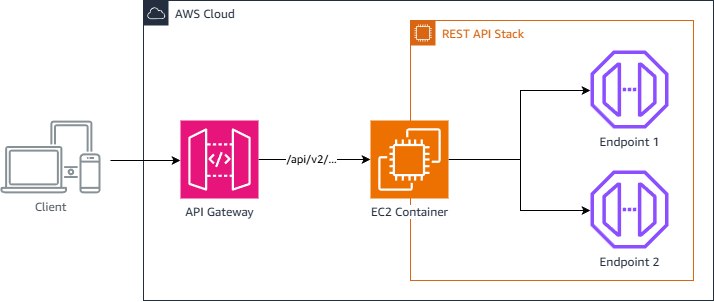
  • Architecture utilizes a lightweight sidecar container deployed alongside existing REST services to handle agentic protocol translation.
  • Implements a bi-directional mapping layer between JSON-REST payloads and MCP-compliant tool execution schemas.
  • Uses a persistent state store (Amazon DynamoDB) to maintain conversation context across stateless legacy API calls.
  • Employs an asynchronous event bus to handle long-running agent tasks that exceed standard REST timeout thresholds.
  • Integrates with AWS IAM to provide fine-grained, identity-based access control for agent-to-agent interactions.

๐Ÿ”ฎ Future ImplicationsAI analysis grounded in cited sources

Legacy API modernization costs will drop by 40% for enterprises.
By avoiding full-scale refactoring of monolithic REST services into native agentic architectures, companies can bypass expensive rewrite cycles.
MCP will become the industry standard for cross-cloud agent interoperability.
AWS's adoption of MCP for legacy overlays signals a shift toward vendor-neutral protocols for AI tool discovery.

โณ Timeline

2023-11
AWS launches Amazon Bedrock to provide managed foundation models.
2024-07
AWS introduces Agents for Amazon Bedrock to automate multi-step tasks.
2025-03
AWS expands Bedrock capabilities to support broader tool-use and function calling.
2026-06
AWS releases Agentic Overlays to bridge legacy REST services with agentic workflows.
๐Ÿ“ฐ

Weekly AI Recap

Read this week's curated digest of top AI events โ†’

๐Ÿ‘‰Related Updates

AI-curated news aggregator. All content rights belong to original publishers.
Original source: AWS Machine Learning Blog โ†—

Retrofit legacy REST services into AI agents with overlays | AWS Machine Learning Blog | SetupAI | SetupAI