Resight Mass Produces 2D VCSEL Chips
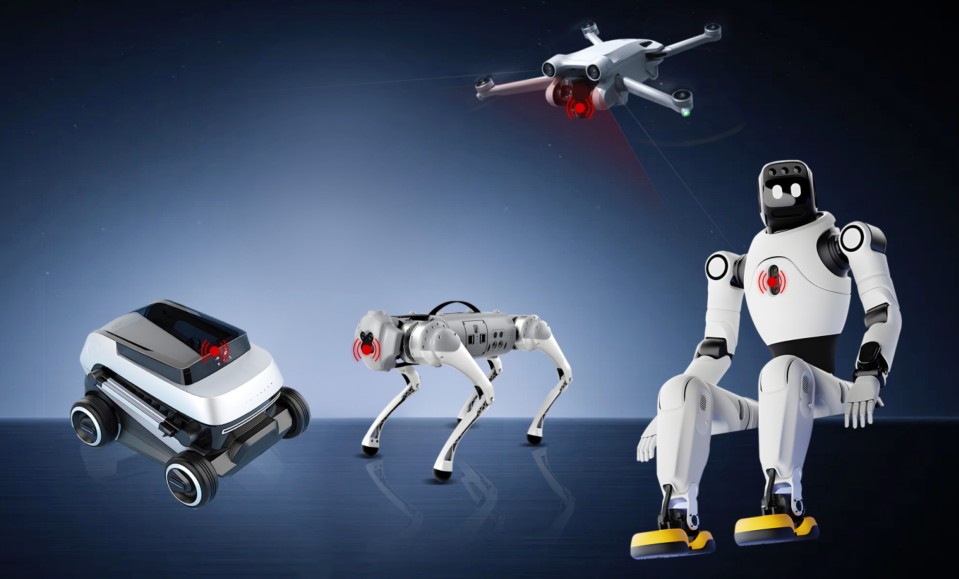
💡VCSEL breakthrough enables scalable solid-state lidar for AVs & robots
⚡ 30-Second TL;DR
What Changed
Mass production of 2D addressable VCSEL chips achieved, solving crosstalk and yield issues
Why It Matters
Advances solid-state lidar for autonomous vehicles and robots, reducing mechanical scanning needs. Boosts precision in complex environments, accelerating embodied AI adoption. Positions Resight as key supplier in AI hardware ecosystem.
What To Do Next
Contact Resight for 2D VCSEL samples to prototype solid-state lidar in robot projects.
Key Points
- •Mass production of 2D addressable VCSEL chips achieved, solving crosstalk and yield issues
- •Deployed in car lidar for Didi autonomous taxis and smart robot sensors
- •Factories in Hefei/Xi'an ensure 24h full production with quality certifications
- •Partnerships with BYD for mid/low-end EVs and robot firms for embodied apps
🧠 Deep Insight
AI-generated analysis for this event — not the original article.
🔑 Enhanced Key Takeaways
- •Resight's 2D addressable VCSEL architecture utilizes a proprietary monolithic integration process that significantly reduces optical crosstalk between adjacent emitters, a critical hurdle for high-resolution solid-state lidar.
- •The company's expansion into Hefei and Xi'an represents a strategic shift toward 'localized supply chain resilience,' aiming to reduce dependency on imported epitaxial wafers for high-volume automotive-grade components.
- •Beyond lidar, Resight is actively pivoting its 2D VCSEL technology toward the 'embodied AI' sector, specifically targeting high-precision depth sensing for humanoid robot navigation and gesture recognition modules.
📊 Competitor Analysis▸ Show
| Feature | Resight (2D VCSEL) | Lumentum (Multi-junction) | ams OSRAM (EEL/VCSEL) |
|---|---|---|---|
| Addressability | High (2D Matrix) | Low (1D/Flood) | Moderate (Hybrid) |
| Primary Market | Autonomous Taxis/Robots | Consumer Electronics/ADAS | Automotive/Industrial |
| Crosstalk Control | Proprietary Isolation | Standard | Industry Standard |
🛠️ Technical Deep Dive
- Architecture: 2D addressable array allowing independent control of individual emitters, enabling software-defined beam steering without mechanical components.
- Wavelength: Primarily 905nm and 940nm variants optimized for silicon-based SPAD (Single-Photon Avalanche Diode) receivers.
- Thermal Management: Integrated micro-lens arrays and high-thermal-conductivity submounts to maintain wavelength stability at high duty cycles.
- Reliability: AEC-Q102 qualification for automotive-grade operation, supporting extended temperature ranges (-40°C to 125°C).
🔮 Future ImplicationsAI analysis grounded in cited sources
⏳ Timeline
Weekly AI Recap
Read this week's curated digest of top AI events →
👉Related Updates
AI-curated news aggregator. All content rights belong to original publishers.
Original source: 36氪 ↗
This is a summary, not the original. Read the source, or get the weekly briefing.
The weekly digest
One email a week. Unsubscribe anytime.