Renault Uses China as Automotive Benchmark
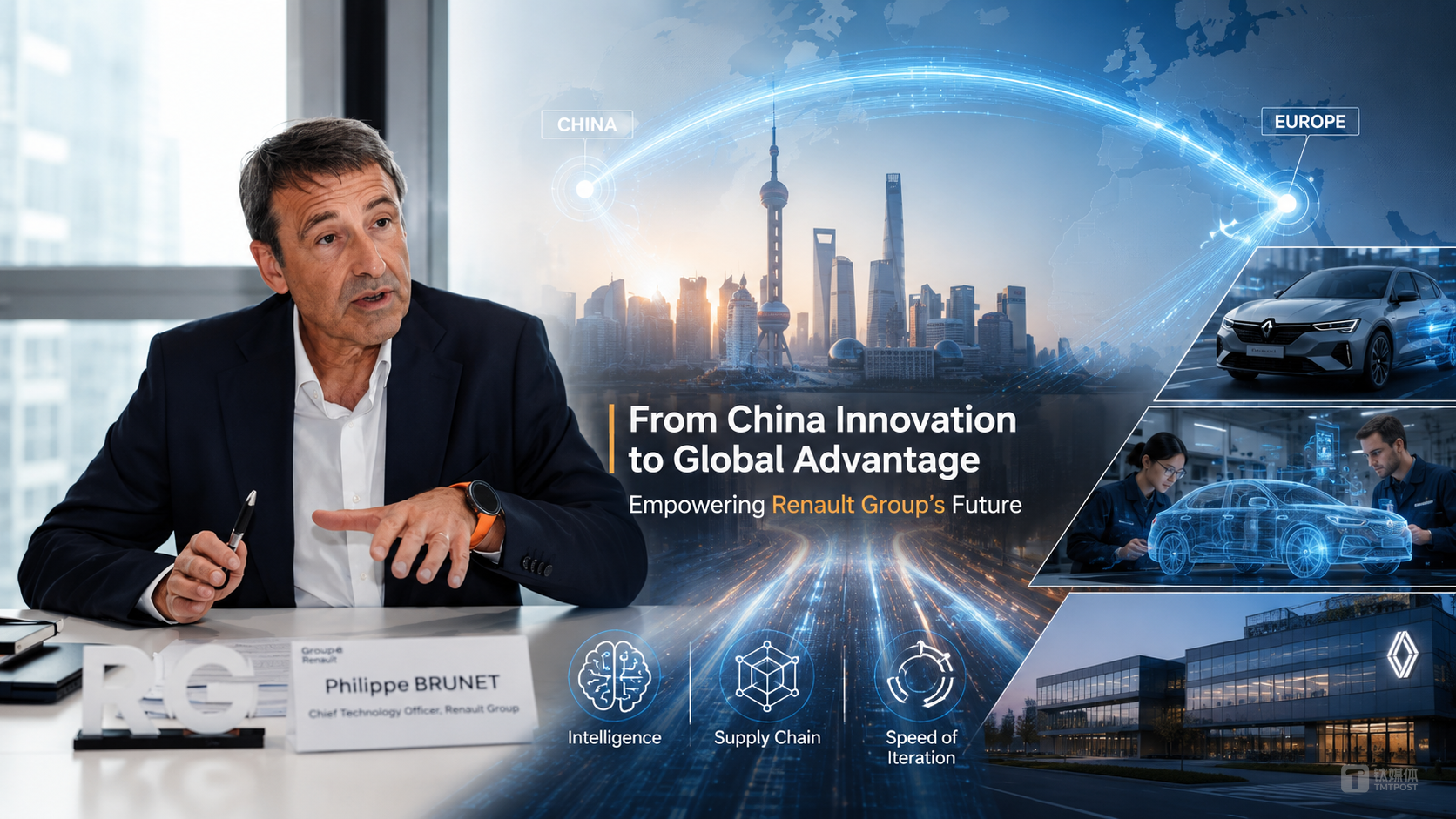
Understand how global giants are reverse-engineering China's automotive R&D to stay competitive.
30-Second TL;DR
What Changed
Renault treats China as a strategic benchmark for automotive innovation.
Why It Matters
Global automakers are increasingly adopting Chinese R&D workflows to accelerate their own digital and intelligent transformation.
What To Do Next
Analyze Chinese automotive software supply chains to identify potential integration patterns for your own IoT or robotics projects.
Key Points
- •Renault treats China as a strategic benchmark for automotive innovation.
- •Shift from exporting physical products to exporting industrial methodologies.
- •China's automotive ecosystem is becoming a global knowledge hub.
Deep Insight
AI-generated analysis for this event — not the original article.
Enhanced Key Takeaways
- •Renault has established the 'Renault China R&D Center' specifically to tap into local software-defined vehicle (SDV) capabilities and rapid iteration cycles that are currently outpacing European development timelines.
- •The strategy involves 'reverse engineering' Chinese supply chain efficiency, specifically focusing on how local OEMs integrate battery management systems and power electronics to reduce costs by up to 30%.
- •Renault is actively pursuing joint ventures with Chinese tech firms to localize its 'Ampere' software stack, aiming to adapt Chinese user interface (UI) and user experience (UX) standards for the European market.
- •This shift follows the dissolution of Renault's previous joint venture with Dongfeng in 2020, marking a pivot from a failed volume-sales model to a knowledge-acquisition and engineering-partnership model.
- •Renault is utilizing China as a 'testbed' for autonomous driving features and smart cockpit technologies, which are then validated against European regulatory frameworks before global deployment.
Competitor Analysis
- Renault (China-Benchmark Strategy)
- Knowledge/Methodology Transfer
- Volkswagen (China-Local-for-Local)
- Market Share/Volume
- Stellantis (Leapmotor Partnership)
- Cost Reduction/Tech Access
- Renault (China-Benchmark Strategy)
- R&D Speed & Software
- Volkswagen (China-Local-for-Local)
- Localized Supply Chain
- Stellantis (Leapmotor Partnership)
- Manufacturing Efficiency
- Renault (China-Benchmark Strategy)
- Engineering Hub
- Volkswagen (China-Local-for-Local)
- Independent R&D Centers
- Stellantis (Leapmotor Partnership)
- Joint Venture/Equity Stake
| Feature | Renault (China-Benchmark Strategy) | Volkswagen (China-Local-for-Local) | Stellantis (Leapmotor Partnership) |
|---|---|---|---|
| Primary Goal | Knowledge/Methodology Transfer | Market Share/Volume | Cost Reduction/Tech Access |
| Benchmark Focus | R&D Speed & Software | Localized Supply Chain | Manufacturing Efficiency |
| Market Approach | Engineering Hub | Independent R&D Centers | Joint Venture/Equity Stake |
Technical Deep Dive
- Implementation of 'Software-Defined Vehicle' (SDV) architecture mirroring Chinese zonal controller designs to reduce wiring harness complexity.
- Adoption of high-density LFP (Lithium Iron Phosphate) battery integration techniques pioneered by Chinese suppliers to lower entry-level EV costs.
- Integration of 800V electrical architectures and silicon carbide (SiC) power modules sourced from Chinese tier-1 suppliers to improve charging efficiency.
- Utilization of agile 'sprint' development cycles for OTA (Over-the-Air) update deployment, reducing software release cycles from 18 months to 6 months.
Future ImplicationsAI analysis grounded in cited sources
Timeline
- 2020-04Renault ends its joint venture with Dongfeng Motor, exiting the Chinese passenger vehicle market.
- 2022-11Renault announces the creation of 'Ampere,' a dedicated EV and software entity, signaling a shift toward tech-centric operations.
- 2023-05Renault signs strategic agreements with Chinese partners to accelerate battery and software development.
- 2025-02Renault officially pivots its China strategy to focus on R&D and engineering benchmarking rather than direct vehicle sales.
Weekly AI Recap
Read this week's curated digest of top AI events →
AI-curated news aggregator. All content rights belong to original publishers.
Original source: 钛媒体 ↗
This is a summary, not the original. Read the source, or get the weekly briefing.
The weekly digest
One email a week. Unsubscribe anytime.