Razer Blade 16 Gains Intel Core Ultra NPU
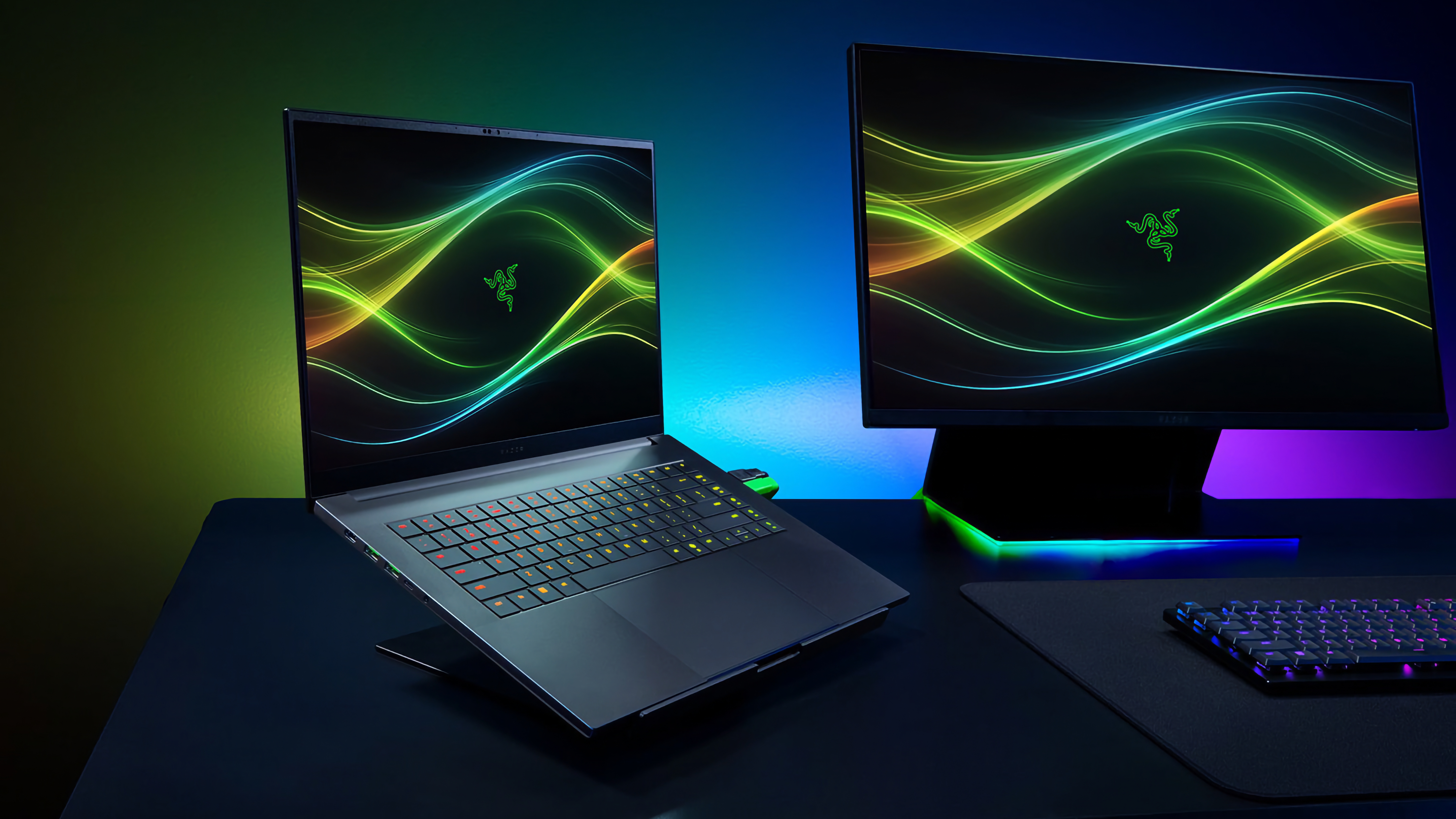
💡50 TOPS NPU + RTX 50 in thin laptop enables portable AI inference for devs
⚡ 30-Second TL;DR
What Changed
Intel Core Ultra 9 386H with 16 cores and 50 TOPS NPU on 18A process
Why It Matters
Boosts portable AI development with powerful NPU and GPU in a thin chassis, though high price reflects memory cost pressures affecting AI hardware adoption.
What To Do Next
Order Razer Blade 16 to benchmark Intel Core Ultra NPU on local AI image generation tasks.
Key Points
- •Intel Core Ultra 9 386H with 16 cores and 50 TOPS NPU on 18A process
- •NVIDIA GeForce RTX 50-series Laptop GPUs and LPDDR5X-9600 MHz RAM up to 64GB
- •Copilot+ PC native support for AI features like live translation
- •Thin 0.59-inch design with brighter 240Hz QHD+ OLED display
- •Ports include Thunderbolt 5, HDMI 2.1, and UHS-II SD reader
🧠 Deep Insight
AI-generated analysis for this event — not the original article.
🔑 Enhanced Key Takeaways
- •The Intel Core Ultra 9 386H utilizes the 'Panther Lake' architecture, marking a significant shift to the 18A process node which improves power efficiency per watt compared to previous Meteor Lake and Arrow Lake iterations.
- •Razer has implemented a proprietary 'Vapor Chamber 2.0' cooling system specifically redesigned to manage the increased thermal load of the 50 TOPS NPU during sustained AI inference workloads.
- •The device integrates a dedicated hardware-level 'AI Security Engine' that works in tandem with the NPU to perform real-time biometric authentication and local data encryption without offloading to the cloud.
📊 Competitor Analysis▸ Show
| Feature | Razer Blade 16 (2026) | ASUS ROG Zephyrus G16 (2026) | Alienware m16 R4 |
|---|---|---|---|
| CPU | Intel Core Ultra 9 386H | Intel Core Ultra 9 386H | Intel Core Ultra 9 386H |
| GPU | NVIDIA RTX 5090 | NVIDIA RTX 5080 | NVIDIA RTX 5090 |
| NPU | 50 TOPS | 50 TOPS | 48 TOPS |
| Starting Price | $3,500 | $3,100 | $3,300 |
🛠️ Technical Deep Dive
- Intel Panther Lake Architecture: Utilizes a multi-tile design (Compute, SoC, Graphics, and I/O) on the 18A process, optimizing interconnect latency for the NPU.
- LPDDR5X-9600 Memory: Employs high-speed memory modules to ensure the NPU has sufficient bandwidth for large language model (LLM) token generation.
- Thunderbolt 5 Implementation: Supports up to 120Gbps bandwidth in 'Bandwidth Boost' mode, enabling external GPU enclosures to operate with minimal latency for AI training tasks.
- Display Panel: 240Hz QHD+ OLED features a new 'Tandem OLED' structure, increasing peak brightness to 1,200 nits for HDR content.
🔮 Future ImplicationsAI analysis grounded in cited sources
⏳ Timeline
Weekly AI Recap
Read this week's curated digest of top AI events →
👉Related Updates

AI-curated news aggregator. All content rights belong to original publishers.
Original source: Engadget ↗
This is a summary, not the original. Read the source, or get the weekly briefing.
The weekly digest
One email a week. Unsubscribe anytime.