Rabbit r1's 35 OTA Updates Crush Backlash
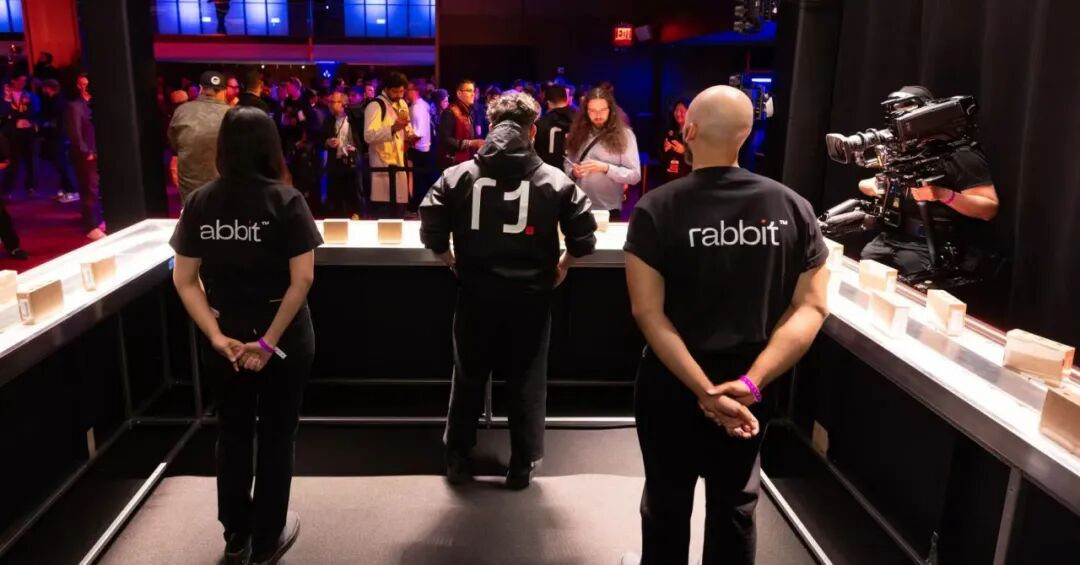
💡AI hardware survives MKBHD roast via 35 OTAs: iteration lessons for builders.
⚡ 30-Second TL;DR
What Changed
Achieved 100k sales at $199 despite peripheral CES launch.
Why It Matters
Highlights value of rapid OTA iteration over PR defense in AI hardware, rebuilding trust post-failure. Offers playbook for AI founders facing hype backlash.
What To Do Next
Analyze rabbit r1 changelogs on their site to replicate user-driven OTA update cadence.
Key Points
- •Achieved 100k sales at $199 despite peripheral CES launch.
- •Endured MKBHD 'Barely Reviewable' verdict and Tom's Guide 1.5/5 score.
- •Delivered 35 device OTAs + cloud updates addressing battery, usability complaints.
- •Added AI meeting transcription and magic camera for cartoon-style photos.
- •Hardware vision: Full AI permissions to 'kill apps' unlike phone restrictions.
🧠 Deep Insight
AI-generated analysis for this event — not the original article.
🔑 Enhanced Key Takeaways
- •Rabbit's transition to an 'AI agent testbed' model shifted the product from a standalone hardware device to a platform-agnostic service, with the company releasing a dedicated app for iOS and Android to expand the user base beyond the initial hardware owners.
- •The 'Large Action Model' (LAM) architecture, initially marketed as a revolutionary proprietary engine, was later scrutinized by security researchers who identified it as a wrapper around existing LLM APIs, specifically leveraging GPT-4 for decision-making tasks.
- •Despite the high volume of OTA updates, the company faced significant financial and operational headwinds throughout 2025, leading to a pivot in business strategy that prioritized software-as-a-service (SaaS) revenue over hardware manufacturing.
📊 Competitor Analysis▸ Show
| Feature | Rabbit r1 | Humane AI Pin | Meta Ray-Ban |
|---|---|---|---|
| Form Factor | Handheld | Wearable (Chest) | Wearable (Glasses) |
| Primary Input | Push-to-talk | Gesture/Voice | Voice/Visual |
| Pricing | $199 | $699 + Sub | $299 |
| Core Value | App-agnostic Agent | Screenless Interface | Multimodal Assistant |
🛠️ Technical Deep Dive
- •Hardware: Powered by a MediaTek Helio P35 processor, 4GB of RAM, and 128GB of storage.
- •Software Architecture: Utilizes a custom Android-based OS (Rabbit OS) designed to run a 'Large Action Model' (LAM) that interacts with web interfaces via a cloud-based browser environment.
- •Connectivity: Supports Wi-Fi, Bluetooth, and a physical SIM card slot for 4G LTE connectivity.
- •Security Implementation: Relies on a cloud-based 'Rabbit Hole' portal where users authenticate their third-party service accounts (Spotify, Uber, etc.) to allow the LAM to perform actions on their behalf.
🔮 Future ImplicationsAI analysis grounded in cited sources
⏳ Timeline
Weekly AI Recap
Read this week's curated digest of top AI events →
👉Related Updates

AI-curated news aggregator. All content rights belong to original publishers.
Original source: 虎嗅 ↗
This is a summary, not the original. Read the source, or get the weekly briefing.
The weekly digest
One email a week. Unsubscribe anytime.