Qwen Powers Hongqi HS6 In-Car AI
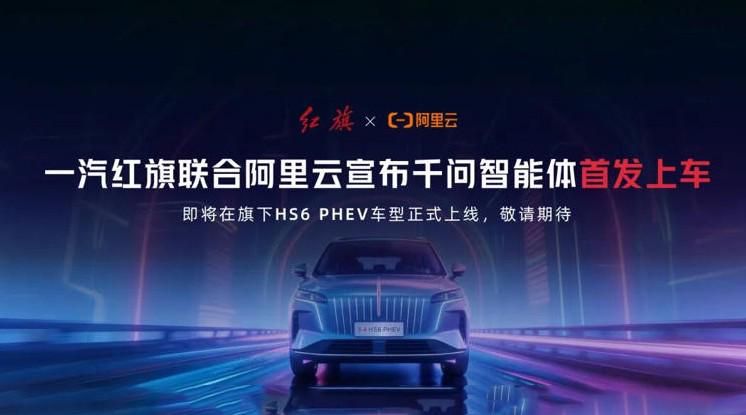
💡Qwen LLM goes in-car: multi-step commands & plans—automotive AI blueprint
⚡ 30-Second TL;DR
What Changed
Qwen integrated into Hongqi HS6 PHEV cockpit
Why It Matters
Boosts Alibaba's Qwen adoption in automotive, showcasing LLM potential beyond chat. Could inspire more vehicle makers to embed LLMs for enhanced user experiences.
What To Do Next
Test Qwen API for multi-step task handling in your automotive AI prototypes.
Key Points
- •Qwen integrated into Hongqi HS6 PHEV cockpit
- •Handles multi-step commands and real-time plans
- •Enables proactive, scenario-based in-car AI
🧠 Deep Insight
AI-generated analysis for this event — not the original article.
🔑 Enhanced Key Takeaways
- •The integration utilizes Qwen-Max, Alibaba's flagship large language model, which leverages a Mixture-of-Experts (MoE) architecture to balance high-performance reasoning with the latency constraints of automotive hardware.
- •This partnership marks a strategic expansion of Alibaba Cloud's 'Model-as-a-Service' (MaaS) strategy into the automotive sector, specifically targeting the premium PHEV segment to differentiate Hongqi's user experience from mass-market EV competitors.
- •The system utilizes a hybrid cloud-edge architecture where lightweight tasks are processed locally on the vehicle's cockpit domain controller, while complex, multi-step reasoning queries are offloaded to Alibaba's cloud infrastructure to maintain responsiveness.
📊 Competitor Analysis▸ Show
| Feature | Qwen (Hongqi HS6) | NIO NOMI GPT | XPeng AI Cockpit |
|---|---|---|---|
| Model Base | Qwen-Max (Alibaba) | In-house/Hybrid | In-house/XGPT |
| Primary Focus | Proactive Travel Planning | Emotional Interaction | Autonomous Driving/Cabin Integration |
| Cloud/Edge | Hybrid Cloud-Edge | Hybrid | Hybrid |
🛠️ Technical Deep Dive
- Model Architecture: Utilizes Qwen-Max, a high-parameter MoE model optimized for long-context understanding and multi-turn dialogue.
- Integration Layer: Implemented via Alibaba Cloud's automotive middleware, which provides a standardized API for vehicle CAN bus data access, allowing the LLM to interpret real-time vehicle status (battery, range, tire pressure).
- Latency Optimization: Employs model quantization (INT8/INT4) for edge-side inference to ensure sub-500ms response times for voice commands.
- Context Window: Supports extended context windows, enabling the system to retain user preferences and travel history across multiple sessions.
🔮 Future ImplicationsAI analysis grounded in cited sources
⏳ Timeline
Weekly AI Recap
Read this week's curated digest of top AI events →
👉Related Updates


AI-curated news aggregator. All content rights belong to original publishers.
Original source: Pandaily ↗
This is a summary, not the original. Read the source, or get the weekly briefing.
The weekly digest
One email a week. Unsubscribe anytime.