Qwen Office: Polished, but Not a Workflow
Qwen Office analyzes data well, but its local storage and static outputs reveal the gap between AI tools and real workfl
30-Second TL;DR
What Changed
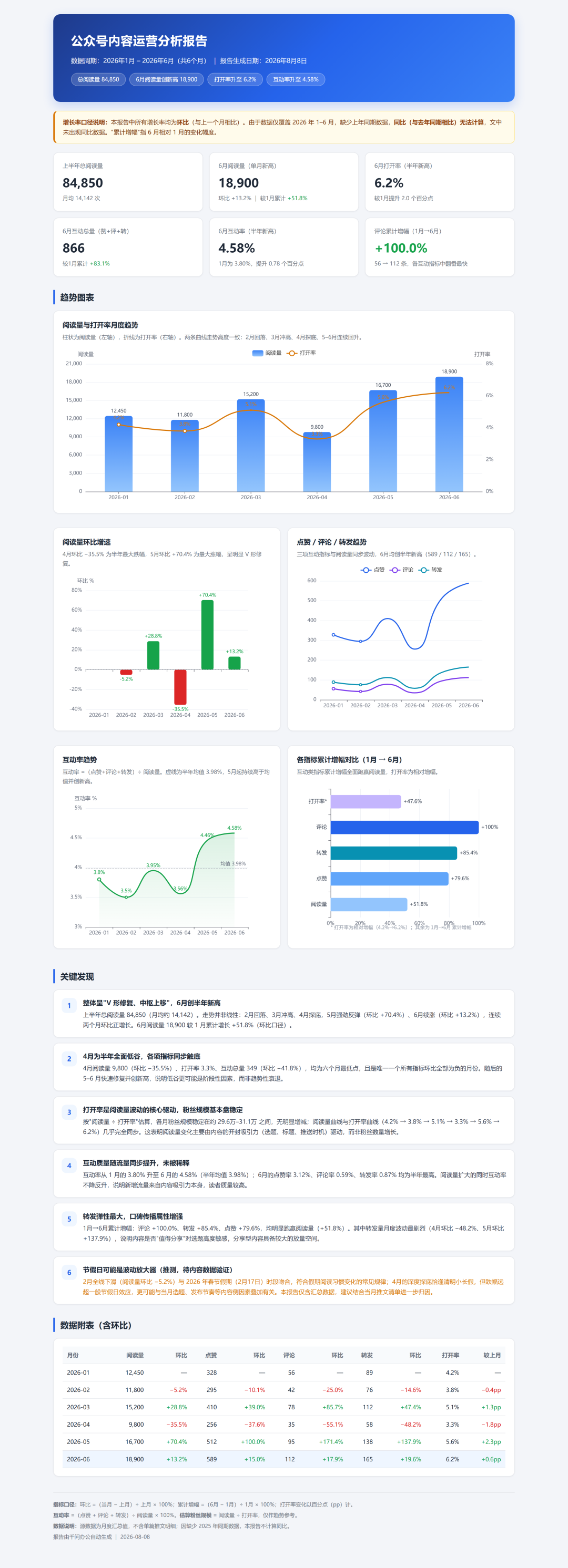
Qwen3.8 accurately calculated spreadsheet growth rates, generated interactive charts, and produced data-grounded reports.
Why It Matters
Qwen Office demonstrates that agentic office tools can already deliver reliable analysis and multi-format outputs for individual users. However, the lack of persistent cloud state, dependency tracking, artifact versioning, and robust integrations limits its readiness for enterprise-grade automation.
What To Do Next
Before adopting Qwen Office for production, test a source-file update workflow and verify whether its local scheduling, OAuth connectors, and webpage artifacts meet your deployment and data-governance requirements.
Key Points
- •Qwen3.8 accurately calculated spreadsheet growth rates, generated interactive charts, and produced data-grounded reports.
- •The image-generation extension followed negative style constraints well, producing a restrained industrial cover instead of a generic neon design.
- •Connectors such as Google Calendar, Notion, Slack, and Figma require manual OAuth credential configuration that is unsuitable for most nontechnical users.
- •Scheduled tasks run only while the computer remains awake, indicating local execution rather than cloud scheduling.
- •Updated source files do not automatically refresh existing webpages or downstream artifacts; published pages behave like static snapshots.
- •Cross-conversation file access depends on scanning local folders, so data portability and version control are weak.
Deep Insight
AI-generated analysis for this event — not the original article.
Enhanced Key Takeaways
- •Qwen Office leverages the Qwen3.8 model's enhanced 'Agentic Reasoning' framework, which utilizes a specialized chain-of-thought process specifically tuned for multi-step document manipulation rather than just text generation.
- •The platform's local-first architecture is designed to comply with strict data residency requirements, allowing enterprise users to process sensitive documents without them ever leaving the local machine's memory space.
- •Alibaba Cloud has integrated Qwen Office into the broader 'Qwen Ecosystem' strategy, aiming to position it as the primary interface for the Qwen-Max and Qwen-Turbo API services for non-coding business users.
- •The image generation capability within the suite utilizes a distilled version of the Qwen-VL-Max model, optimized for low-latency inference on consumer-grade GPUs.
- •Early feedback from the developer community indicates that the OAuth configuration issues stem from a 'Bring Your Own Key' (BYOK) security model, intended to prevent Alibaba from accessing third-party user credentials.
Competitor Analysis
- Qwen Office
- Local-first Data/Agentic
- Microsoft 365 Copilot
- Integrated Office Suite
- Notion AI
- Knowledge Management
- Claude Projects
- Contextual Reasoning
- Qwen Office
- Weak/Manual
- Microsoft 365 Copilot
- Native/Seamless
- Notion AI
- Native/Seamless
- Claude Projects
- Cloud-based
- Qwen Office
- Beta (Free)
- Microsoft 365 Copilot
- Subscription (Per User)
- Notion AI
- Subscription (Per User)
- Claude Projects
- Subscription (Pro)
- Qwen Office
- High (Local-first)
- Microsoft 365 Copilot
- Medium (Cloud-based)
- Notion AI
- Medium (Cloud-based)
- Claude Projects
- Medium (Cloud-based)
| Feature | Qwen Office | Microsoft 365 Copilot | Notion AI | Claude Projects |
|---|---|---|---|---|
| Primary Focus | Local-first Data/Agentic | Integrated Office Suite | Knowledge Management | Contextual Reasoning |
| Cloud Sync | Weak/Manual | Native/Seamless | Native/Seamless | Cloud-based |
| Pricing | Beta (Free) | Subscription (Per User) | Subscription (Per User) | Subscription (Pro) |
| Data Privacy | High (Local-first) | Medium (Cloud-based) | Medium (Cloud-based) | Medium (Cloud-based) |
Technical Deep Dive
- Model Architecture: Qwen3.8 utilizes a Mixture-of-Experts (MoE) architecture with enhanced long-context window capabilities, specifically optimized for document retrieval-augmented generation (RAG).
- Execution Environment: The application runs as a local Electron-based wrapper that interfaces with a local Python runtime for spreadsheet processing and data analysis tasks.
- OAuth Implementation: Uses a standard PKCE (Proof Key for Code Exchange) flow, requiring users to register custom applications in developer consoles (e.g., Google Cloud Console) to obtain Client IDs and Secrets.
- File Retrieval: Employs a local vector database (likely based on FAISS or ChromaDB) to index local directories for semantic search without cloud-side embedding.
Future ImplicationsAI analysis grounded in cited sources
Timeline
- 2025-04Alibaba releases Qwen2.5, establishing the foundation for agentic capabilities.
- 2026-02Qwen3 series announced, introducing significant improvements in reasoning and tool-use.
- 2026-07Qwen3.8 model released with specialized optimizations for data analysis and document processing.
- 2026-08Qwen Office enters public beta, marking the first integrated application suite for the Qwen model family.
Weekly AI Recap
Read this week's curated digest of top AI events →
AI-curated news aggregator. All content rights belong to original publishers.
Original source: 虎嗅 ↗
This is a summary, not the original. Read the source, or get the weekly briefing.
The weekly digest
One email a week. Unsubscribe anytime.