Qwen Launches AI Football Prediction Assistant for World Cup
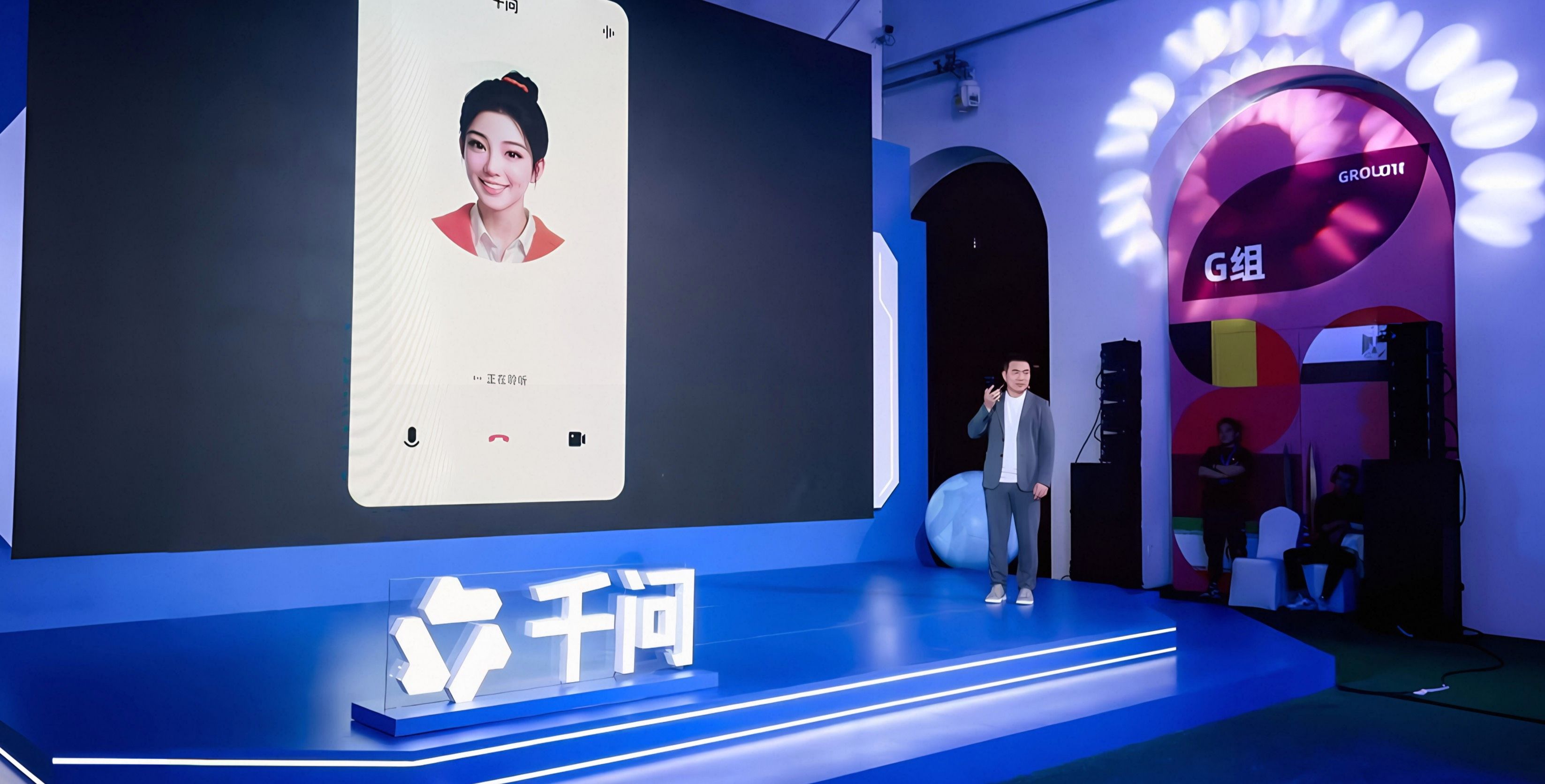
💡See how Qwen is using AI prediction models to drive social impact and community engagement for the 2026 World Cup.
⚡ 30-Second TL;DR
What Changed
Launched AI-driven prediction assistant for 2026 FIFA World Cup
Why It Matters
This initiative demonstrates a creative application of LLMs in social impact and community engagement, showcasing how AI can bridge the gap between digital prediction models and physical infrastructure development.
What To Do Next
Analyze the gamification mechanics of the Qwen platform to understand how to integrate social impact incentives into your own AI-driven consumer applications.
Key Points
- •Launched AI-driven prediction assistant for 2026 FIFA World Cup
- •Gamified community contributions to fund rural school football pitches
- •Features a human-vs-AI prediction challenge with cash prizes up to RMB 10,000
🧠 Deep Insight
Background and context from public sources — not the original article. 10 sources cited.
🔑 Enhanced Key Takeaways
- •Qwen is a series of large language models (LLMs) and large multimodal models (LMMs) developed by Alibaba Group, serving as the underlying AI for the prediction assistant.
- •The Qwen models are distinguished by their extensive multilingual capabilities, supporting 119 languages and dialects, which broadens the potential global reach of the prediction assistant.
- •Qwen has a substantial open-source presence, with its models downloaded over 40 million times and inspiring more than 200,000 derivative models on platforms like Hugging Face.
- •Qwen's AI has already made a specific prediction for the 2026 FIFA World Cup, identifying France as the likely champion.
🛠️ Technical Deep Dive
- Qwen is a large language model (LLM) and large multimodal model (LMM) series from Alibaba Group, capable of natural language understanding, text generation, vision understanding, audio understanding, tool use, and role play.
- The models are pre-trained on extensive multilingual and multimodal datasets and fine-tuned to align with human preferences.
- Latest Qwen3 models incorporate hybrid thinking modes ('Thinking' for deep reasoning and 'Non-Thinking' for fast responses) to balance performance, speed, and cost.
- Qwen utilizes a relatively large vocabulary of 151,646 tokens.
- Some advanced Qwen models, such as Qwen3-Next, employ a highly sparse Mixture-of-Experts (MoE) architecture and a hybrid attention mechanism, enabling significant efficiency gains like activating only 3 billion parameters out of 80 billion during inference and achieving over 10x higher throughput for long contexts.
- The Qwen family includes multimodal variants like Qwen-VL (Vision-Language), Qwen-TTS (text-to-speech), Qwen-Audio, and Qwen-Omni, which can process text, audio, and vision modalities simultaneously.
- The foundational architecture of Qwen models was initially based on Meta AI's Llama architecture.
🔮 Future ImplicationsAI analysis grounded in cited sources
⏳ Timeline
📎 Sources (10)
Factual claims are grounded in the sources below. Forward-looking analysis is AI-generated interpretation.
Weekly AI Recap
Read this week's curated digest of top AI events →
👉Related Updates

AI-curated news aggregator. All content rights belong to original publishers.
Original source: Pandaily ↗
This is a summary, not the original. Read the source, or get the weekly briefing.
The weekly digest
One email a week. Unsubscribe anytime.