Qwen Becomes an Autonomous Newsroom Intern
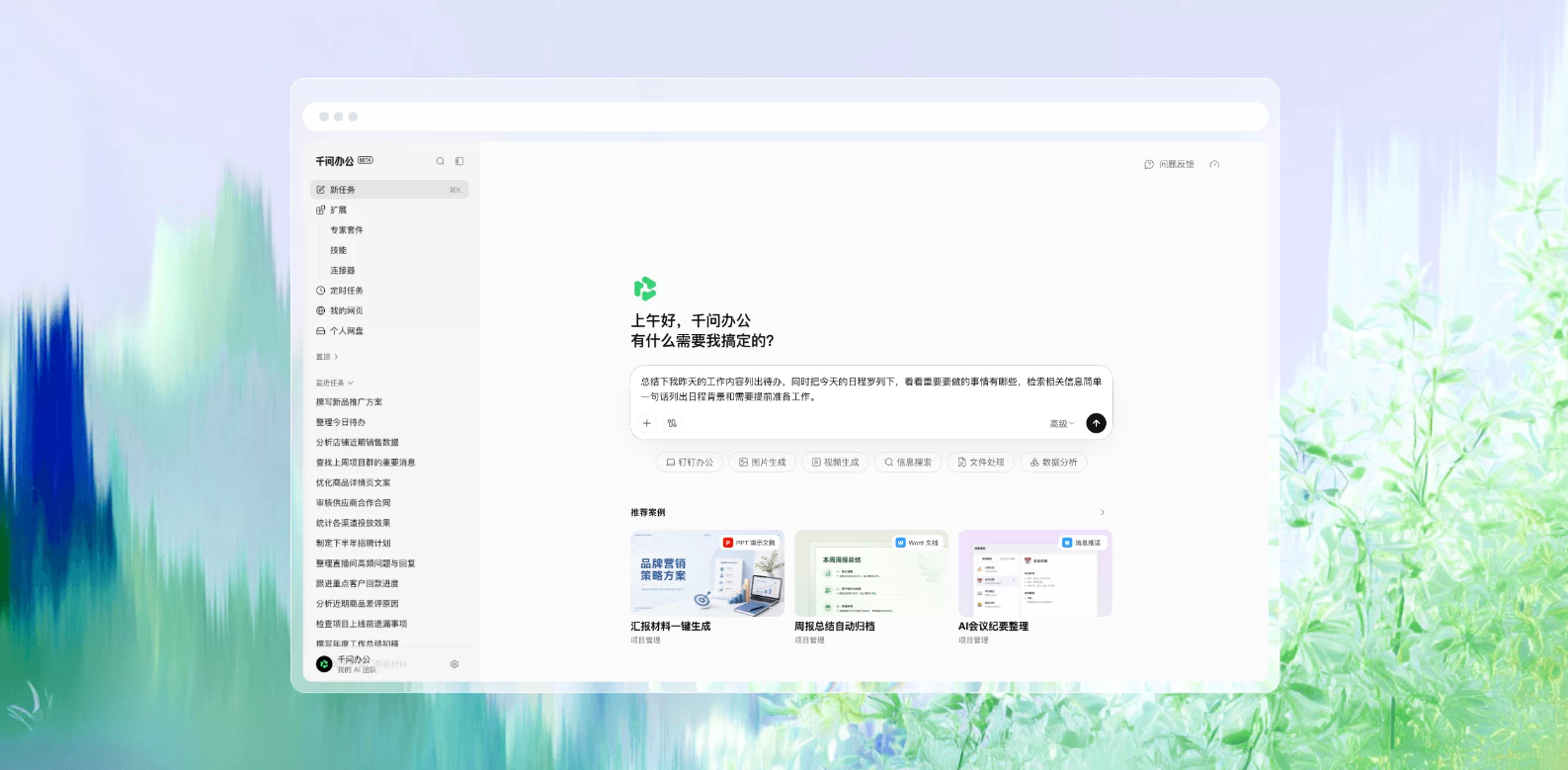
💡See how Qwen turns scattered AI updates into scored alerts and human-reviewable drafts.
⚡ 30-Second TL;DR
What Changed
Qwen monitored nine major AI companies across official websites, GitHub, Hugging Face, API documentation, and media reports.
Why It Matters
The example shows that general-purpose AI assistants can automate much more than text generation when connected to external sources and scheduled workflows. For AI teams, the main value is reducing monitoring and triage work while keeping human editors responsible for ambiguous judgments and final quality control.
What To Do Next
Prototype a Qwen Work Assistant pipeline that monitors your critical GitHub repositories, deduplicates updates, applies a configurable score threshold, and sends review cards to Feishu.
Key Points
- •Qwen monitored nine major AI companies across official websites, GitHub, Hugging Face, API documentation, and media reports.
- •A configurable scoring system evaluates company tier, event type, and source reliability before triggering automatic drafting.
- •The workflow uses crawlers, deduplication, scheduled scans, source-health checks, and Feishu topic-card notifications.
- •Qwen also generated scheduled technology briefings, including translation, categorization, length control, and source-link insertion.
🧠 Deep Insight
Background and context from public sources — not the original article. 11 sources cited.
🔑 Enhanced Key Takeaways
- •Qwen3.8-Max has demonstrated the capability to perform autonomous coding tasks for 16 consecutive days with successful GitHub commit integration.
- •The model architecture utilizes long-horizon reasoning, enabling the execution of over 1,000 sequential tool calls within a single autonomous session.
- •Qwen models have been deployed for specialized hardware engineering, including the autonomous generation of kernel drivers for Alibaba's Zhenwu M890 chip.
- •The ecosystem now features 'self-checking' agent loops, allowing the model to perform autonomous testing and error correction during complex, multi-step workflows.
- •Alibaba introduced the Qwen-Robot Suite in June 2026, extending the model's agentic capabilities into physical robotics navigation and manipulation.
📊 Competitor Analysis▸ Show
| Feature | Qwen (Alibaba) | DeepSeek | NVIDIA Model Suite |
|---|---|---|---|
| Agentic Workflow | High (Long-horizon focus) | High (Reasoning-heavy) | Emerging (Hardware-integrated) |
| Open-Weight Strategy | Aggressive | Aggressive | Proprietary/Closed |
| Primary Strength | Developer Ecosystem/API | Cost-Efficiency | Hardware Optimization |
🛠️ Technical Deep Dive
- Long-horizon reasoning engine: Optimized for multi-hour sessions requiring 1,000+ sequential tool calls.
- Self-correction loop: Integrated testing framework that triggers error-correction cycles based on real-time execution feedback.
- Kernel-level generation: Specialized training on low-level hardware drivers for custom silicon (Zhenwu M890).
- Agentic state persistence: Ability to resume interrupted workflows from the exact point of failure without context loss.
🔮 Future ImplicationsAI analysis grounded in cited sources
⏳ Timeline
📎 Sources (11)
Factual claims are grounded in the sources below. Forward-looking analysis is AI-generated interpretation.
Weekly AI Recap
Read this week's curated digest of top AI events →
👉Related Updates
AI-curated news aggregator. All content rights belong to original publishers.
Original source: 极客公园 ↗
This is a summary, not the original. Read the source, or get the weekly briefing.
Weekly AI briefing
One email a week. Unsubscribe anytime.