Quick Share Adds Tap-to-Share
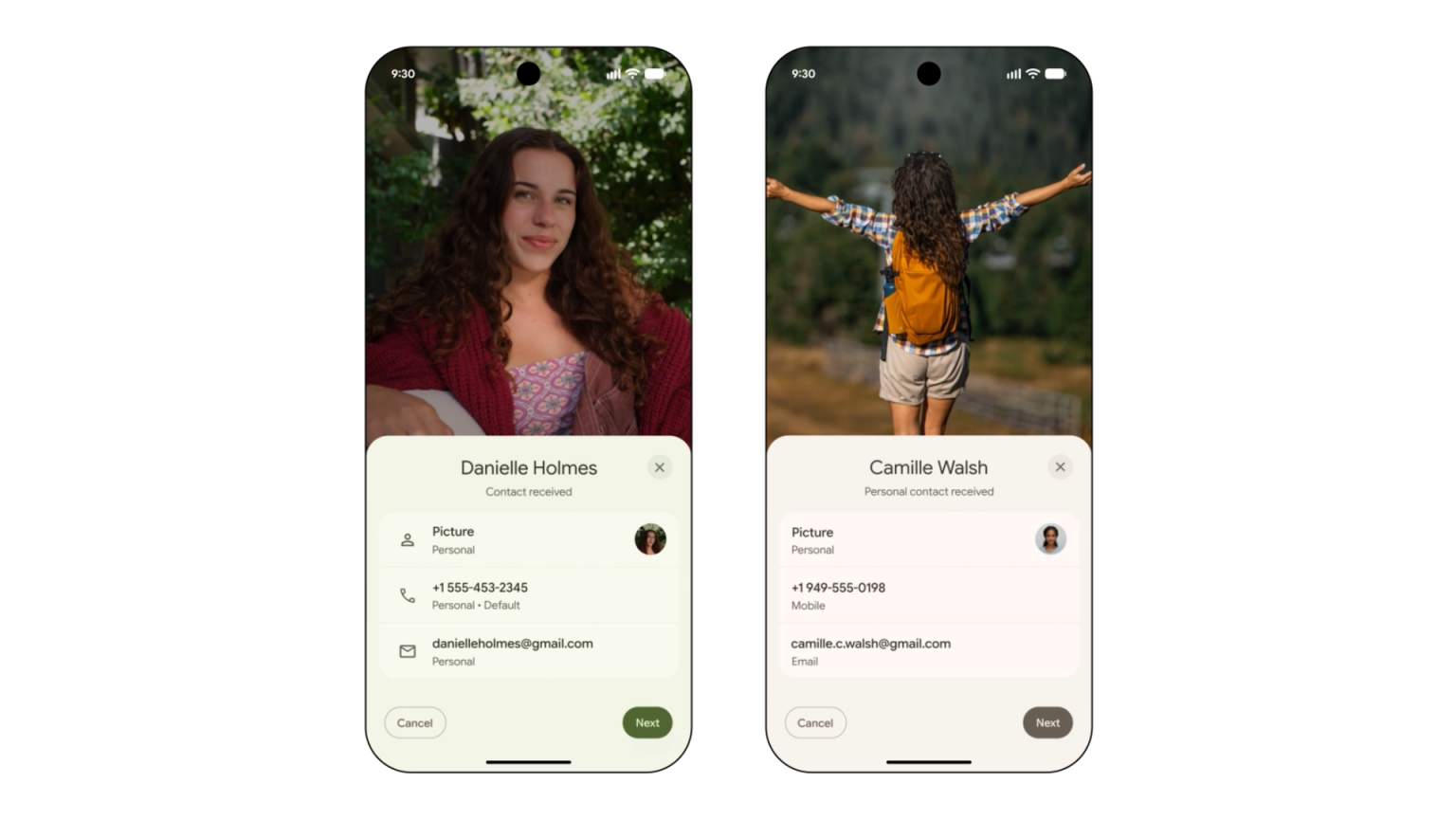
💡A simpler way to move AI demos, media, and test data between Android devices is rolling out now.
⚡ 30-Second TL;DR
What Changed
Quick Share now supports a new proximity-based tap-to-share mode.
Why It Matters
The update lowers friction for peer-to-peer sharing across Android devices and strengthens Google’s alternative to Apple’s AirDrop. It may also simplify device-to-device workflows for teams testing mobile AI applications and prototypes.
What To Do Next
Test Quick Share’s tap-to-share mode across your supported Android devices to validate a faster workflow for transferring AI demos, media, and test data.
Key Points
- •Quick Share now supports a new proximity-based tap-to-share mode.
- •The feature is rolling out to users starting immediately.
- •Android users can exchange contacts, photos, and videos between nearby devices.
🧠 Deep Insight
AI-generated analysis for this event.
🔑 Enhanced Key Takeaways
- •The tap-to-share functionality utilizes a combination of NFC (Near Field Communication) for the initial handshake and UWB (Ultra-Wideband) or Wi-Fi Direct for high-speed data transfer.
- •This feature is integrated into the Google Play Services framework, allowing it to function across various Android OEMs rather than being exclusive to Pixel hardware.
- •The implementation includes a new 'Proximity Discovery' API that allows developers to integrate tap-to-share capabilities into third-party Android applications.
- •Security protocols for the new mode require a user-confirmed 'tap' gesture to prevent accidental data transfers or unauthorized proximity-based attacks.
- •The rollout is part of a broader effort to unify the Android sharing ecosystem following the rebranding of Nearby Share to Quick Share in early 2024.
📊 Competitor Analysis▸ Show
| Feature | Quick Share (Android) | Apple AirDrop | Samsung Quick Share (Legacy) |
|---|---|---|---|
| Proximity Trigger | NFC + UWB/Wi-Fi | NFC + Bluetooth/UWB | NFC + Wi-Fi Direct |
| Cross-Platform | Android, Windows, ChromeOS | Apple Ecosystem Only | Samsung Devices Only |
| Data Transfer | Wi-Fi Direct/P2P | Wi-Fi Direct/P2P | Wi-Fi Direct |
| Pricing | Free | Free | Free |
🛠️ Technical Deep Dive
- Utilizes the Android Nearby framework which manages the discovery and connection negotiation process.
- Employs NFC Forum Type 4 tags for the initial device discovery and pairing handshake to ensure low power consumption.
- Leverages UWB (Ultra-Wideband) on supported devices to provide precise spatial awareness, ensuring the 'tap' gesture is intentional and secure.
- Fallback mechanism automatically switches to Wi-Fi Direct or Bluetooth Low Energy (BLE) if UWB hardware is unavailable or signal strength is insufficient.
- Data packets are encrypted end-to-end using ephemeral keys generated during the initial handshake process.
🔮 Future ImplicationsAI analysis grounded in cited sources
⏳ Timeline
Weekly AI Recap
Read this week's curated digest of top AI events →
👉Related Updates
AI-curated news aggregator. All content rights belong to original publishers.
Original source: cnBeta (Full RSS) ↗