Quantum Simulates Möbius Molecule
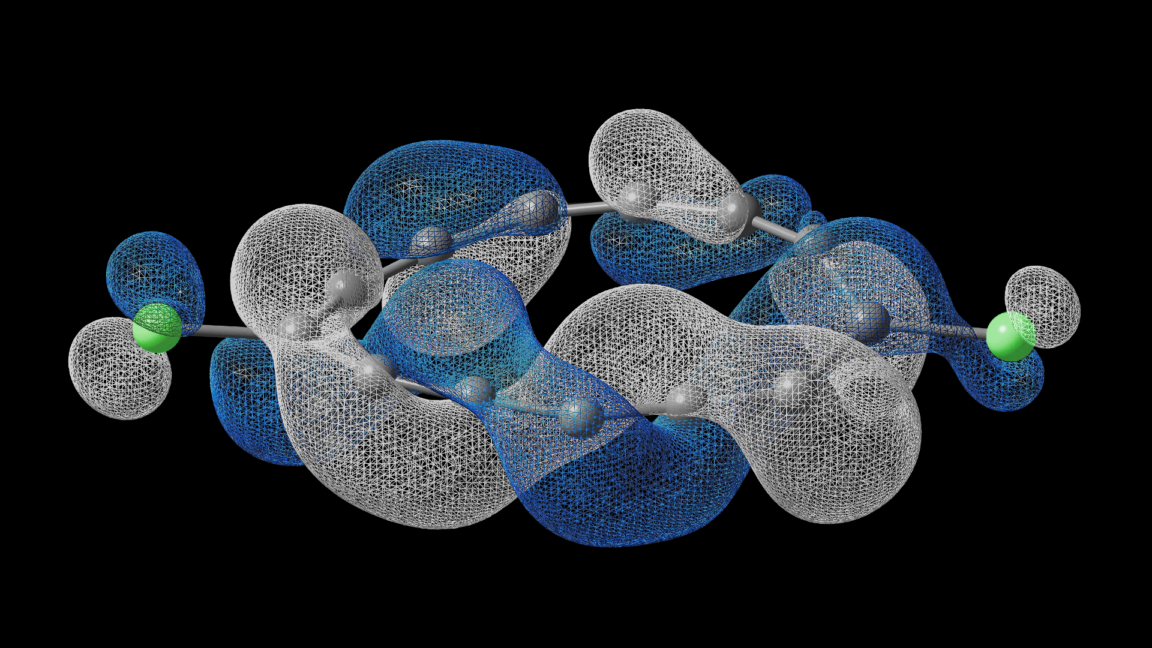
💡Quantum hardware now handles complex molecules—vital for AI in chem simulations
⚡ 30-Second TL;DR
What Changed
Simulates Möbius molecule with multiple electrons
Why It Matters
This breakthrough could speed up molecular modeling for drug discovery and materials science, aiding AI practitioners in hybrid quantum-classical workflows.
What To Do Next
Test molecular simulations on IBM Qiskit or Cirq to explore quantum chemistry algorithms.
Key Points
- •Simulates Möbius molecule with multiple electrons
- •Achievable on current quantum hardware
- •Advances quantum chemistry capabilities
- •Demonstrates topological complexity handling
🧠 Deep Insight
Background and context from public sources — not the original article. 4 sources cited.
🔑 Enhanced Key Takeaways
- •The molecule is a C13Cl2 structure assembled atom-by-atom at IBM’s Zurich lab from an Oxford-synthesized precursor, using STM and AFM under ultra-high vacuum at near-absolute-zero temperatures.[1][2][4]
- •IBM Heron quantum processor with 100 qubits and SqDRIFT algorithm simulated 32 electrons in an active space, exceeding classical limits of ~18 electrons.[1][2]
- •Simulations revealed helical pseudo-Jahn-Teller effect causing topology switching and confirmed twisted Dyson orbitals for electron attachment as half-Möbius hallmark.[1][2][4]
🛠️ Technical Deep Dive
- •Molecule formula: C13Cl2, a 13-carbon 2-chlorine ring with electrons twisting 90 degrees per loop, requiring 4 circuits to return to starting phase.[1][3][4]
- •Assembly: Atom-by-atom using scanning tunneling microscopy (STM) and atomic force microscopy (AFM), pioneered by IBM (Nobel 1986), with voltage pulses to remove atoms.[1][2][4]
- •Quantum simulation: IBM Heron processor (100 qubits), SqDRIFT (sample-based quantum diagonalization), quantum-centric supercomputing integrating QPUs, CPUs, GPUs; modeled helical pseudo-Jahn-Teller effect and Dyson orbitals.[1][2]
- •Validation: Confirmed left-twisted, right-twisted, untwisted configurations; first experimental half-Möbius electronic topology, never predicted or observed before.[1][3][4]
🔮 Future ImplicationsAI analysis grounded in cited sources
⏳ Timeline
📎 Sources (4)
Factual claims are grounded in the sources below. Forward-looking analysis is AI-generated interpretation.
- quantumcomputingreport.com — Ibm and Researchers Synthesize First Half Mobius Molecule Validated by Quantum Computing
- research.ibm.com — Half Mobius Molecule
- tipranks.com — Ibm Uses Quantum Supercomputer Combo to Model Newly Discovered Half Mobius Molecule
- phys.org — 2026 03 Molecule Exotic Nature Quantum
Weekly AI Recap
Read this week's curated digest of top AI events →
👉Related Updates
AI-curated news aggregator. All content rights belong to original publishers.
Original source: Ars Technica ↗
This is a summary, not the original. Read the source, or get the weekly briefing.
Weekly AI briefing
One email a week. Unsubscribe anytime.