Professor Zeng Ming on AI-Native Business Strategy
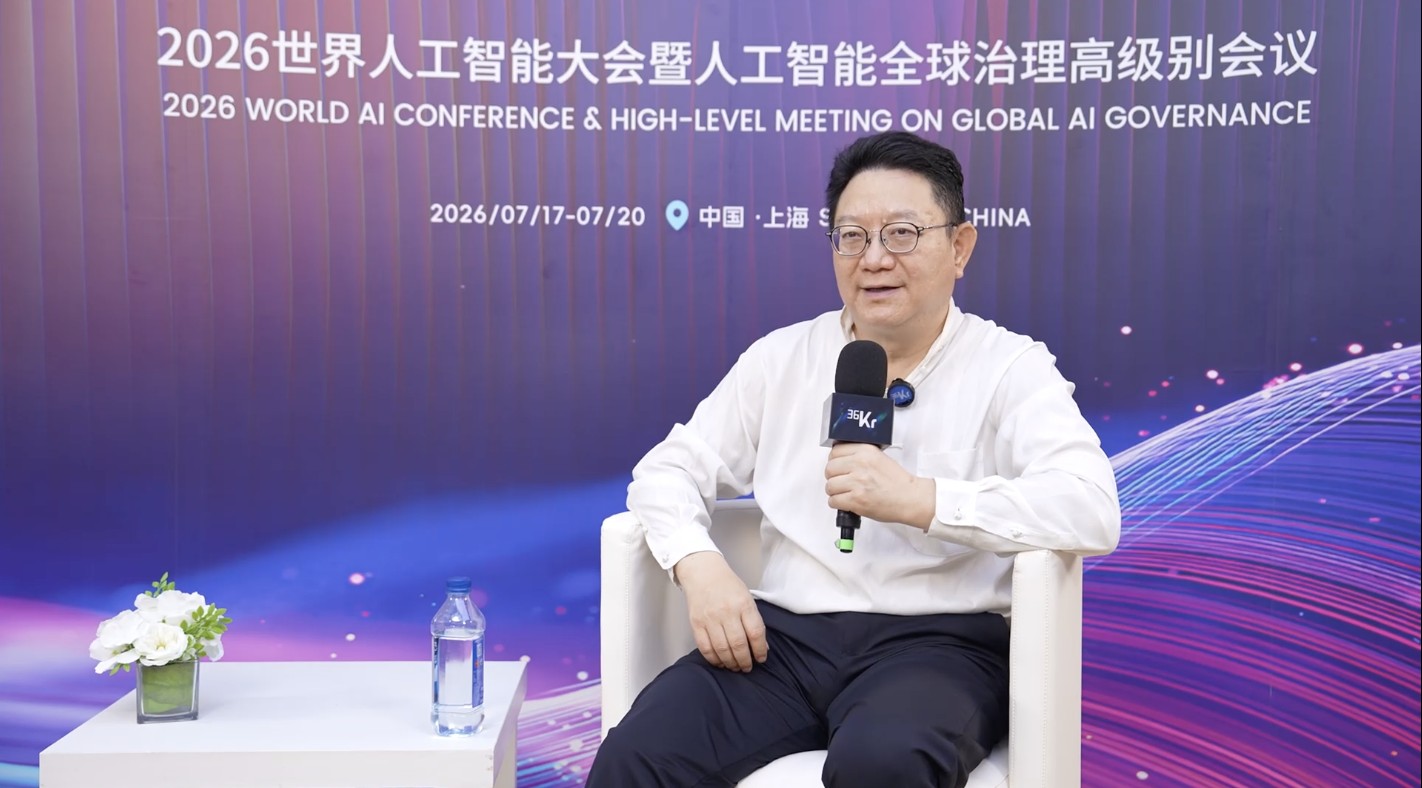
💡Learn how to move AI from a demo to a core business driver using the 'intelligent compounding' framework.
⚡ 30-Second TL;DR
What Changed
AI must move from efficiency tools to deep integration in core business workflows.
Why It Matters
Enterprises that fail to integrate AI into their core operational loops risk obsolescence as competitors leverage autonomous AI agents to drive self-reinforcing growth.
What To Do Next
Identify one core business task where an AI agent can take full responsibility for the outcome and build a feedback loop to measure its performance.
Key Points
- •AI must move from efficiency tools to deep integration in core business workflows.
- •Intelligent compounding requires AI to learn from real-world feedback loops.
- •The '60-point baseline' is critical: AI must be able to independently complete tasks to be valuable.
- •Transition from 'one-size-fits-all' to 'one-person-one-thousand-faces' personalization.
🧠 Deep Insight
AI-generated analysis for this event — not the original article.
🔑 Enhanced Key Takeaways
- •Zeng Ming's framework emphasizes 'Networked Intelligence,' where the value of an AI system increases exponentially as more nodes (users/agents) interact within the ecosystem.
- •He advocates for 'Algorithmic Management,' where AI agents replace traditional middle management by automating decision-making based on real-time data streams.
- •The strategy highlights the 'Data-Flywheel' effect, where the cost of data acquisition must decrease as the AI's capability to process and act on that data increases.
- •Zeng Ming distinguishes between 'Digitization' (moving processes online) and 'Intelligence' (AI-driven autonomous execution), arguing most firms are stuck in the former.
- •He posits that the ultimate competitive moat for AI-native businesses is the 'Feedback Velocity'—the speed at which an agent can learn from a user interaction and update its policy.
🛠️ Technical Deep Dive
- Focuses on Multi-Agent Systems (MAS) architecture where specialized agents handle sub-tasks within a business workflow.
- Utilizes Reinforcement Learning from Human Feedback (RLHF) integrated directly into production environments rather than just pre-training.
- Employs event-driven architecture to ensure AI agents react to real-world triggers in sub-second latency.
- Recommends a modular 'Agentic Workflow' design pattern over monolithic model deployment to allow for granular updates and specialized fine-tuning.
🔮 Future ImplicationsAI analysis grounded in cited sources
⏳ Timeline
Weekly AI Recap
Read this week's curated digest of top AI events →
👉Related Updates
AI-curated news aggregator. All content rights belong to original publishers.
Original source: 36氪 ↗
This is a summary, not the original. Read the source, or get the weekly briefing.
The weekly digest
One email a week. Unsubscribe anytime.