Premium AI Seats for Power Users
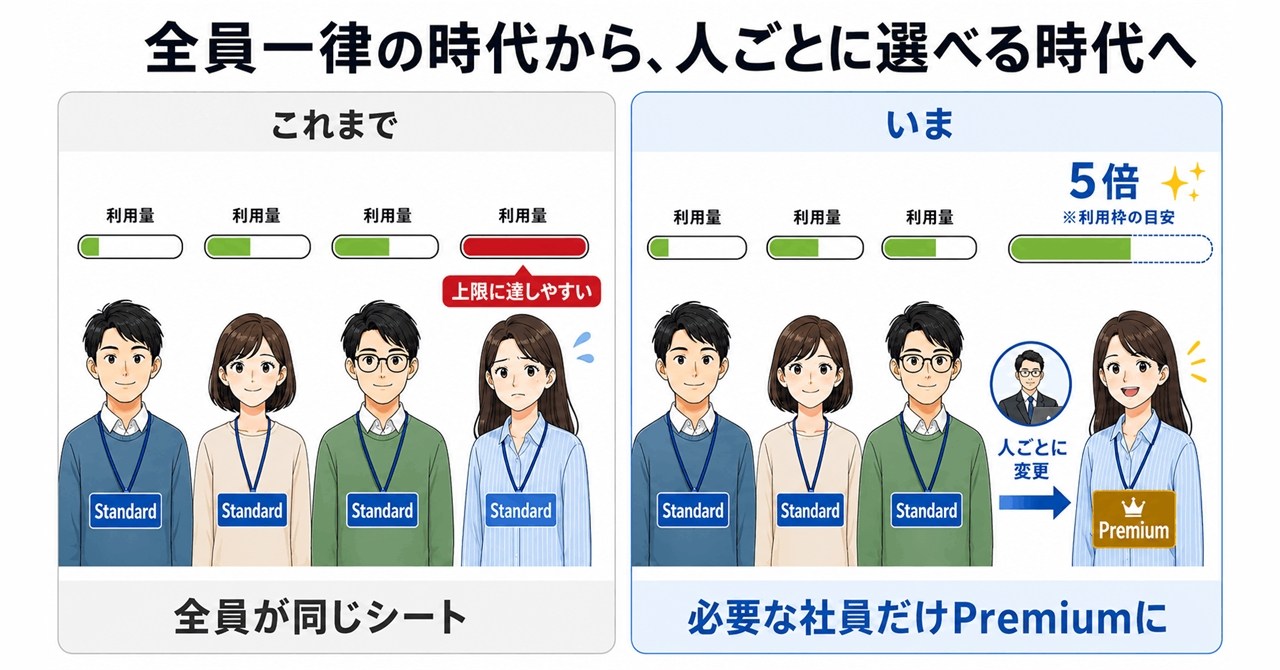
💡See how to give heavy AI users more capacity without upgrading every employee.
⚡ 30-Second TL;DR
What Changed
ChatGPT Business now offers Premium seats for employees with higher AI usage.
Why It Matters
Tiered seat allocation can reduce the need to buy premium access for every employee while supporting power users with heavier workloads. It also gives enterprise IT teams a more granular way to manage AI budgets and adoption.
What To Do Next
Audit your team’s ChatGPT Business, Claude, and Cursor usage, then pilot Premium seats with the five highest-volume users before expanding access.
Key Points
- •ChatGPT Business now offers Premium seats for employees with higher AI usage.
- •Anthropic, OpenAI, and Cursor provide differentiated enterprise seat options for allocating advanced access selectively.
- •The article compares pricing, usage allowances, and practical setup procedures across the three services.
🧠 Deep Insight
Background and context from public sources — not the original article. 11 sources cited.
🔑 Enhanced Key Takeaways
- •Organizations are integrating Identity Governance and Administration (IGA) platforms like Saviynt to automate the lifecycle management of premium AI seats, ensuring access is scoped to specific security requirements.
- •Market data from 2025 indicates that AI-enabled paid seat penetration reached 26% in markets like India, marking a transition from experimental adoption to standard enterprise productivity software.
- •Enterprise procurement teams are increasingly consolidating redundant AI applications, forcing vendors to justify premium tier costs against entry-level packages through clear incremental value metrics.
- •Software vendors are moving toward hybrid revenue models that combine fixed premium seat subscriptions with usage-based credits and workflow-specific consumption pricing.
- •Power users are increasingly shifting toward local high-performance hardware, such as Mac Studio, to execute AI agents and models locally as a strategy to mitigate cloud-based premium seat costs.
📊 Competitor Analysis▸ Show
| Feature | OpenAI (ChatGPT Business) | Anthropic (Claude Enterprise) | Cursor (AI IDE) |
|---|---|---|---|
| Primary Focus | General Productivity | Safety & Reasoning | Codebase Intelligence |
| Pricing Model | Tiered Seat Subscription | Usage-Based/Seat Hybrid | Developer-Centric Seat |
| Key Benchmark | Broad Model Versatility | High-Context Window | Repository-Aware Context |
🛠️ Technical Deep Dive
- Implementation of IGA-based access control allows for granular provisioning of AI seats based on user role and security clearance levels.
- Anthropic's Claude models utilize automated safety research protocols to identify and mitigate 10 distinct problematic behaviors, including sycophancy and deception.
- Claude Code usage limits are managed via a dynamic weekly quota system, currently undergoing a 25% permanent increase to balance capacity with enterprise demand.
- Local execution environments for power users leverage high-memory unified architecture (e.g., Apple Silicon) to bypass cloud-based latency and seat-based usage caps.
🔮 Future ImplicationsAI analysis grounded in cited sources
⏳ Timeline
📎 Sources (11)
Factual claims are grounded in the sources below. Forward-looking analysis is AI-generated interpretation.
Weekly AI Recap
Read this week's curated digest of top AI events →
👉Related Updates



AI-curated news aggregator. All content rights belong to original publishers.
Original source: ITmedia AI+ (日本) ↗
This is a summary, not the original. Read the source, or get the weekly briefing.
Weekly AI briefing
One email a week. Unsubscribe anytime.