SourcePandaily•Stalecollected in 2h
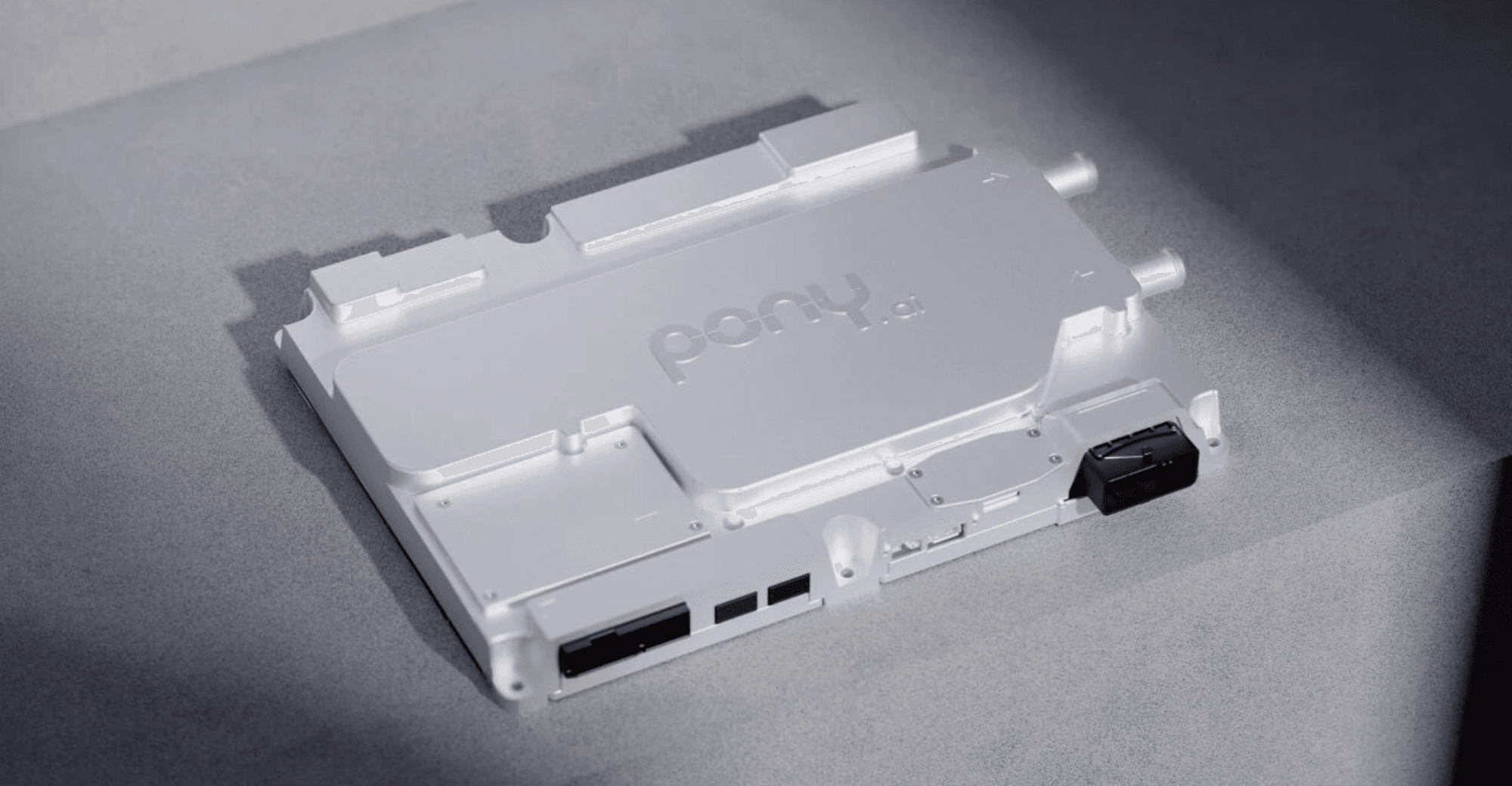
Pony.ai Launches NVIDIA-Powered L4 Controller
#autonomous-driving#domain-controller#robotaxiautonomous-driving-domain-controllerpony.ainvidiadrive-hyperion
💡NVIDIA-powered controller accelerates L4 AV and Robotaxi scaling
⚡ 30-Second TL;DR
What Changed
Next-gen domain controller unveiled by Pony.ai
Why It Matters
This launch bolsters Pony.ai's AV leadership, enabling faster scaling of L4 systems and Robotaxi fleets via NVIDIA's robust hardware.
What To Do Next
Evaluate NVIDIA DRIVE Hyperion integration for your L4 AV domain controller prototype.
Who should care:Enterprise & Security Teams
Key Points
- •Next-gen domain controller unveiled by Pony.ai
- •Powered by NVIDIA DRIVE Hyperion platform
- •Targets scalable L4 autonomous driving
- •Supports Robotaxi commercialization acceleration
🧠 Deep Insight
AI-generated analysis for this event — not the original article.
🔑 Enhanced Key Takeaways
- •The controller utilizes the NVIDIA DRIVE Orin system-on-a-chip (SoC) architecture, which provides the high-performance compute necessary for processing multi-sensor fusion data in real-time.
- •Pony.ai's new hardware design focuses on modularity and thermal efficiency, specifically engineered to reduce the physical footprint and power consumption of the compute stack in their seventh-generation Robotaxi fleet.
- •The integration with NVIDIA DRIVE Hyperion includes a standardized sensor suite and software stack, which Pony.ai claims will significantly shorten the validation and testing cycle for mass-producing autonomous vehicles.
📊 Competitor Analysis▸ Show
| Feature | Pony.ai (NVIDIA-based) | Baidu Apollo (Apollo Computing Unit) | Waymo (Custom Hardware) |
|---|---|---|---|
| Compute Platform | NVIDIA DRIVE Orin | NVIDIA Orin / Custom | Custom ASIC/TPU |
| Focus | Scalable Robotaxi | Ecosystem/Open Platform | Vertically Integrated |
| Hardware Strategy | Modular/Off-the-shelf | Modular/Hybrid | Proprietary/Closed |
🛠️ Technical Deep Dive
- Architecture: Built on the NVIDIA DRIVE Hyperion 9 platform, utilizing dual DRIVE Orin SoCs for redundant, high-performance compute.
- Compute Capability: Delivers up to 500 TOPS (trillion operations per second) per SoC, enabling complex perception and path planning algorithms.
- Sensor Integration: Supports high-bandwidth input from multiple LiDARs, cameras, and radar units with synchronized time-stamping.
- Thermal Management: Features an optimized liquid-cooling design to maintain performance stability during continuous high-load operation in urban environments.
🔮 Future ImplicationsAI analysis grounded in cited sources
Pony.ai will achieve a 20% reduction in per-vehicle hardware costs by 2027.
The shift to a standardized, modular NVIDIA Hyperion architecture allows for greater economies of scale compared to previous custom-built compute stacks.
The new controller will enable L4 operations in more complex, high-density urban environments.
Increased compute headroom allows for more sophisticated neural network models to handle edge cases in dense traffic scenarios.
⏳ Timeline
2016-12
Pony.ai founded in Silicon Valley.
2018-06
Pony.ai launches first public Robotaxi pilot in Guangzhou.
2021-01
Pony.ai announces strategic partnership with NVIDIA for autonomous driving compute.
2023-04
Pony.ai unveils its sixth-generation hardware architecture.
2024-11
Pony.ai completes its initial public offering (IPO) on the NASDAQ.
📰
Weekly AI Recap
Read this week's curated digest of top AI events →
👉Related Updates

AI-curated news aggregator. All content rights belong to original publishers.
Original source: Pandaily ↗
This is a summary, not the original. Read the source, or get the weekly briefing.
The weekly digest
One email a week. Unsubscribe anytime.