Police use drone to disarm person in nationwide first
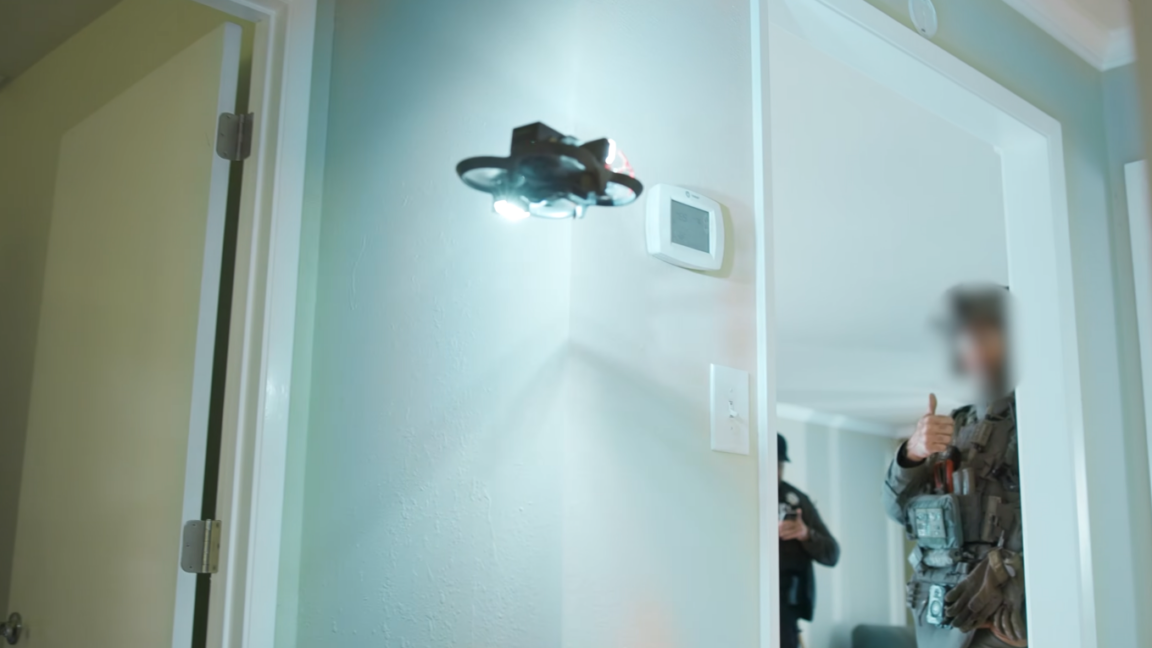
See how autonomous drone tech is moving from surveillance to active tactical intervention in law enforcement.
30-Second TL;DR
What Changed
Police successfully used a drone to disarm an incapacitated suspect.
Why It Matters
The successful deployment of drones for tactical intervention suggests a shift toward remote-controlled law enforcement, potentially reducing human risk in dangerous encounters. This could accelerate the demand for specialized computer vision and autonomous navigation software in the public safety sector.
What To Do Next
Explore the integration of low-latency computer vision APIs with drone SDKs to develop autonomous tactical assistance features.
Key Points
- •Police successfully used a drone to disarm an incapacitated suspect.
- •This marks a 'nationwide first' for law enforcement drone usage in tactical scenarios.
- •There is a growing trend of US police departments adopting drones as first responders.
Deep Insight
AI-generated analysis for this event — not the original article.
Enhanced Key Takeaways
- •The incident involved the use of a specialized drone equipped with a non-lethal payload, specifically a tethered projectile or mechanical manipulator designed to neutralize a threat without direct human contact.
- •Legal experts and civil liberties groups have raised concerns regarding the 'use of force' classification for autonomous systems, questioning whether drone-based disarmament constitutes a seizure under the Fourth Amendment.
- •The drone deployment was facilitated by a 'Drone as First Responder' (DFR) program, which allows remote pilots to bypass traditional dispatch times by launching pre-positioned UAVs from rooftops or automated docking stations.
- •This specific operation utilized advanced computer vision algorithms to track the suspect's movements and identify the weapon, minimizing the risk of collateral damage during the intervention.
- •The Federal Aviation Administration (FAA) has been granting increasing numbers of Beyond Visual Line of Sight (BVLOS) waivers to police departments, which are essential for the tactical operations described in the report.
Technical Deep Dive
- Platform: Typically utilizes enterprise-grade quadcopters such as the DJI Matrice series or Skydio X10, modified with custom payload release mechanisms.
- Control Architecture: Operates on a low-latency 5G or private LTE network to ensure real-time command and control for remote pilots.
- Sensor Suite: Incorporates high-resolution thermal imaging and 4K optical zoom cameras for target identification in low-light conditions.
- Autonomy: Employs obstacle avoidance systems and GPS-denied navigation capabilities to maintain stability in complex urban environments.
- Payload Mechanism: Features a custom-engineered, solenoid-actuated release system designed to deploy non-lethal deterrents with high precision.
Future ImplicationsAI analysis grounded in cited sources
Timeline
- 2020-05Chula Vista Police Department launches the first major DFR program in the US.
- 2023-09FAA begins streamlining BVLOS waiver processes for public safety agencies.
- 2025-11Expansion of automated docking station networks across major US metropolitan police departments.
- 2026-06First recorded instance of a police drone successfully disarming an incapacitated suspect.
Weekly AI Recap
Read this week's curated digest of top AI events →
AI-curated news aggregator. All content rights belong to original publishers.
Original source: Ars Technica ↗
This is a summary, not the original. Read the source, or get the weekly briefing.
The weekly digest
One email a week. Unsubscribe anytime.