Plasma Thrusters Bring Nuclear Fusion Tech to Space
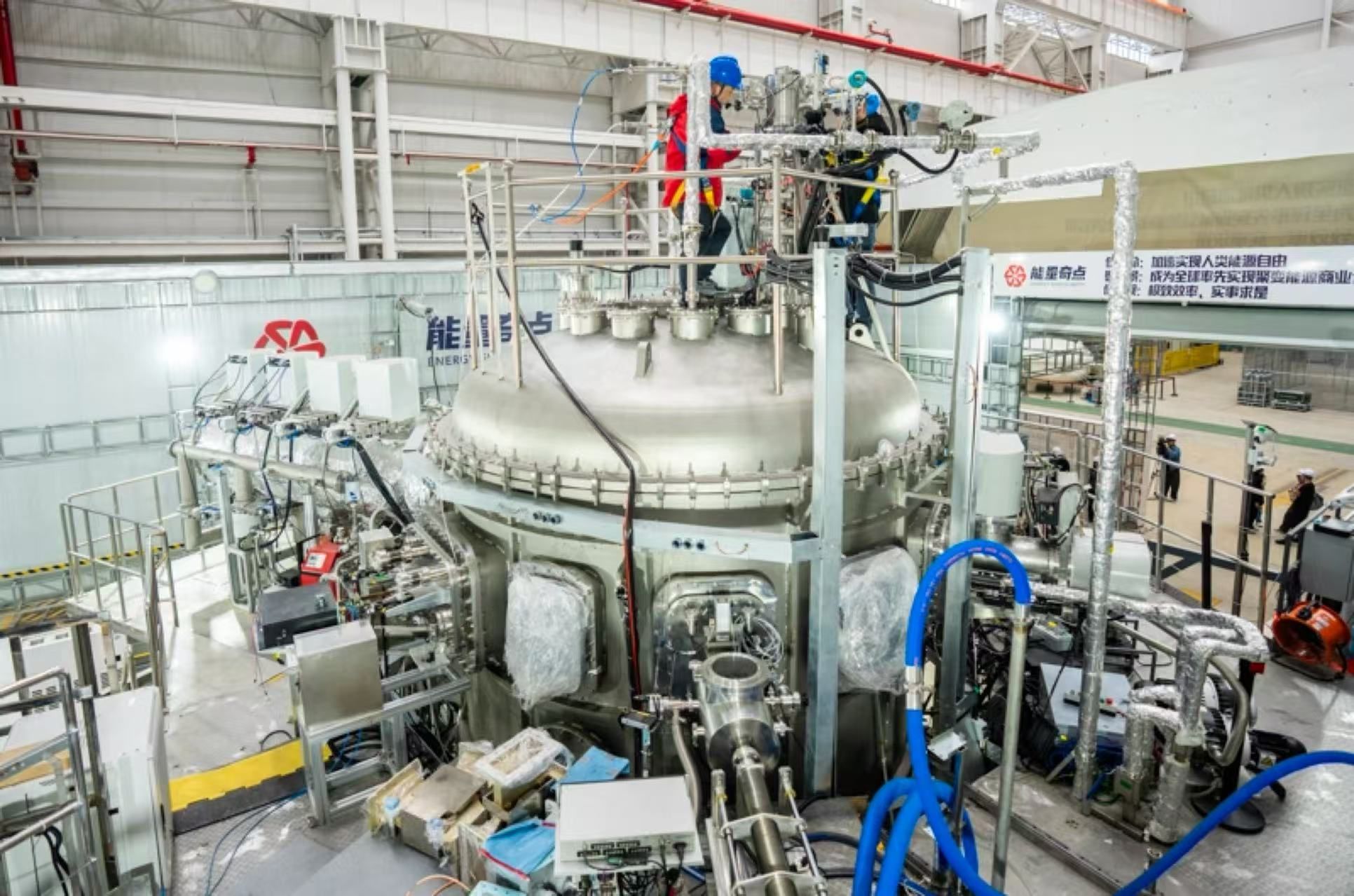
💡Fusion-derived propulsion is a game-changer for long-term orbital sustainability and satellite autonomy.
⚡ 30-Second TL;DR
What Changed
Adapts nuclear fusion R&D for commercial space propulsion
Why It Matters
This technology could significantly extend the lifespan of satellites in low orbits, reducing space debris and lowering the barrier for persistent orbital infrastructure.
What To Do Next
Monitor the development of orbital refueling standards to prepare for potential integration of automated maintenance systems in your satellite software stack.
Key Points
- •Adapts nuclear fusion R&D for commercial space propulsion
- •Enables satellite refueling in ultra-low Earth orbit
- •Reduces operational costs for long-term satellite missions
🧠 Deep Insight
Web-grounded analysis with 9 cited sources.
🔑 Enhanced Key Takeaways
- •Shanghai JetLab Power Technology is applying plasma thruster capabilities, originally developed for confining and accelerating charged particles in nuclear fusion devices, directly to space propulsion.
- •The company was founded in April 2025 and was incubated by Dongsheng Fusion (Shanghai) Technology Co., which itself was established in July 2025.
- •JetLab's plasma thrusters aim to achieve 'space refueling' by ionizing ambient atmospheric particles in ultra-low Earth orbit and expelling them to generate thrust, thereby eliminating the need for satellites to carry all their own propellant.
- •This innovation is part of a broader 'fusion spillover' ecosystem in China's Yangtze River Delta, where fusion research and development has already yielded commercial applications in areas like security scanning and proton therapy.
- •Plasma thrusters offer a significantly higher specific impulse (Isp) compared to conventional chemical rockets (e.g., VASIMR > 12000 s, Hall thrusters ~2000 s vs. chemical ~450 s), enabling greater speeds and longer mission durations with less fuel.
🛠️ Technical Deep Dive
- The core technology adapts plasma thruster capabilities from nuclear fusion research, specifically those used to confine and accelerate charged particles.
- The thrusters are designed for 'space refueling' in ultra-low Earth orbit (200–300 km altitude) by ionizing ambient atmospheric particles and ejecting them to produce thrust.
- Plasma thrusters typically generate thrust from a quasi-neutral plasma, often using internal currents and potentials to accelerate ions, which helps avoid issues like grid ion erosion seen in some ion thrusters.
- Plasma generation can be achieved using radio frequency or microwave energy, allowing for flexibility in propellant choice, including atmospheric gases.
- These systems are characterized by a high specific impulse, which is a measure of propellant efficiency, significantly exceeding that of chemical rockets.
- The exhaust plume is 'quasi-neutral,' meaning it contains an equal number of positive ions and electrons, simplifying the neutralization process in space.
- Research in China has demonstrated prototype plasma jet engines that use microwave energy to convert compressed air into a plasma jet, generating thrust comparable to commercial jet engines for atmospheric flight, which is relevant to the concept of using ambient air as propellant.
🔮 Future ImplicationsAI analysis grounded in cited sources
⏳ Timeline
📎 Sources (9)
Factual claims are grounded in the sources below. Forward-looking analysis is AI-generated interpretation.
Weekly AI Recap
Read this week's curated digest of top AI events →
👉Related Updates

AI-curated news aggregator. All content rights belong to original publishers.
Original source: Pandaily ↗