PKU Scholar Aims to Build Physics-Aware World Foundation Model
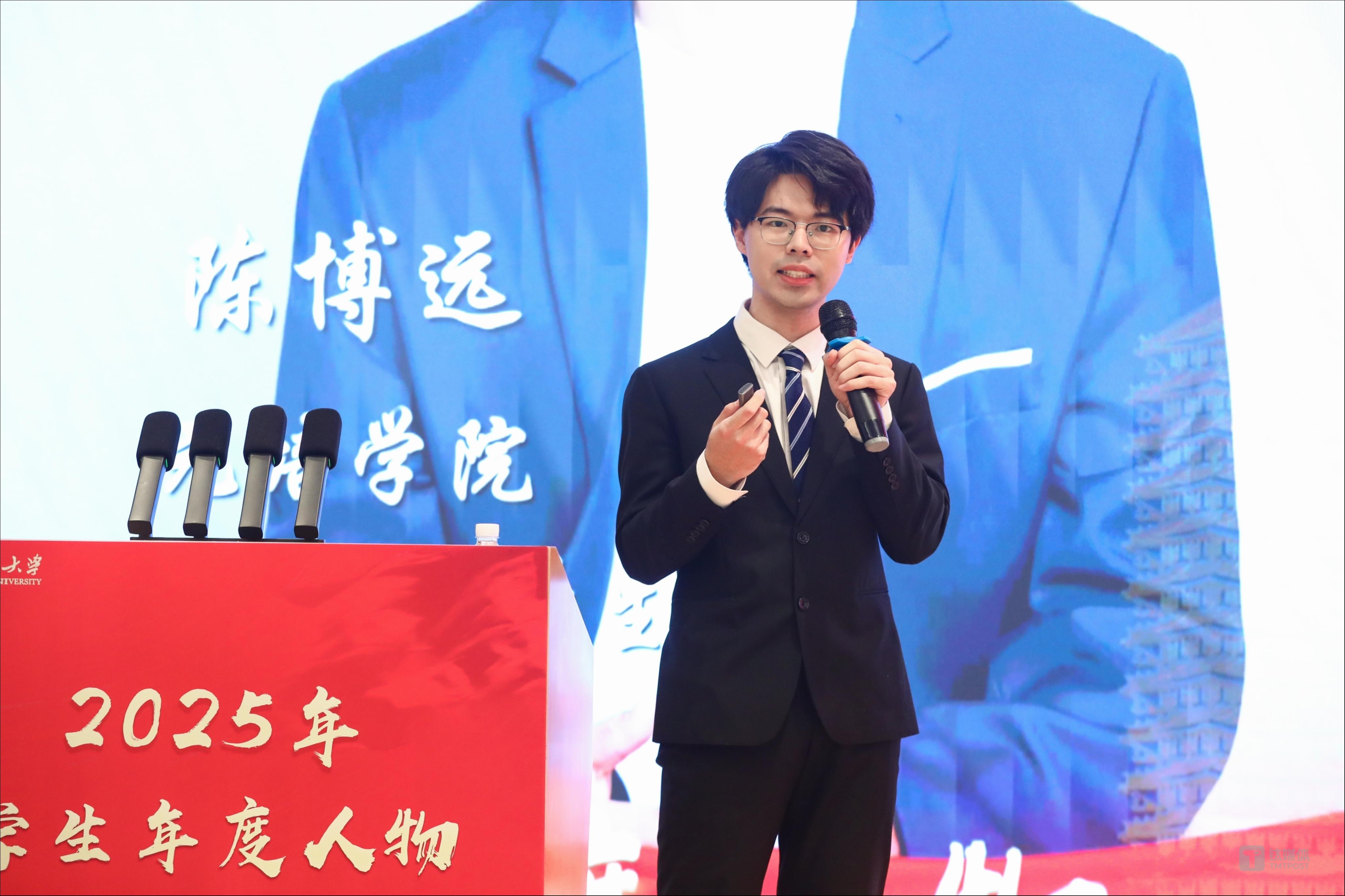
💡A novel research direction aiming to solve the 'hallucination' problem by grounding AI in physical reality.
⚡ 30-Second TL;DR
What Changed
Focus on physical correctness as the primary model metric
Why It Matters
If successful, this approach could revolutionize robotics, simulation, and scientific discovery by providing models that adhere to real-world constraints.
What To Do Next
Follow the research papers from this PKU lab to understand how they incorporate physical constraints into transformer-based architectures.
Key Points
- •Focus on physical correctness as the primary model metric
- •Moving beyond statistical token prediction to physical reasoning
- •Development of a universal world foundation model
- •Academic-led innovation in fundamental AI architecture
🧠 Deep Insight
Web-grounded analysis with 15 cited sources.
🔑 Enhanced Key Takeaways
- •The development of physics-aware AI models, such as Physics-Informed Neural Networks (PINNs), aims to overcome the limitations of purely data-driven approaches by embedding known physical laws, often expressed as partial differential equations (PDEs), directly into the neural network's training process.
- •These 'world foundation models' for physics are designed to learn universal physical principles from extensive and diverse scientific datasets, enabling them to generalize effectively to new, previously unseen physical systems and conditions without requiring extensive retraining.
- •Peking University's research includes the 'AI-Newton' system, led by Professor Ma Yanqing, which is capable of autonomously discovering fundamental physics laws from experimental data by employing symbolic regression to build a knowledge base of concepts and equations.
- •Integrating physical realism and dynamic simulation into generative AI is crucial for its evolution into a 'world simulator,' which is essential for applications in robotics, autonomous systems, and scientific simulations that require understanding interactions governed by physics.
🛠️ Technical Deep Dive
- Physics-Informed Neural Networks (PINNs): These networks incorporate physical principles or equations as constraints within their loss functions during training, ensuring that predictions are physically meaningful and accurate, even with noisy or incomplete data.
- Foundation Model Training: Unlike traditional AI models trained for specific subfields, physics foundation models are trained on colossal datasets from various research areas or experiments to learn the underlying physical processes, allowing for broad applicability.
- General Physics Transformer (GPhyT): This transformer-based architecture encodes multiple physical fields (e.g., velocity, pressure, temperature) at various time steps into spatiotemporal patches using a linear encoder. It also computes spatial and temporal derivatives via finite differences to aid in identifying underlying physics.
- AI-Newton's Symbolic Regression: The system mimics human scientific discovery by progressively building a knowledge base of concepts and laws, using symbolic regression to search for the optimal mathematical equations to represent physical phenomena.
- MatterChat's Bridge Model: This framework from Berkeley Lab acts as a specialized intermediary, translating between the general knowledge of Large Language Models (LLMs) and the deep understanding of atomic-scale physics encoded in scientific interatomic potentials.
🔮 Future ImplicationsAI analysis grounded in cited sources
⏳ Timeline
📎 Sources (15)
Factual claims are grounded in the sources below. Forward-looking analysis is AI-generated interpretation.
Weekly AI Recap
Read this week's curated digest of top AI events →
👉Related Updates

AI-curated news aggregator. All content rights belong to original publishers.
Original source: 钛媒体 ↗