PJM電網模型低估可靠產能
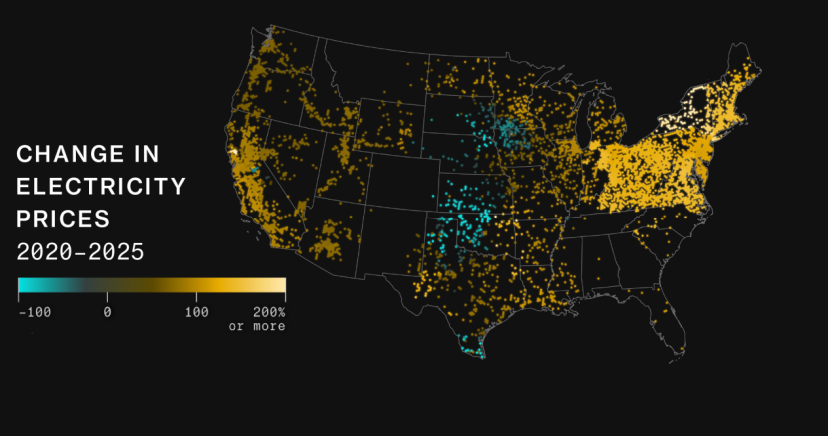
💡AI data centers are hitting a grid whose capacity model may be overcharging users and understating available power.
⚡ 30-Second TL;DR
What Changed
PJM’s capacity auction prices rose from $28.92 to roughly $270–$333 per MW-day.
Why It Matters
Electricity availability and pricing are becoming strategic constraints for AI infrastructure. Data-center operators may increasingly need long-term power contracts, on-site generation, or alternative regions with faster grid access.
What To Do Next
When planning an AI data center, model regional power prices, interconnection queues, and on-site generation options instead of assuming grid capacity is immediately available.
Key Points
- •PJM’s capacity auction prices rose from $28.92 to roughly $270–$333 per MW-day.
- •Four auctions generated $63.6 billion in payments, with only 4.8 GW of additional generation capacity.
- •The model reportedly ignores winter efficiency gains and continues relying on outdated outage data from Winter Storm Elliott.
- •Correcting the biases could reveal about 3.8 GW of additional reliable capacity and avoid roughly $12 billion in unnecessary costs.
- •PJM received 220 GW of interconnection applications as AI data-center projects accelerated.
🧠 Deep Insight
Background and context from public sources — not the original article. 8 sources cited.
🔑 Enhanced Key Takeaways
- •PJM's 'Reserve Requirement Study' model is criticized as a 'black box' that fails to account for post-Winter Storm Elliott infrastructure hardening and seasonal efficiency gains.
- •The 2028/2029 capacity auction resulted in a shortfall of 6,831 MW relative to reliability targets, a figure critics argue was artificially inflated by PJM's board against internal model data.
- •PJM has proposed a 'Reliability Backstop Procurement' mechanism to FERC, which includes controversial provisions for load-shedding protocols specifically targeting large-scale data centers.
- •PJM's internal governance is under scrutiny for overriding member-preferred auction designs, leading to accusations of a lack of transparency in how capacity gaps are calculated.
- •PJM released a new five-year strategic plan on August 19, 2026, aiming to integrate AI and automation to improve grid operations and address the 30 GW of projected data center demand growth by 2030.
🛠️ Technical Deep Dive
- The model utilizes a Reserve Requirement Study (RRS) framework that determines the Installed Reserve Margin (IRM) and Forecast Pool Requirement (FPR).
- Current methodology relies on historical forced outage rates (EFORd) that critics claim are outdated and fail to reflect current fleet performance improvements.
- The model lacks dynamic adjustment factors for ambient temperature impacts on thermal generation efficiency during peak winter periods.
- The interconnection queue management system is currently processing 220 GW of requests, with new protocols being developed to prioritize projects based on grid impact and readiness.
🔮 Future ImplicationsAI analysis grounded in cited sources
⏳ Timeline
📎 Sources (8)
Factual claims are grounded in the sources below. Forward-looking analysis is AI-generated interpretation.
Weekly AI Recap
Read this week's curated digest of top AI events →
👉Related Updates


AI-curated news aggregator. All content rights belong to original publishers.
Original source: 虎嗅 ↗
This is a summary, not the original. Read the source, or get the weekly briefing.
Weekly AI briefing
One email a week. Unsubscribe anytime.