Pixel 11 Adds Custom Vibration Patterns
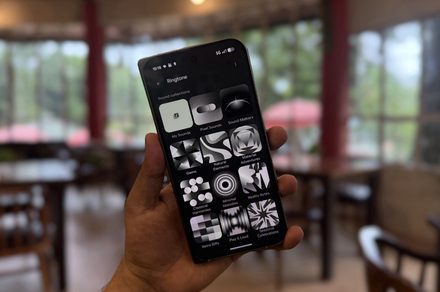
💡Pixel 11’s haptic controls could make mobile AI assistants more useful without requiring users to check the screen.
⚡ 30-Second TL;DR
What Changed
Custom vibration patterns are coming to the Pixel 11 series.
Why It Matters
The change improves accessibility and silent-use workflows by making alerts distinguishable without looking at the screen. For AI app builders, it suggests more opportunities to use haptic feedback as an output channel for mobile assistants and notifications.
What To Do Next
Prototype a mobile assistant notification flow that maps urgent, routine, and contact-specific events to distinct haptic patterns.
Key Points
- •Custom vibration patterns are coming to the Pixel 11 series.
- •Users can assign different patterns to ringtones and notifications.
- •Specific contacts can receive their own identifiable vibration pattern.
🧠 Deep Insight
Web-grounded analysis with 21 cited sources.
🔑 Enhanced Key Takeaways
- •The custom vibration patterns feature was quietly rolled out with the Pixel 11 series, without being highlighted in the launch materials.
- •The development of this feature was first uncovered through an APK teardown of the Google Sounds app by Android Authority early last year, revealing separate vibration controls for ringtones and notifications.
- •The ability to assign specific vibration patterns to individual contacts was later discovered in the code for Google Contacts in September of last year.
- •The Pixel 11 offers a selection of preset vibration patterns, including 'Heartbeat,' 'Gears,' 'Rattlesnake,' and 'Pulse,' among others.
- •Users can adjust the intensity of vibrations and utilize a 'Matches ringtone' option that automatically selects a vibration pattern suitable for the chosen ringtone.
📊 Competitor Analysis▸ Show
| Feature | Google Pixel 11 (Android) | Apple iPhone (iOS) | Samsung Galaxy (Android) |
|---|---|---|---|
| Custom Vibration Patterns | Yes, for ringtones, notifications, and individual contacts. Preset patterns available, intensity adjustment. | Yes, for ringtones, text tones, and individual contacts. Users can create custom patterns by tapping. | Yes, for calls, notifications, and individual contacts. Preset patterns and custom pattern creation via Good Lock/Sound Assistant on some models. |
| Per-Contact Customization | Yes, assign unique patterns to specific contacts. | Yes, assign unique patterns to specific contacts. | Yes, assign unique patterns to specific contacts. |
| Per-App Customization | Not explicitly mentioned in the article or search results for Pixel 11. | Yes, assign custom patterns to various alert types (e.g., Text Tone, New Mail). | Limited; some older discussions indicate per-app customization was not natively supported. |
| Pattern Creation Method | Selection from preset patterns; 'Matches ringtone' option. | 'Create New Vibration' by tapping on screen to record. | Selection from preset patterns; custom pattern recording with intensity levels via Sound Assistant (Good Lock). |
🛠️ Technical Deep Dive
- Android provides Haptics APIs that allow developers to create custom vibration effects beyond standard waveforms.
- Custom vibration patterns can be achieved by precisely controlling the vibration amplitude to create smooth ramp-up and ramp-down effects.
- Rich haptics leverage a wider frequency range of the device vibrator to produce smoother effects, such as crescendo or diminuendo.
- The Android framework includes haptics primitives (e.g., SPIN, THUD) that can be combined to create complex vibration compositions like 'Resist,' 'Expand,' 'Wobble,' and 'Bounce.'
- Vibration waveform with envelopes, using classes like
BasicEnvelopeBuilderandWaveformEnvelopeBuilder, enables precise control over the vibration's amplitude and frequency over time. - Devices vary in haptic capabilities, ranging from basic on/off vibration to those supporting amplitude control and specific haptic primitives.
- Modern smartphones typically employ finely controlled haptic motors, such as Eccentric Rotating Mass (ERM) and Linear Resonant Actuators (LRA), with piezoelectric actuators used for the most advanced haptic systems.
- For consistency across Android devices, it is recommended to use
HapticFeedbackConstants, which also provide fallback behavior for unsupported complex effects. - The
android.permission.VIBRATEpermission is necessary for Android applications to utilize vibration functionalities.
🔮 Future ImplicationsAI analysis grounded in cited sources
⏳ Timeline
📎 Sources (21)
Factual claims are grounded in the sources below. Forward-looking analysis is AI-generated interpretation.
Weekly AI Recap
Read this week's curated digest of top AI events →
👉Related Updates

AI-curated news aggregator. All content rights belong to original publishers.
Original source: Digital Trends ↗
Weekly AI briefing
One email a week. Unsubscribe anytime.