Pigeon Liver Cells Enable Geomagnetic Navigation
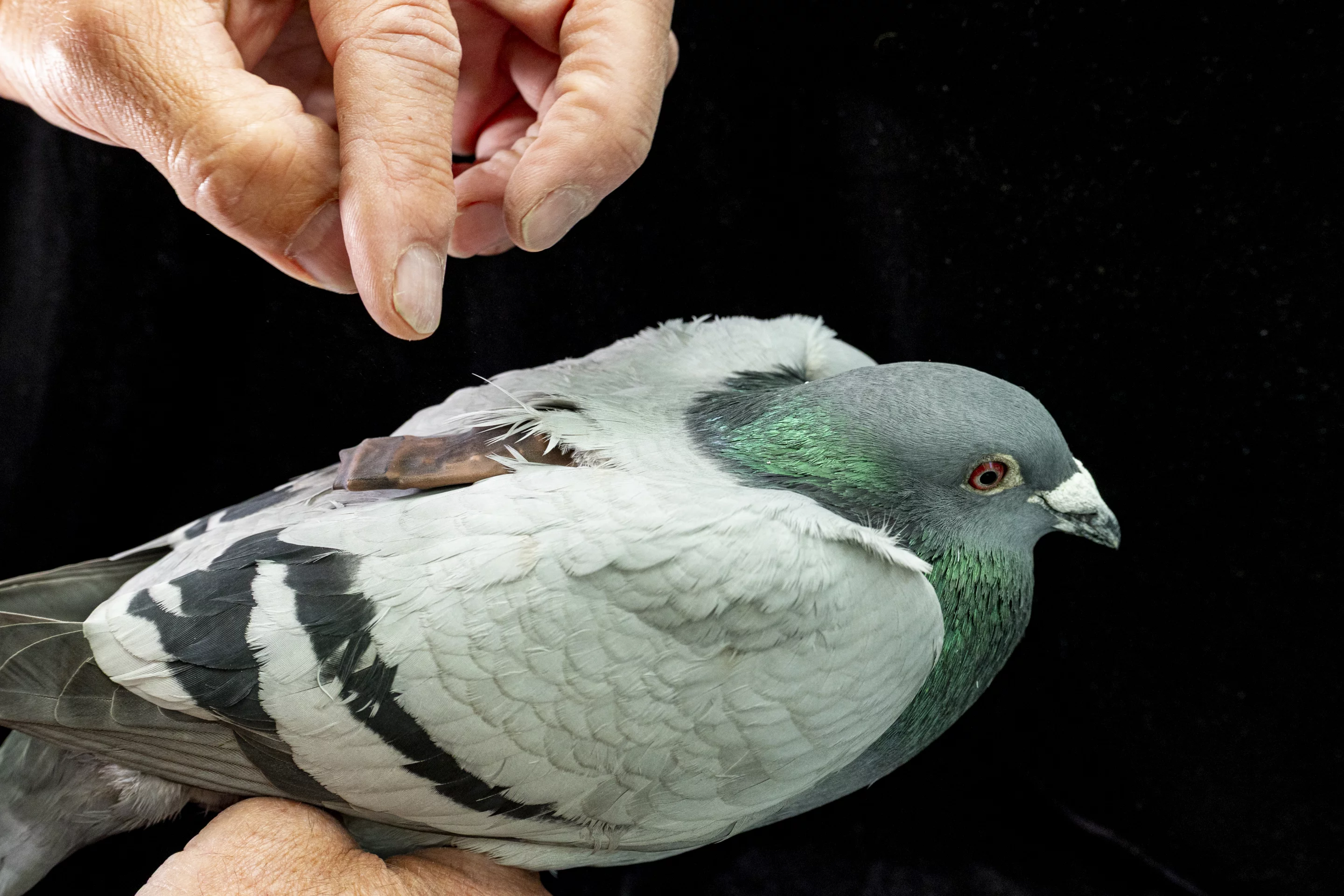
💡Discover how biological magnetoreception could revolutionize autonomous navigation and sensor technology.
⚡ 30-Second TL;DR
What Changed
Carrier pigeons utilize iron-rich immune cells in the liver for magnetoreception.
Why It Matters
Understanding biological magnetoreception could inspire new approaches to robust, low-power navigation systems in robotics and autonomous drones.
What To Do Next
Explore biomimetic sensor designs by researching magnetoreception mechanisms for potential integration into autonomous navigation hardware.
Key Points
- •Carrier pigeons utilize iron-rich immune cells in the liver for magnetoreception.
- •The study provides a breakthrough in understanding biological navigation mechanisms.
- •Research led by the Max Planck Institute for Biological Intelligence.
🧠 Deep Insight
Background and context from public sources — not the original article. 12 sources cited.
🔑 Enhanced Key Takeaways
- •The newly identified magnetoreceptors are specifically macrophages, a type of immune cell, which become superparamagnetic due to accumulated iron from breaking down old red blood cells.
- •This discovery introduces a novel, iron-based magnetoreception mechanism that operates in the liver, complementing or challenging the long-standing 'radical pair mechanism' which posits light-dependent magnetoreception in the eyes via cryptochrome proteins.
- •The finding contrasts with a previously debunked theory that iron-rich cells in the pigeon's beak were magnetoreceptors; those cells were also identified as macrophages but were not found to be involved in magnetic sensation.
- •The iron-rich macrophages in the liver are strategically located near nerve fibers, suggesting a direct pathway for magnetic information to be transmitted to the pigeon's brain.
- •This research broadens the understanding of the immune system's functions, indicating its role extends beyond defense and healing to include sensing environmental cues like magnetic fields.
🛠️ Technical Deep Dive
- The magnetoreceptive cells are identified as macrophages, a type of immune cell found in the pigeon's liver.
- These macrophages accumulate iron, primarily from the breakdown of old red blood cells.
- The accumulated iron forms nanoparticles within the macrophages, rendering them superparamagnetic.
- When the pigeons are in flight, these superparamagnetic nanoparticles align with the Earth's magnetic field, becoming 'magnetized.'
- The macrophages are situated in close proximity to nerve fibers, facilitating the transmission of magnetic information from the liver to the brain.
- This mechanism is distinct from the radical pair mechanism, which involves cryptochrome proteins in the retina and is light-dependent, relying on quantum entanglement to sense magnetic fields.
- It also differs from the electromagnetic induction mechanism, which has been proposed for the inner ear and involves highly sensitive electric sensors.
🔮 Future ImplicationsAI analysis grounded in cited sources
⏳ Timeline
📎 Sources (12)
Factual claims are grounded in the sources below. Forward-looking analysis is AI-generated interpretation.
Weekly AI Recap
Read this week's curated digest of top AI events →
👉Related Updates
AI-curated news aggregator. All content rights belong to original publishers.
Original source: cnBeta (Full RSS) ↗
This is a summary, not the original. Read the source, or get the weekly briefing.
The weekly digest
One email a week. Unsubscribe anytime.