Pig Price Rebound: Industry Turning Point?
💡Understand how industrial-scale AI and data-driven efficiency are disrupting traditional agricultural cycles.
⚡ 30-Second TL;DR
What Changed
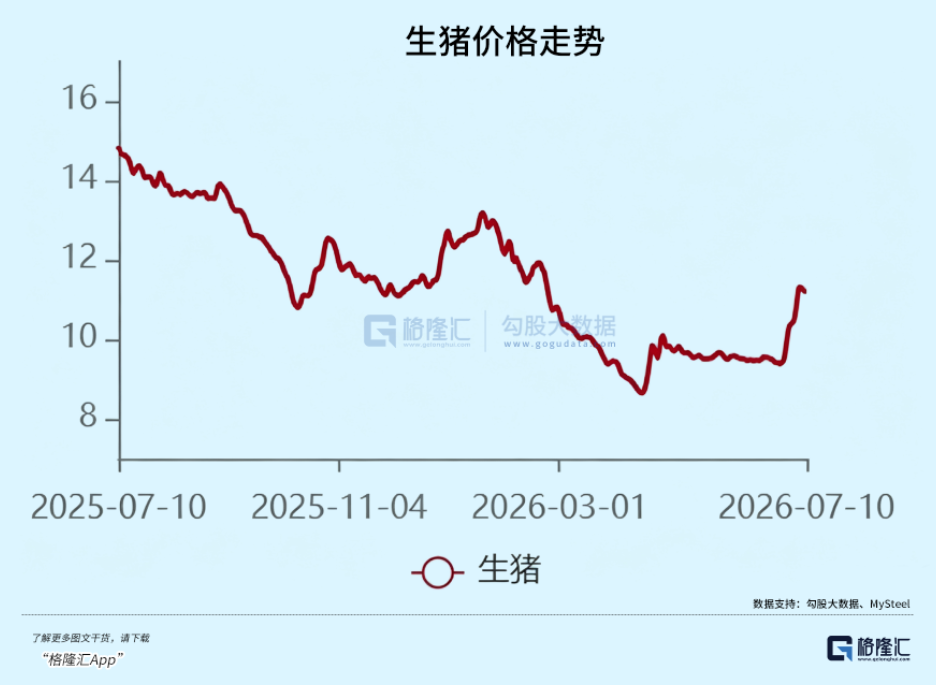
Hog prices rose nearly 20% between late June and early July
Why It Matters
The shift toward intelligent, large-scale farming suggests a growing market for AI-driven agricultural management systems and precision livestock monitoring.
What To Do Next
Explore opportunities for developing or integrating computer vision and IoT sensors for real-time livestock health and growth monitoring in large-scale farms.
Key Points
- •Hog prices rose nearly 20% between late June and early July
- •Supply contraction driven by secondary fattening and policy-mandated capacity reduction
- •Industry shift toward large-scale, efficient, and intelligent farming models
- •Traditional hog cycle logic is being disrupted by scale and technology
🧠 Deep Insight
AI-generated analysis for this event — not the original article.
🔑 Enhanced Key Takeaways
- •The recent price surge is significantly influenced by the 'pig cycle' synchronization across major producers, where collective herd reduction strategies have tightened market supply faster than historical norms.
- •Feed cost volatility, particularly regarding imported soybean meal and domestic corn price fluctuations, remains a critical variable offsetting the profit margins gained from the 20% price rebound.
- •Government intervention has shifted from simple price subsidies to 'capacity regulation' mechanisms, which mandate strict sow inventory caps to prevent the extreme oversupply seen in previous cycles.
- •Biosecurity investments, specifically the adoption of AI-driven disease monitoring systems, have become the primary barrier to entry for small-scale farmers, accelerating industry consolidation.
- •Financial leverage among mid-sized hog producers has reached a critical threshold, forcing many to exit the market or be acquired by larger, cash-rich enterprises to avoid insolvency.
🛠️ Technical Deep Dive
- Implementation of IoT-based environmental control systems in mega-farms allows for real-time monitoring of temperature, humidity, and ammonia levels to optimize feed conversion ratios (FCR).
- Deployment of computer vision and facial recognition technology for pigs enables automated health tracking, individual weight estimation, and early detection of African Swine Fever (ASF) symptoms.
- Integration of blockchain-based traceability systems ensures supply chain transparency from farm to slaughterhouse, meeting increasing regulatory requirements for food safety.
- Utilization of big data analytics platforms to forecast market demand and adjust breeding cycles, effectively decoupling production schedules from traditional seasonal price fluctuations.
🔮 Future ImplicationsAI analysis grounded in cited sources
⏳ Timeline
Weekly AI Recap
Read this week's curated digest of top AI events →
👉Related Updates




AI-curated news aggregator. All content rights belong to original publishers.
Original source: 虎嗅 ↗
This is a summary, not the original. Read the source, or get the weekly briefing.
The weekly digest
One email a week. Unsubscribe anytime.