Physical AI: The Next Industrial Revolution
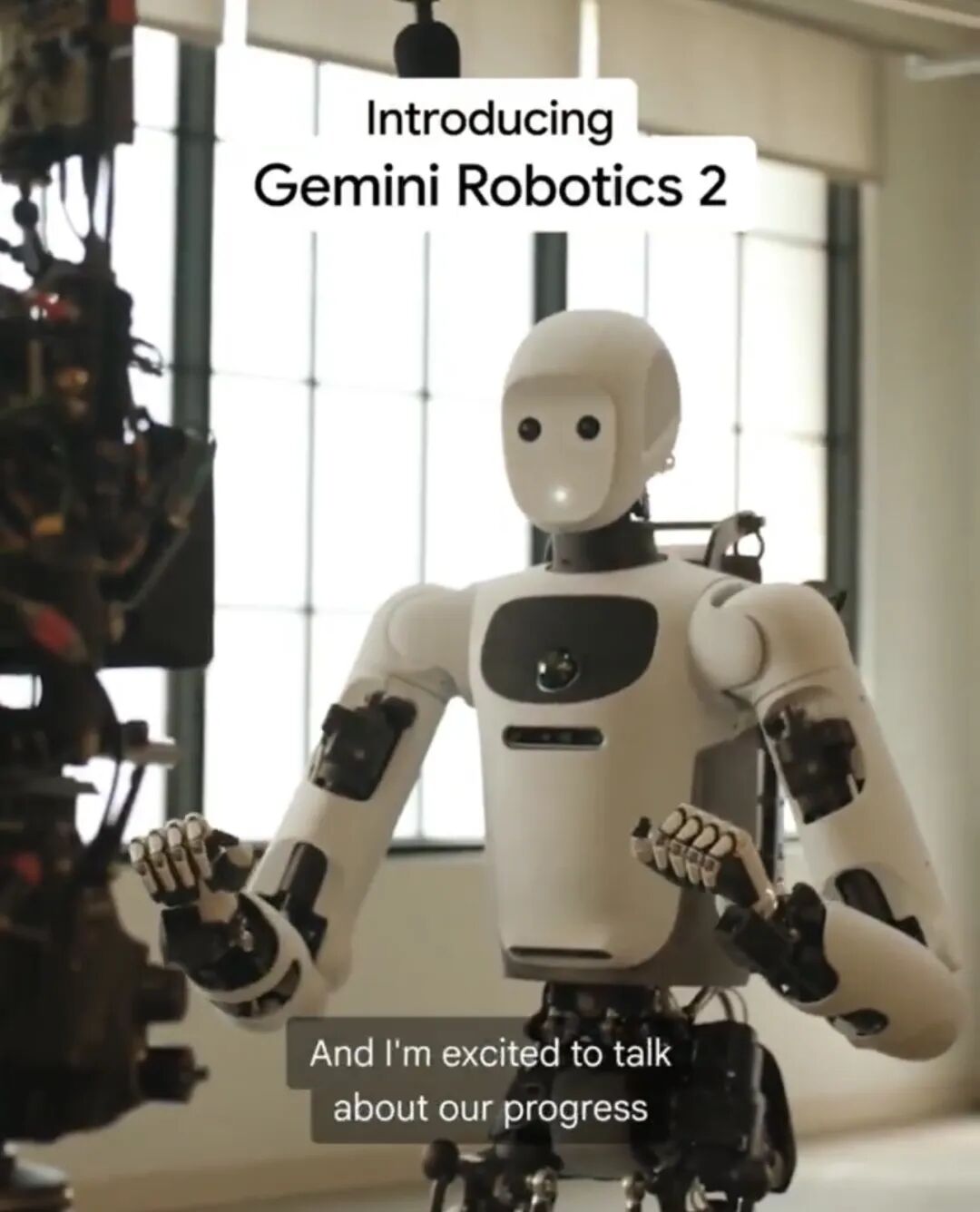
See why Physical AI may reshape industrial technology more profoundly than the next software trend.
30-Second TL;DR
What Changed
2026 is framed as Physical AI’s potential 1995 moment.
Why It Matters
If the thesis is correct, companies will need to treat embodied intelligence as a core industrial capability rather than a short-lived trend. This could accelerate investment in robotics, simulation, sensor systems, and deployment infrastructure.
What To Do Next
Use NVIDIA Isaac Sim to prototype one physical-AI workflow and measure simulation-to-real transfer, latency, and safety requirements.
Key Points
- •2026 is framed as Physical AI’s potential 1995 moment.
- •The sector may experience an investment or market bubble.
- •Physical AI is presented as a force capable of transforming industrial operations.
- •The article takes a long-term, industry-level view rather than announcing a specific product.
Deep Insight
AI-generated analysis for this event — not the original article.
Enhanced Key Takeaways
- •Physical AI integrates Large World Models (LWMs) with robotic hardware, enabling machines to perceive, reason, and act in unstructured environments rather than just executing pre-programmed tasks.
- •The 2026 surge is driven by the convergence of embodied intelligence, edge computing, and advancements in multimodal foundation models that allow robots to understand natural language instructions.
- •Major industrial players are shifting from 'automation' (fixed, repetitive tasks) to 'autonomy' (adaptive, context-aware operations), significantly reducing the cost of deploying robots in dynamic settings.
- •Standardization of simulation-to-reality (Sim2Real) training pipelines has become the primary technical bottleneck, as companies race to create high-fidelity digital twins for training AI agents.
- •Governmental and industrial bodies are increasingly focusing on 'Physical AI Safety' frameworks to address the risks associated with autonomous systems operating in human-centric environments.
Technical Deep Dive
- Embodied Foundation Models: Utilization of transformer-based architectures trained on massive datasets of video, tactile, and proprioceptive sensor data to predict future states.
- Sim2Real Transfer: Implementation of domain randomization and physics-based simulation environments (such as NVIDIA Isaac or similar platforms) to bridge the gap between virtual training and physical deployment.
- Edge-Cloud Hybrid Inference: Architecture where low-latency motor control is handled by local edge processors, while complex reasoning and high-level planning are offloaded to cloud-based or local high-performance compute clusters.
- Multimodal Sensor Fusion: Integration of LiDAR, depth cameras, and tactile sensors into a unified latent space, allowing the AI to maintain object permanence and spatial awareness.
Future ImplicationsAI analysis grounded in cited sources
Timeline
- 2023-03Emergence of early multimodal foundation models capable of basic robotic control tasks.
- 2024-06Increased industry focus on 'Embodied AI' as a distinct research category from pure LLMs.
- 2025-02First large-scale commercial pilots of general-purpose humanoid robots in manufacturing environments.
- 2026-01Widespread adoption of standardized Sim2Real training protocols across the robotics industry.
Weekly AI Recap
Read this week's curated digest of top AI events →
Related Updates

AI-curated news aggregator. All content rights belong to original publishers.
Original source: 钛媒体 ↗
This is a summary, not the original. Read the source, or get the weekly briefing.
The weekly digest
One email a week. Unsubscribe anytime.