PhysBrain 1.0: FPV-Trained Embodied Base Model
💡SOTA embodied model from cheap human FPV data—redefines robotics training
⚡ 30-Second TL;DR
What Changed
PhysBrain 1.0 launched with understanding-first paradigm using 3,000h FPV data
Why It Matters
Introduces scalable training for embodied AI via abundant human data, reducing costs and improving generalization. Challenges trajectory-fitting norms, accelerating humanoid robotics progress.
What To Do Next
Download open-source PhysBrain 1.0 and benchmark on spatial reasoning tasks.
Key Points
- •PhysBrain 1.0 launched with understanding-first paradigm using 3,000h FPV data
- •TwinBrainVLA addresses physical commonsense gaps in traditional VLA models
- •Achieves SOTA in spatial intelligence and embodied interaction benchmarks
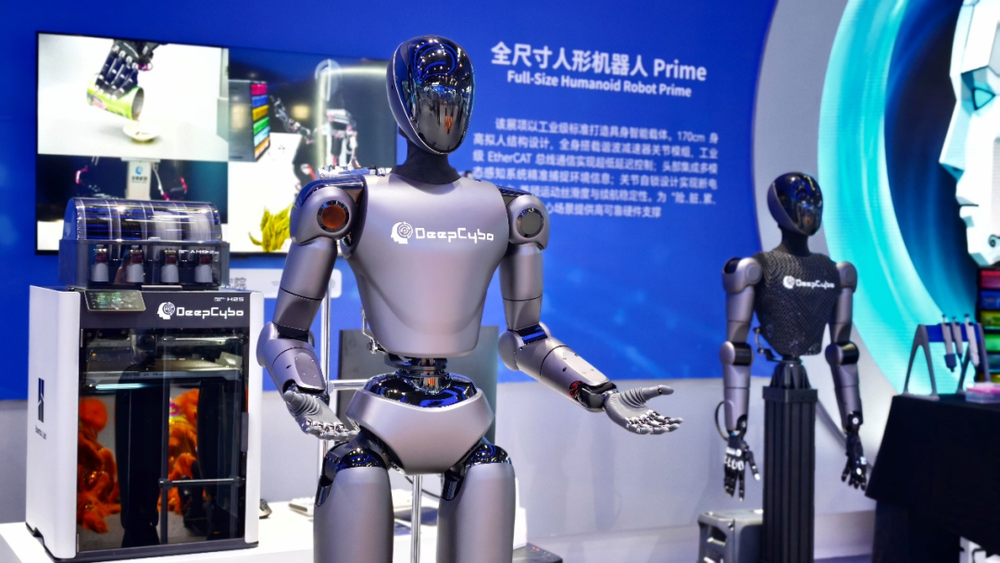
- •Prime robot verifies model in real-world with mm-precision operations
- •Shifts industry from expensive robot data to low-cost human videos
🧠 Deep Insight
AI-generated analysis for this event — not the original article.
🔑 Enhanced Key Takeaways
- •PhysBrain 1.0 utilizes a proprietary 'Physical-Aware Tokenization' (PAT) layer that explicitly encodes 3D spatial constraints into the latent space, distinguishing it from standard Vision-Language-Action (VLA) models that rely solely on pixel-to-action mapping.
- •The model's training pipeline incorporates a novel 'Cross-Modal Physical Consistency' loss function, which penalizes the model when predicted robot trajectories violate basic Newtonian physics observed in the 3,000 hours of FPV training data.
- •Shendu Jizhi has open-sourced a subset of the 'PhysBench' evaluation suite, allowing third-party researchers to benchmark spatial reasoning capabilities against the Prime robot's performance metrics.
📊 Competitor Analysis▸ Show
| Feature | PhysBrain 1.0 | Google RT-2 | Tesla Optimus (Gen 3) |
|---|---|---|---|
| Primary Training Data | 3,000h Human FPV | Web-scale VLA | Teleoperation/Simulation |
| Physical Reasoning | Explicit Physics Layer | Implicit/Emergent | Simulation-heavy |
| Architecture | TwinBrainVLA | Transformer-based VLA | End-to-end Neural Net |
| Benchmark Focus | Spatial/Physical | Semantic/Generalist | Task-specific/Speed |
🛠️ Technical Deep Dive
- TwinBrainVLA Architecture: A dual-stream transformer design where one stream processes high-level semantic intent (Language) and the second stream processes low-level physical dynamics (Vision/Proprioception), fused via a cross-attention mechanism.
- LangForce Strategy: A reinforcement learning framework that uses natural language feedback to refine physical motor primitives, reducing the need for manual reward function engineering.
- Spatial Intelligence: The model achieves sub-millimeter precision by integrating a real-time depth-estimation head that operates at 60Hz, synchronized with the robot's joint state feedback.
- Data Efficiency: By leveraging FPV, the model achieves a 10x reduction in required teleoperation data compared to traditional imitation learning baselines.
🔮 Future ImplicationsAI analysis grounded in cited sources
⏳ Timeline
Weekly AI Recap
Read this week's curated digest of top AI events →
👉Related Updates


AI-curated news aggregator. All content rights belong to original publishers.
Original source: 虎嗅 ↗
This is a summary, not the original. Read the source, or get the weekly briefing.
The weekly digest
One email a week. Unsubscribe anytime.