Embodied AI Data Industry: 4.47B RMB Funding in One Year
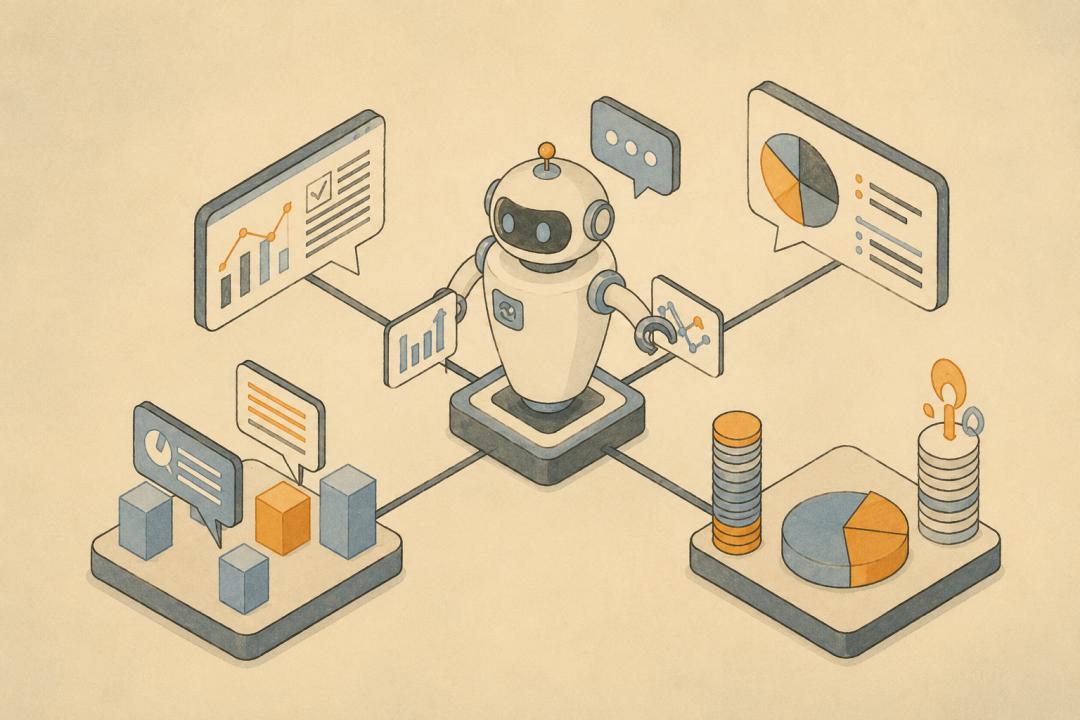
💡Understand the emerging embodied AI data market landscape and the shift in collection strategies for robot training.
⚡ 30-Second TL;DR
What Changed
97 domestic players identified, with 70 focusing on data collection and 27 on infrastructure.
Why It Matters
The professionalization of embodied data services suggests a shift toward data-centric robotics development. This lowers the barrier for model training but highlights a massive supply-demand gap for high-quality physical interaction data.
What To Do Next
Evaluate your data pipeline: if you are building embodied models, consider outsourcing to independent data service providers to scale your training set efficiently.
Key Points
- •97 domestic players identified, with 70 focusing on data collection and 27 on infrastructure.
- •Data collection techniques include real-machine teleoperation, non-embodied demonstration, simulation, and video distillation.
- •Independent data service providers have become the largest player group, surpassing robot hardware manufacturers.
- •Industry capacity is currently 1.6-1.8 million hours/year, with a 1-3 year goal of 25-35 million hours.
🧠 Deep Insight
AI-generated analysis for this event — not the original article.
🔑 Enhanced Key Takeaways
- •The surge in funding is largely driven by the 'Data Flywheel' hypothesis, where companies are racing to solve the 'Sim-to-Real' gap by scaling high-quality, diverse datasets to train General Purpose Robot (GPR) foundation models.
- •Government policy in China, specifically the 'Robot + Application' action plan, has incentivized local municipalities to subsidize embodied AI data centers, significantly lowering the barrier to entry for startups.
- •There is a growing trend of 'Data-as-a-Service' (DaaS) business models where firms are specializing in synthetic data generation using high-fidelity physics engines like NVIDIA Isaac Sim to augment real-world data.
- •Major Chinese tech giants, including ByteDance and Meituan, have begun internalizing data collection pipelines, creating a competitive pressure for independent service providers to offer specialized, high-precision human-in-the-loop (HITL) annotation services.
- •The industry is currently facing a standardization crisis, with the China Electronics Standardization Institute (CESI) initiating efforts to define unified formats for robot trajectory and multimodal sensor data to ensure interoperability across different hardware platforms.
📊 Competitor Analysis▸ Show
| Company Category | Primary Focus | Key Differentiator | Data Scaling Strategy |
|---|---|---|---|
| Independent DaaS | Data Annotation/Cleaning | Agnostic to hardware | Human-in-the-loop (HITL) crowdsourcing |
| Hardware-Integrated | Robot-specific datasets | High-fidelity sensor alignment | Proprietary robot fleet collection |
| Synthetic Data Firms | Simulation-based training | Low cost, infinite scale | Physics-engine-based generation |
| Cloud/AI Giants | Foundation Model Training | Massive compute resources | Internet video distillation |
🛠️ Technical Deep Dive
- Multimodal Data Fusion: Current pipelines utilize Transformer-based architectures to align proprioceptive robot data (joint angles, torque) with exteroceptive data (RGB-D video, LiDAR point clouds).
- Video Distillation: Implementation of Vision-Language-Action (VLA) models that convert unstructured internet video into robot-executable trajectory sequences using inverse reinforcement learning.
- Synthetic Augmentation: Use of Domain Randomization (DR) in simulation to vary lighting, texture, and physics parameters to improve model robustness when deployed on physical hardware.
- Annotation Efficiency: Deployment of automated keyframe extraction algorithms to reduce the cost of human labeling for teleoperation demonstrations.
🔮 Future ImplicationsAI analysis grounded in cited sources
⏳ Timeline
Weekly AI Recap
Read this week's curated digest of top AI events →
👉Related Updates
AI-curated news aggregator. All content rights belong to original publishers.
Original source: 36氪 ↗
This is a summary, not the original. Read the source, or get the weekly briefing.
The weekly digest
One email a week. Unsubscribe anytime.