Philips CEO: AI Enhancing Clinical Accuracy and Efficiency
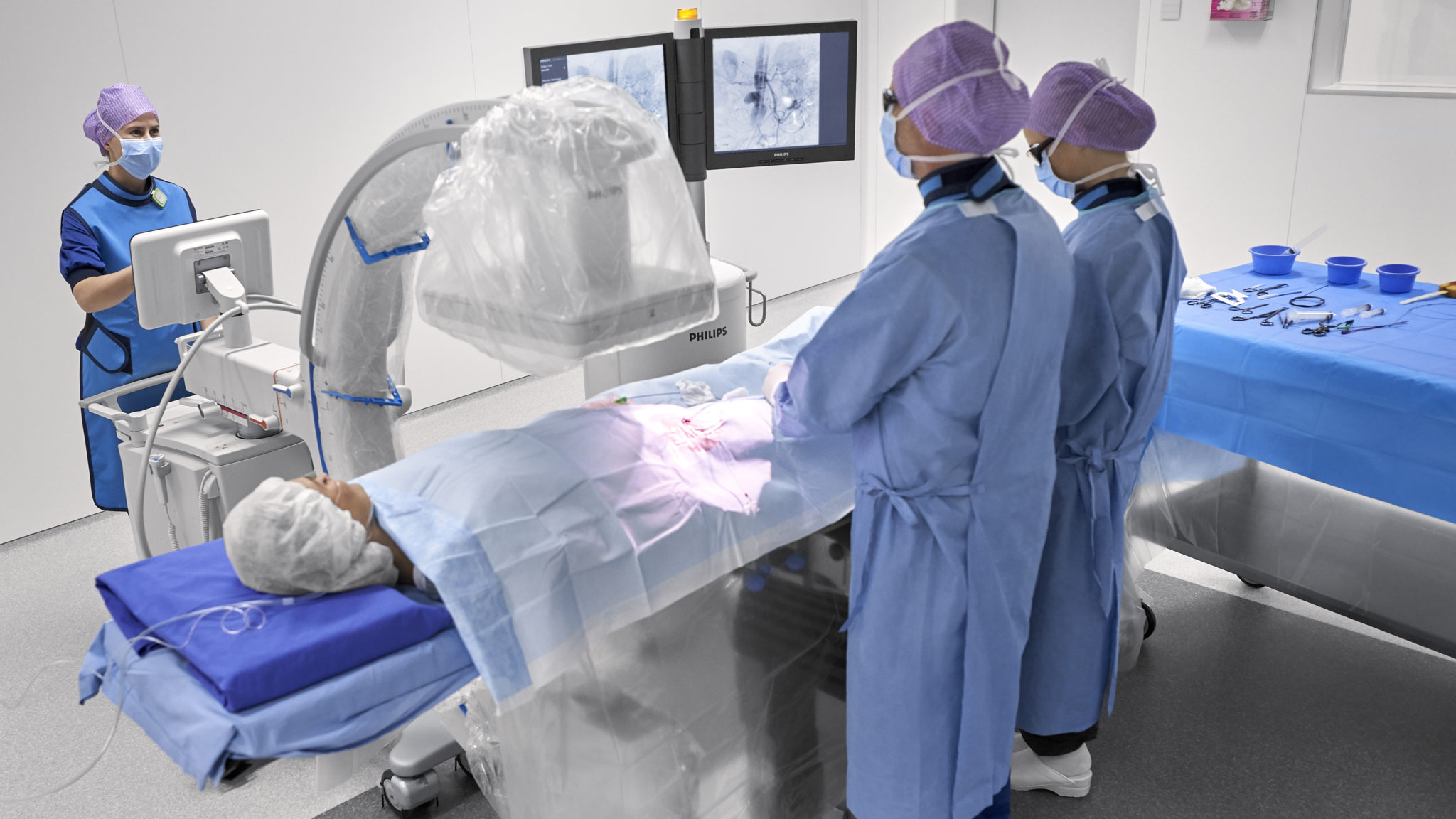
💡Insights into how enterprise-grade AI is successfully driving ROI in the highly regulated healthcare sector.
⚡ 30-Second TL;DR
What Changed
AI improves diagnostic accuracy in clinical workflows
Why It Matters
This signals a broader industry shift toward AI-assisted diagnostics, creating opportunities for specialized medical AI model development.
What To Do Next
Explore the Philips HealthSuite API documentation to understand how to integrate clinical data with AI diagnostic tools.
Key Points
- •AI improves diagnostic accuracy in clinical workflows
- •Implementation leads to measurable time and cost savings
- •Philips is actively integrating AI into imaging and cloud diagnostic services
🧠 Deep Insight
Background and context from public sources — not the original article. 20 sources cited.
🔑 Enhanced Key Takeaways
- •Philips' AI strategy is structured around three core functions: automation of repetitive tasks, augmentation of clinical capabilities, and agility in adapting to healthcare needs, all aimed at amplifying clinical effectiveness and efficiency.
- •The company's HealthSuite platform, a regulatory-compliant platform-as-a-service (PaaS) built on Amazon Web Services (AWS), provides cloud capabilities for imaging AI and machine learning solutions, with an ambitious goal to improve 2.5 billion lives per year by 2030.
- •Philips is actively engaging in co-development partnerships with healthcare systems, such as the seven-year strategic alliance with WellSpan Health, to evaluate, validate, and develop AI-enabled and digital healthcare tools specifically designed to reduce administrative and operational burdens on staff and reclaim workforce time.
- •Beyond diagnostic imaging, Philips' AI solutions extend to critical areas like patient monitoring (e.g., predicting respiratory distress in ICU patients), clinical decision support, and personalized self-care, aiming to provide actionable insights at the point of care.
- •Philips AI Manager serves as an end-to-end, cloud-based solution that provides radiology departments with access to an ecosystem of AI applications from multiple vendors, facilitating diagnostic reading and seamlessly integrating with existing Picture Archiving and Communication Systems (PACS) and Radiology Information Systems (RIS).
🛠️ Technical Deep Dive
- Philips HealthSuite Platform: A regulatory-compliant Platform-as-a-Service (PaaS) built on Amazon Web Services (AWS), leveraging Amazon Elastic Compute Cloud (Amazon EC2) for secure, resizable compute capacity and AWS IoT Core for connecting billions of IoT devices. It utilizes natural-language processing and language comprehension to structure textual reports, which are then fed back to the development environment to enhance learning and retrain models.
- Philips AI Manager: A cloud-based solution designed for radiology departments, offering access to a multi-vendor ecosystem of AI applications. It integrates deeply with Philips Vue PACS and Philips Radiology Information System (RIS) to deliver AI-generated insights directly into the radiologist's primary reading environment.
- SmartSpeed (MR Imaging): An AI-based imaging technology that employs a unique Compressed-SENSE based deep learning AI algorithm. This technology can increase MRI imaging speed by up to a factor of 3 and provide up to 65% greater resolution. The neural network behind it is trained for various contrasts and acceleration factors to ensure data consistency and signal fidelity.
- SmartSpeed Precise: An advanced version of SmartSpeed, powered by Dual-AI engines, which further enhances productivity and delivers an 80% improvement in image sharpness, enabling faster scans and more confident diagnoses.
- PET/CT Adaptive Reconstruction: Features AI-based smart processing of PET data during reconstruction. It uses machine learning and neural network algorithms to develop look-up tables for automated selection of PET reconstruction algorithm parameters, reducing image noise and enhancing contrast.
- CT Precise Image: An advanced CT reconstruction technique that applies a supervised learning process and convolutional neural networks to reproduce the image appearance traditionally associated with high-dose filtered back-projection reconstruction.
- CT Precise Position: A camera-based solution that utilizes convolutional neural network technology to identify anatomical landmarks of patient anatomy, enabling automatic and accurate patient positioning on the CT table.
- HealthSuite Insights: An AI platform providing advanced analytic capabilities and tools for data scientists and developers to build, maintain, deploy, and scale AI-based solutions. It supports machine learning and deep learning applications across diagnostic imaging, patient monitoring, oncology, and genomics. It includes HealthSuite De-Identification Services for privacy and a Clinical Data Lake for high-volume data collection.
- MLOps Platform: Philips utilizes an MLOps platform built on Amazon SageMaker to standardize and accelerate the development and deployment of machine learning applications across its diverse business units, addressing challenges posed by fragmented AI development environments.
🔮 Future ImplicationsAI analysis grounded in cited sources
⏳ Timeline
📎 Sources (20)
Factual claims are grounded in the sources below. Forward-looking analysis is AI-generated interpretation.
Weekly AI Recap
Read this week's curated digest of top AI events →
👉Related Updates
AI-curated news aggregator. All content rights belong to original publishers.
Original source: cnBeta (Full RSS) ↗
This is a summary, not the original. Read the source, or get the weekly briefing.
The weekly digest
One email a week. Unsubscribe anytime.