Perception Era Secures Funding for Robotic Tactile Systems
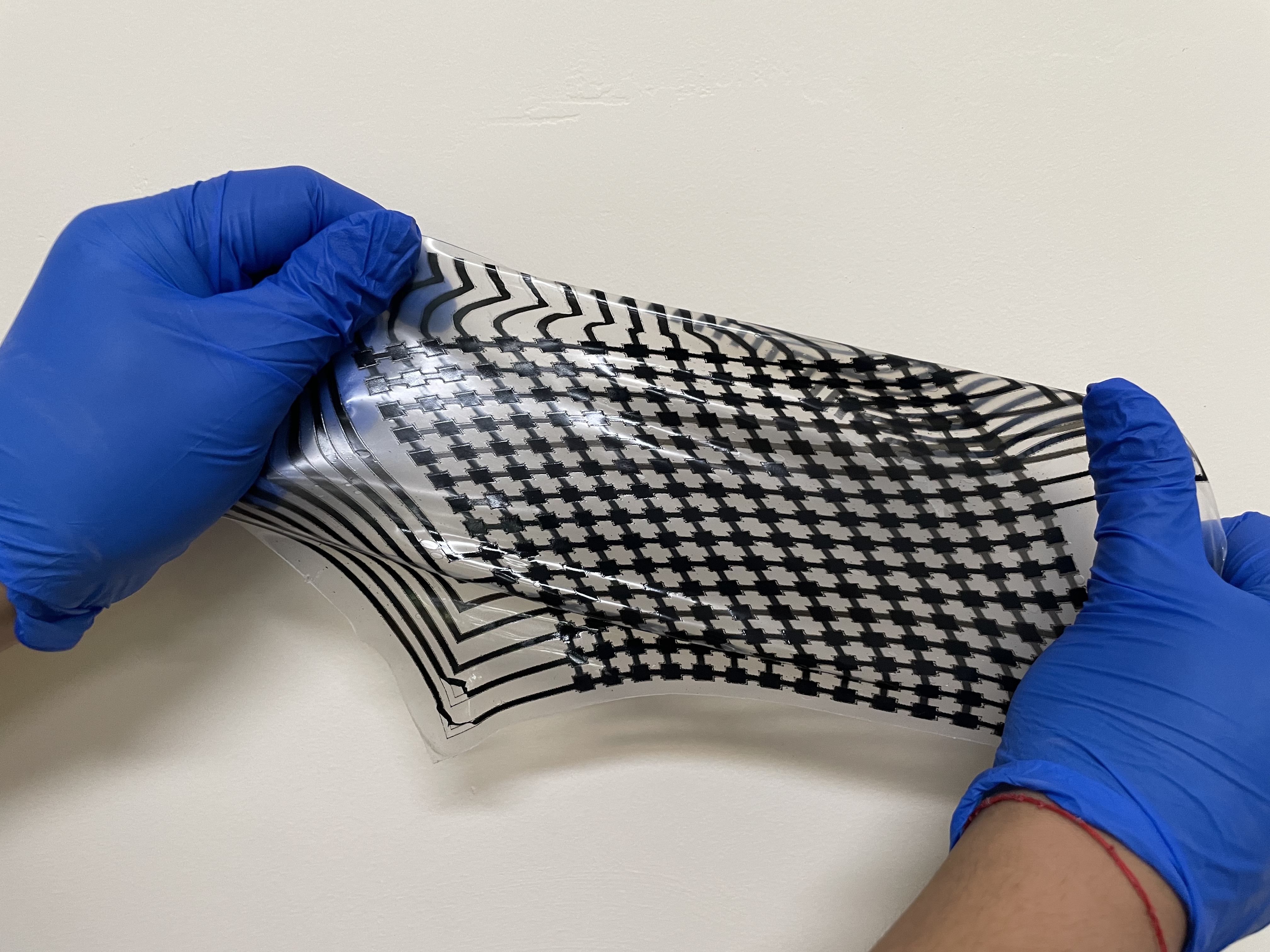
💡A breakthrough in embodied AI: new tactile skin technology enabling robots to 'feel' and understand physical objects.
⚡ 30-Second TL;DR
What Changed
Raised tens of millions in angel funding led by Songhe Capital.
Why It Matters
This technology addresses the 'tactile bottleneck' in embodied AI, moving robots from simple sensing to complex physical interaction. It is critical for the industrial and medical deployment of humanoid robots.
What To Do Next
Evaluate integrating multimodal tactile sensors into your robot's control loop to improve fine-motor manipulation capabilities.
Key Points
- •Raised tens of millions in angel funding led by Songhe Capital.
- •Developed a highly elastic (400% stretch) bionic skin integrating pressure, temperature, and texture sensing.
- •Utilizes migration learning algorithms to enable robots to understand physical object properties.
- •Strategic partnerships signed with domestic humanoid robot companies and EV manufacturers.
🧠 Deep Insight
AI-generated analysis for this event — not the original article.
🔑 Enhanced Key Takeaways
- •Perception Era's core technology leverages a proprietary 'ion-electronic' sensing mechanism that mimics human mechanoreceptors to achieve high-fidelity tactile feedback.
- •The company is addressing the 'sim-to-real' gap in robotics by providing high-density tactile datasets that allow foundation models to better interpret physical interactions.
- •The funding round includes participation from specialized deep-tech investors focusing on the 'embodied AI' supply chain, signaling a shift toward hardware-software co-design.
- •The bionic skin architecture utilizes a modular design, allowing for rapid integration onto various end-effector geometries beyond standard humanoid grippers.
- •Perception Era is actively collaborating with research institutions to standardize tactile data protocols, aiming to create an industry-wide 'tactile language' for robotic manipulation.
📊 Competitor Analysis▸ Show
| Feature | Perception Era | Competitor A (e.g., Wonik Robotics) | Competitor B (e.g., GelSight) |
|---|---|---|---|
| Sensing Modality | Ion-electronic Bionic Skin | Multi-modal tactile arrays | Optical-based tactile sensing |
| Stretchability | Up to 400% | Low/Rigid | Low/Rigid |
| Primary Application | Humanoid/EV Assembly | Research/Prosthetics | Industrial Inspection/Metrology |
| Data Output | Multimodal (Pressure/Temp/Texture) | Pressure/Force | High-res 3D geometry |
🛠️ Technical Deep Dive
- Sensing Mechanism: Employs ion-conductive hydrogels or elastomers that exhibit stable electrical impedance under extreme deformation.
- Signal Processing: Uses a distributed neural network architecture on the edge to convert raw analog impedance changes into digital tactile maps with sub-millisecond latency.
- Algorithm Integration: Employs migration learning to transfer tactile feature extraction capabilities from simulated environments to physical hardware without extensive retraining.
- Material Science: The skin substrate is composed of a self-healing polymer matrix that maintains electrical connectivity even after micro-tears or punctures.
🔮 Future ImplicationsAI analysis grounded in cited sources
⏳ Timeline
Weekly AI Recap
Read this week's curated digest of top AI events →
👉Related Updates

AI-curated news aggregator. All content rights belong to original publishers.
Original source: 36氪 ↗
This is a summary, not the original. Read the source, or get the weekly briefing.
Weekly AI briefing
One email a week. Unsubscribe anytime.