Pentagon scales up 'Loyal Wingman' autonomous fighter fleet
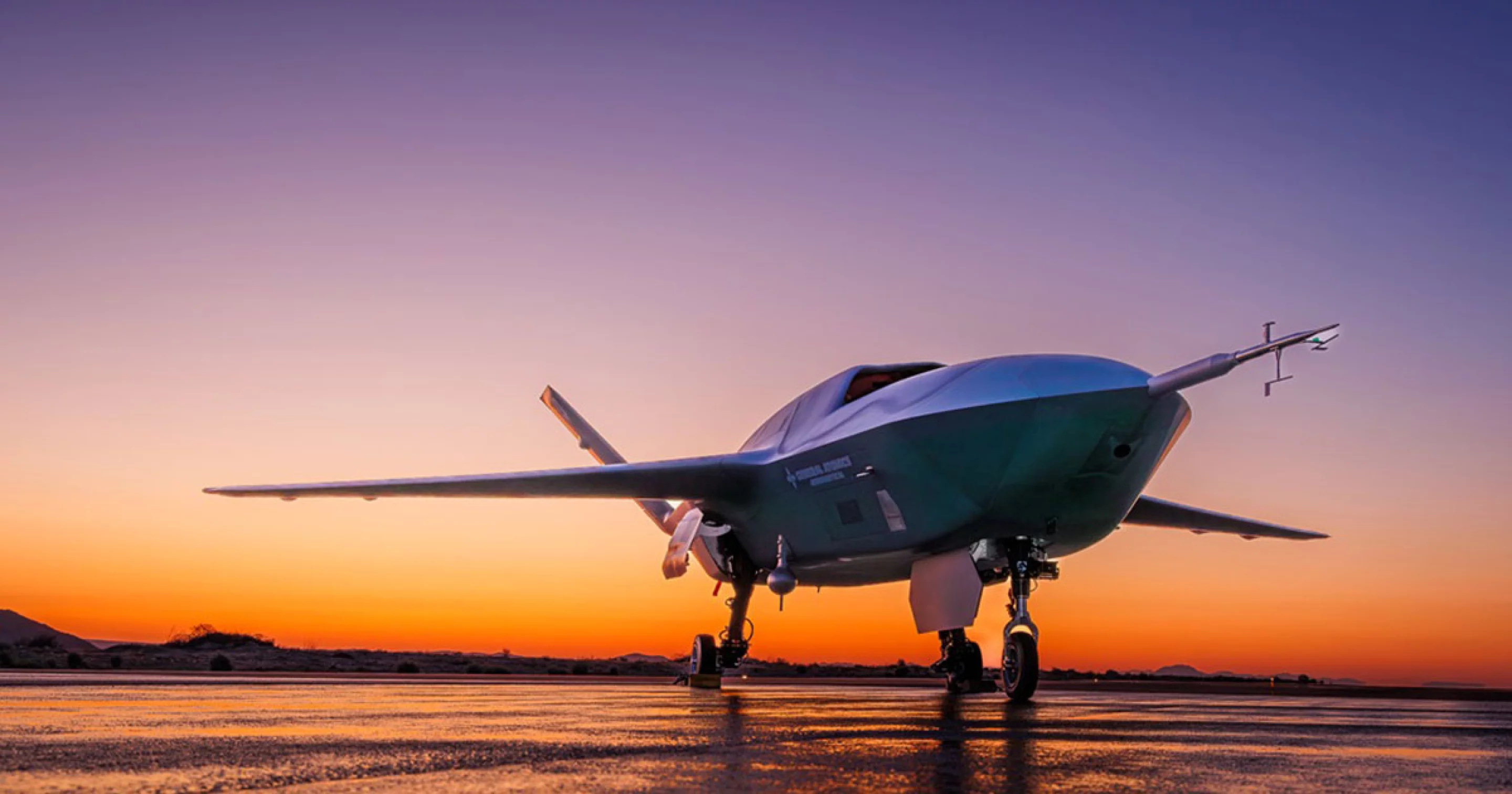
Major shift in military AI: Pentagon scales mass-production of autonomous 'Loyal Wingman' fighter drones.
30-Second TL;DR
What Changed
Contracts awarded to General Atomics and Anduril for autonomous aircraft
Why It Matters
This move signals a major shift in military procurement toward software-defined, autonomous hardware, creating significant opportunities for AI defense contractors.
What To Do Next
Monitor the 'Collaborative Combat Aircraft' (CCA) program requirements to understand the integration standards for autonomous swarm flight software.
Key Points
- •Contracts awarded to General Atomics and Anduril for autonomous aircraft
- •Focus on mass-producing hundreds of AI-driven 'Loyal Wingman' drones
- •Strategic shift toward autonomous aerial combat and swarm technology
Deep Insight
AI-generated analysis for this event — not the original article.
Enhanced Key Takeaways
- •The initiative is part of the U.S. Air Force's Collaborative Combat Aircraft (CCA) program, which seeks to field a mix of high-end and attritable autonomous platforms.
- •General Atomics is developing the XQ-67A, an evolution of the earlier XQ-58A Valkyrie concept, focusing on a common sensing and autonomy architecture.
- •Anduril's contribution centers on the 'Fury' autonomous air vehicle, which utilizes the Lattice OS for command, control, and mission autonomy.
- •The program emphasizes 'attritability,' meaning the aircraft are designed to be low-cost enough that their loss in combat is acceptable, shifting the risk profile of aerial operations.
- •These autonomous systems are designed to operate under 'human-on-the-loop' control, where AI handles flight dynamics and tactical maneuvers while human pilots retain final authority over lethal engagement.
Competitor Analysis
- General Atomics (XQ-67A)
- Modular/Attritable
- Anduril (Fury)
- Software-Defined/Agile
- Boeing (MQ-28 Ghost Bat)
- Multi-role/High-end
- General Atomics (XQ-67A)
- Prototype/Production
- Anduril (Fury)
- Prototype/Production
- Boeing (MQ-28 Ghost Bat)
- Flight Testing
- General Atomics (XQ-67A)
- Manufacturing Scale
- Anduril (Fury)
- Lattice AI Integration
- Boeing (MQ-28 Ghost Bat)
- Mature Airframe Design
| Feature | General Atomics (XQ-67A) | Anduril (Fury) | Boeing (MQ-28 Ghost Bat) |
|---|---|---|---|
| Primary Focus | Modular/Attritable | Software-Defined/Agile | Multi-role/High-end |
| Development Stage | Prototype/Production | Prototype/Production | Flight Testing |
| Key Advantage | Manufacturing Scale | Lattice AI Integration | Mature Airframe Design |
Technical Deep Dive
- Architecture: Utilizes open mission systems (OMS) standards to allow rapid integration of third-party sensors and weapons payloads.
- Autonomy: Employs reinforcement learning-based flight control systems capable of executing complex maneuvers without constant data-link connectivity.
- Manufacturing: Leverages digital engineering and additive manufacturing to reduce production timelines and costs compared to traditional manned platforms.
- Connectivity: Integrates with Manned-Unmanned Teaming (MUM-T) protocols to share sensor data across a distributed network of manned and unmanned assets.
Future ImplicationsAI analysis grounded in cited sources
Timeline
- 2019-03XQ-58A Valkyrie completes its maiden flight, establishing the foundation for low-cost attritable aircraft.
- 2021-02Boeing Australia unveils the MQ-28 Ghost Bat, the first clean-sheet autonomous combat aircraft in decades.
- 2023-04The U.S. Air Force officially launches the Collaborative Combat Aircraft (CCA) program to formalize requirements.
- 2024-02General Atomics reveals the XQ-67A, the first aircraft built using the Air Force's Off-Board Sensing Station (OBSS) initiative.
- 2024-04Anduril and General Atomics are selected as the primary contractors for the initial production increment of the CCA program.
Weekly AI Recap
Read this week's curated digest of top AI events →
Related Updates

AI-curated news aggregator. All content rights belong to original publishers.
Original source: cnBeta (Full RSS) ↗
This is a summary, not the original. Read the source, or get the weekly briefing.
The weekly digest
One email a week. Unsubscribe anytime.