Pedestrians Sharing Roads with Self-Driving Cars?
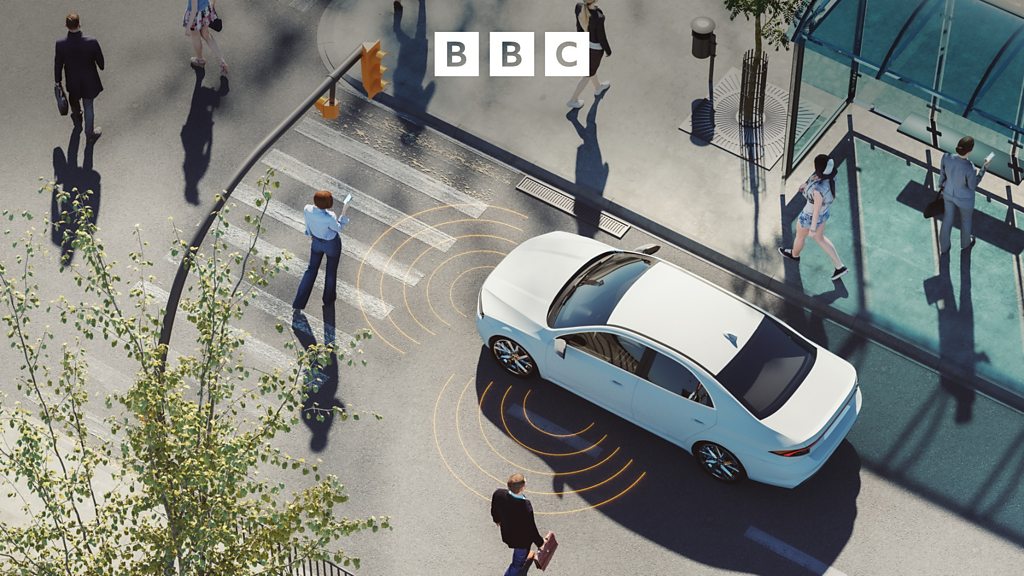
💡AV safety with humans critical for deployment—key challenges for embodied AI devs.
⚡ 30-Second TL;DR
What Changed
Questions safety for pedestrians, runners, cyclists with AVs
Why It Matters
This raises awareness of AV safety gaps, potentially influencing regulations and development priorities for embodied AI systems.
What To Do Next
Benchmark your AV model's pedestrian detection accuracy against nuScenes dataset.
Key Points
- •Questions safety for pedestrians, runners, cyclists with AVs
- •Focuses on road-sharing in urban environments
- •Published by BBC Technology under Tech Life
🧠 Deep Insight
AI-generated analysis for this event — not the original article.
🔑 Enhanced Key Takeaways
- •Research indicates that AVs struggle with 'implicit communication'—the subtle eye contact and body language cues pedestrians use to negotiate right-of-way at intersections.
- •Urban planners are increasingly testing 'External Human-Machine Interfaces' (eHMI), such as light strips or projected signals on the road, to explicitly communicate AV intent to vulnerable road users.
- •Standardization bodies like SAE International are currently refining 'Dynamic Driving Task' (DDT) performance requirements specifically for unpredictable human behavior in dense urban environments.
🛠️ Technical Deep Dive
- •Sensor Fusion Architecture: Integration of LiDAR, long-range radar, and high-resolution cameras to create a 360-degree 'bird's-eye view' perception map.
- •Behavioral Prediction Models: Utilization of Recurrent Neural Networks (RNNs) and Transformers to predict pedestrian trajectory based on pose estimation and historical movement patterns.
- •Latency Requirements: Real-time processing pipelines requiring sub-50ms latency for object detection and path planning to ensure safe emergency braking in urban scenarios.
- •V2X (Vehicle-to-Everything) Integration: Implementation of DSRC or C-V2X protocols to allow vehicles to receive location data from smart infrastructure and connected mobile devices carried by pedestrians.
🔮 Future ImplicationsAI analysis grounded in cited sources
⏳ Timeline
Weekly AI Recap
Read this week's curated digest of top AI events →
👉Related Updates


AI-curated news aggregator. All content rights belong to original publishers.
Original source: BBC Technology ↗
This is a summary, not the original. Read the source, or get the weekly briefing.
The weekly digest
One email a week. Unsubscribe anytime.