Painted e-tattoos enable future wearable biosensors
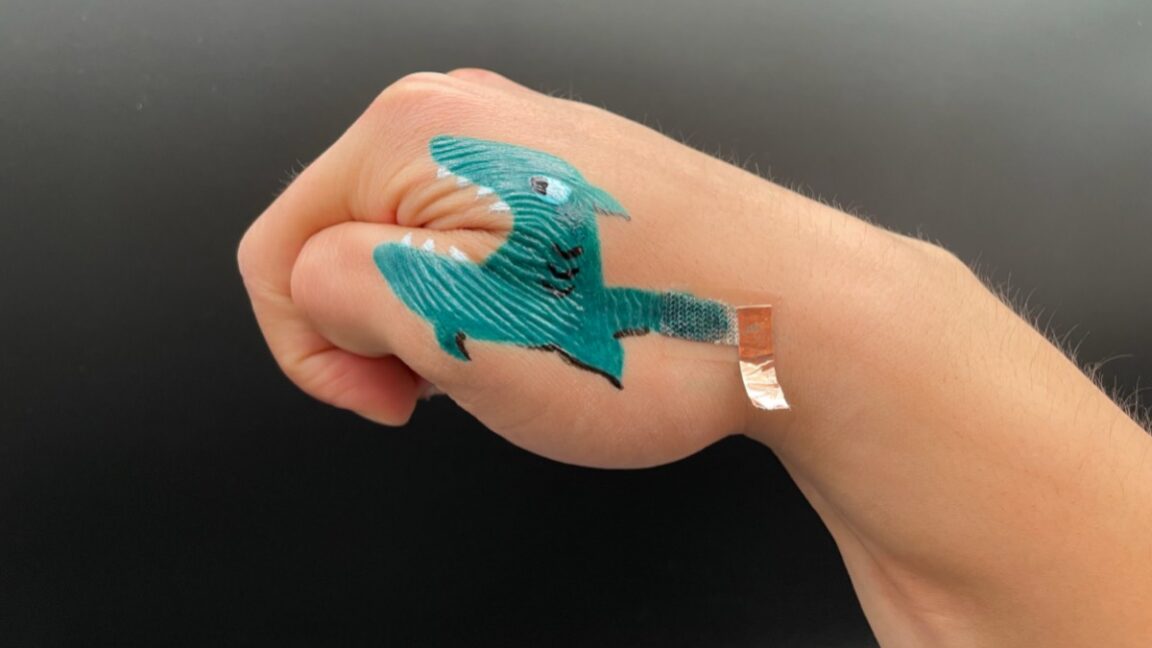
💡New conductive ink technology enables skin-integrated biosensors, a key hardware frontier for future AI health agents.
⚡ 30-Second TL;DR
What Changed
Conductive ink allows for custom-designed wearable electrodes.
Why It Matters
This research could revolutionize the form factor of health-tracking wearables and brain-computer interface inputs. It lowers the barrier for creating non-invasive, skin-integrated data collection devices.
What To Do Next
Explore the integration of flexible electronics with real-time health data processing models for predictive diagnostics.
Key Points
- •Conductive ink allows for custom-designed wearable electrodes.
- •Direct skin application eliminates the need for bulky hardware.
- •Potential for long-term health monitoring and human-computer interaction.
🧠 Deep Insight
AI-generated analysis for this event.
🔑 Enhanced Key Takeaways
- •The conductive ink utilizes a specialized polymer-based composite, often incorporating silver flakes or carbon nanotubes, to maintain electrical conductivity even when the skin stretches or deforms.
- •These e-tattoos demonstrate high signal-to-noise ratios comparable to clinical-grade Ag/AgCl (silver/silver chloride) electrodes used in traditional ECG and EMG monitoring.
- •The application process is designed to be compatible with standard inkjet printing or manual painting, allowing for rapid prototyping of sensor geometries tailored to specific anatomical sites.
- •Research indicates the ink formulation is engineered to be breathable and biocompatible, minimizing skin irritation and signal degradation caused by sweat accumulation during long-term wear.
- •The sensors can be integrated with miniaturized, flexible wireless transmitters, enabling real-time data streaming to smartphones or cloud platforms for remote patient monitoring.
🛠️ Technical Deep Dive
- Material Composition: Typically consists of a conductive filler (silver nanoparticles or carbon-based materials) suspended in a biocompatible, flexible polymer binder like polyurethane or silicone.
- Impedance Characteristics: Designed to achieve low skin-electrode impedance, often below 50 kOhms at 10 Hz, to ensure high-fidelity signal acquisition.
- Mechanical Properties: Exhibits high elasticity (strain tolerance often exceeding 100%) to prevent cracking or delamination during natural skin movement.
- Signal Processing: Requires integration with low-power analog front-end (AFE) chips to amplify and filter bio-potential signals (ECG, EMG, EEG) before digitization.
🔮 Future ImplicationsAI analysis grounded in cited sources
⏳ Timeline
Weekly AI Recap
Read this week's curated digest of top AI events →
👉Related Updates

AI-curated news aggregator. All content rights belong to original publishers.
Original source: Ars Technica ↗