โš›๏ธFreshcollected in 2h

Ozone depletion predates widespread CFC usage
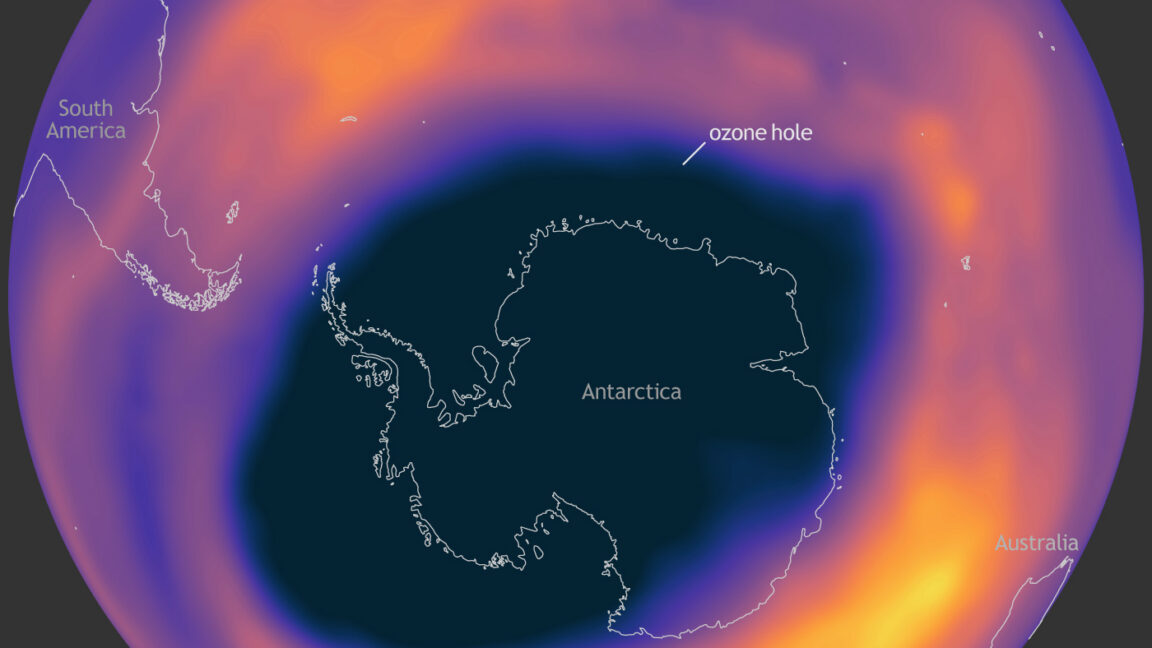
Ozone depletion predates widespread CFC usage
PostLinkedIn
โš›๏ธRead original on Ars Technica

๐Ÿ’กLearn how modern AI analysis can extract new insights from decades-old scientific datasets.

โšก 30-Second TL;DR

What Changed

Ozone loss was detectable using 1950s-era data if analyzed with modern tools

Why It Matters

This demonstrates the power of applying modern AI-driven analytical tools to historical scientific data to uncover previously missed trends.

What To Do Next

Apply your current ML models to historical, unstructured datasets in your domain to identify overlooked patterns or anomalies.

Who should care:Researchers & Academics

๐Ÿง  Deep Insight

AI-generated analysis for this event.

๐Ÿ”‘ Enhanced Key Takeaways

  • โ€ขThe study utilized re-analyzed Dobson Spectrophotometer data, which was the primary instrument for measuring total column ozone during the mid-20th century.
  • โ€ขResearchers identified that natural variability, specifically the Quasi-Biennial Oscillation (QBO) and solar cycles, masked early anthropogenic ozone depletion signals in historical records.
  • โ€ขThe findings suggest that the 'ozone hole' phenomenon was not a sudden emergence in the 1980s, but rather the culmination of a long-term trend that went unnoticed due to limited spatial coverage of early monitoring stations.
  • โ€ขStatistical machine learning techniques were applied to 'denoise' historical atmospheric data, allowing scientists to isolate the ozone depletion signal from background noise that 1950s researchers could not filter.
  • โ€ขThis retrospective analysis challenges the timeline of the Montreal Protocol's scientific foundation, suggesting that earlier detection might have accelerated international policy responses.

๐Ÿ› ๏ธ Technical Deep Dive

  • The analysis employed advanced statistical regression models to reconstruct ozone trends from sparse, ground-based Dobson station data.
  • Researchers utilized modern reanalysis datasets (such as ERA5 or MERRA-2) to cross-reference historical ground observations with atmospheric circulation patterns.
  • Signal processing techniques, specifically wavelet analysis, were used to separate the long-term ozone depletion trend from periodic natural oscillations like the QBO and El Nino-Southern Oscillation (ENSO).
  • The study corrected for instrument calibration drift and station-specific biases that were prevalent in early ozone monitoring networks.

๐Ÿ”ฎ Future ImplicationsAI analysis grounded in cited sources

Historical climate data re-analysis will become a standard practice for identifying 'hidden' environmental trends.
The success of applying modern machine learning to 1950s ozone data provides a scalable framework for re-evaluating other climate datasets for early warning signs.
Policy frameworks for emerging pollutants will require more rigorous 'natural variability' baselines.
Understanding that natural cycles can mask anthropogenic impacts for decades necessitates more sophisticated detection thresholds in future environmental regulations.

โณ Timeline

1956-01
Establishment of the first systematic ozone monitoring stations using Dobson Spectrophotometers.
1974-06
Molina and Rowland publish the hypothesis that CFCs deplete the ozone layer.
1985-05
Farman et al. publish the discovery of the Antarctic ozone hole, confirming significant depletion.
1987-09
The Montreal Protocol is signed to phase out ozone-depleting substances.
2024-10
Publication of the retrospective analysis revealing ozone depletion trends dating back to the 1950s.
๐Ÿ“ฐ

Weekly AI Recap

Read this week's curated digest of top AI events โ†’

๐Ÿ‘‰Related Updates

AI-curated news aggregator. All content rights belong to original publishers.
Original source: Ars Technica โ†—

Ozone depletion predates widespread CFC usage | Ars Technica | SetupAI | SetupAI